
Flowers
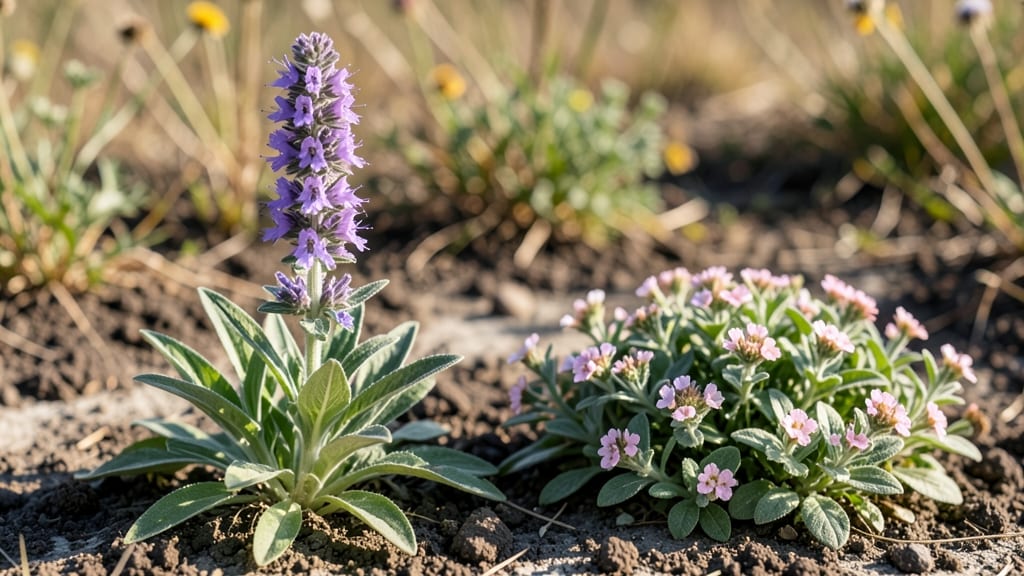
Whether verbena is an annual or perennial depends on your climate: it acts as an annual in cold regions but thrives as a hardy perennial in frost-free zones, regrowing each spring from its roots when temperatures consistently stay above 40°F.
This behavior comes down to verbena's root system, which can survive winter dormancy if protected from freezing. 🌱 In zones 5 and below, frost kills the above-ground growth, forcing gardeners to replant each year.
However, in warmer climates (zones 7-11), the roots remain active, sending up new shoots when spring arrives. The key difference lies in how quickly temperatures rise—verbena needs consistent warmth to break dormancy and regrow.
For gardeners in transitional zones (6-7), mulching heavily with straw or leaves can help protect roots through light frosts, sometimes allowing verbena to persist as a short-lived perennial.
The plant's ability to regenerate makes it a favorite for container gardening in colder areas—simply move pots indoors before frost or overwinter in unheated garages where temperatures stay above freezing.
💡 In This Article
- How Climate Determines Verbena’s Annual vs Perennial Growth Cycle
- Growing Verbena Year-Round: Pruning and Overwintering Tips
How climate determines verbena’s annual vs perennial growth cycle
Verbena's growth pattern hinges on its root system resilience and temperature sensitivity. The plant's roots contain meristematic cells—undifferentiated cells capable of regenerating new growth—when temperatures consistently stay above 40°F.
In frost-free zones (USDA zones 8-11), these roots remain active year-round, allowing verbena to regrow annually from the same rootstock, making it a true perennial. 🌿 The key trigger is consistent warmth, which signals the roots to break dormancy and send up new shoots in early spring.
In colder climates (zones 5-7), frost kills the above-ground growth, but the roots themselves can survive if protected. The difference comes down to dormancy triggers: verbena enters a deep dormancy when nighttime temperatures drop below 32°F for extended periods.
This is why gardeners in zones 5 and below typically treat it as an annual—the roots often don't survive harsh winters unless given extra protection like heavy mulching or container insulation. Even then, the plant may regrow weakly the following year.
What makes this particularly interesting is how verbena's growth cycle mirrors other subtropical plants, like salvia or lantana. These plants all share a similar survival strategy: they prioritize root preservation over above-ground growth when faced with cold.
The difference is that verbena's roots are more sensitive to prolonged freezing—typically dying back if exposed to 20°F or below for more than 24 hours. This is why zone 6 gardeners often see verbena die back completely in winter but sometimes regrow from protected roots.
Another critical factor is day length and light exposure. Verbena is a short-day plant, meaning it responds to decreasing daylight hours in autumn by preparing for dormancy. In warmer climates, this transition is gradual, allowing roots to remain active.
In colder regions, the sudden frost shock combined with shortened days triggers a more aggressive dormancy response. This dual mechanism explains why some gardeners in marginal zones (like zone 7) can coax verbena to survive winters with careful protection, while others in zone 6 must start fresh each spring.
For those curious about the science behind this adaptation, consider that verbena's survival strategy is an example of hemicryptophyte behavior—a growth habit where the plant stores energy in underground structures (roots or rhizomes) and regrows from there.
This is similar to how many garden perennials operate, but verbena's roots are less robust than true hardy perennials like hostas or peonies. The trade-off is verbena's faster growth rate during its active season, which compensates for its shorter lifespan in colder climates.
Understanding these mechanisms helps explain why verbena thrives in Mediterranean or tropical climates but struggles in northern gardens. The plant's native range—primarily South America—provides a clue: it evolved in regions where winter temperatures rarely drop below freezing.
When transplanted to colder zones, its survival becomes a delicate balance between root protection and environmental conditions. 🌍