
Flowers
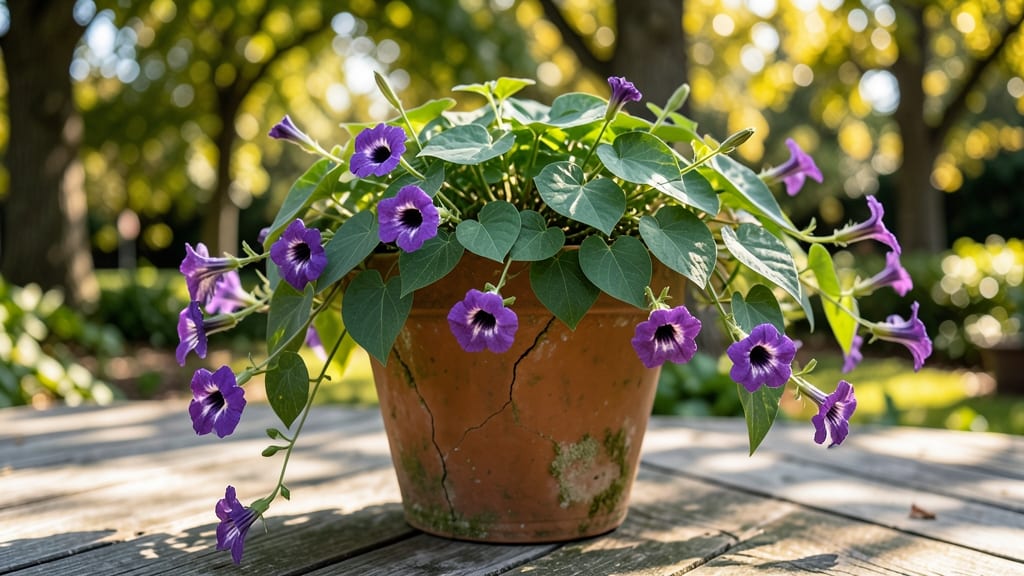
Thunbergia is a perennial only in frost-free zones like USDA 9-11, where its tuberous roots survive winter dormancy and regrow each spring. In colder climates, it behaves like an annual, dying back completely unless you protect the roots or bring it indoors.
Thunbergia's true nature depends entirely on where you live. 🌱 In warmer regions, it naturally returns year after year from underground roots that store energy like a built-in survival system.
However, when temperatures drop below 30°F, even the hardiest varieties struggle—this is why gardeners in colder zones treat it as an annual unless they take special overwintering steps.
What’s fascinating is how its growth habits shift with temperature: in mild winters, you might see regrowth from old stems, while in freezing conditions, only the protected tubers have a chance. This explains why some sources call it "semi-perennial"—it’s a matter of climate, not the plant itself.
💡 In This Article
- Thunbergia’s Cold Tolerance and Root Survival Explained
- How to Overwinter Thunbergia in Cold Climates
Thunbergia’s cold tolerance and root survival explained
Thunbergia's perennial status hinges on its tuberous root system, which acts like a biological battery storing carbohydrates and nutrients during dormancy. These roots can survive in USDA zones 9-11 where winter temperatures rarely dip below 30°F, allowing the vine to regenerate each spring.
The magic happens in how these roots metabolize stored energy—similar to how dahlias or cannas overwinter underground, but Thunbergia requires even more consistent warmth to break dormancy.
In colder zones (USDA 8 or below), the story changes dramatically.
When soil temperatures drop to 25°F or lower, the roots' cellular membranes rupture, and the plant's water content freezes, causing irreversible damage. 🌡️ This explains why Thunbergia dies back completely in frost—its above-ground growth is entirely dependent on root viability.
Even in "semi-perennial" classifications, the term is misleading without context; it's not the plant's inherent nature but rather a climate-dependent behavior.
The key difference lies in root depth and insulation. Thunbergia's tubers typically grow 6-12 inches deep, which provides some natural protection in mild winters. However, without mulch or soil amendments (like compost), the roots remain vulnerable to temperature fluctuations.
In contrast, plants like hostas or peonies have deeper, more insulated root systems that handle colder soils better. This structural limitation is why Thunbergia struggles in zones below 9.
What most gardeners overlook is the timing of dormancy. Thunbergia enters dormancy when nighttime temperatures consistently stay below 50°F for two weeks. During this phase, the roots need moist but well-drained soil to prevent rot while conserving energy.
In warmer zones, this process is seamless, but in colder areas, even a few hard freezes can trigger fatal damage before the plant can fully prepare.
Here's a critical comparison: In USDA zone 10, Thunbergia may regrow from old stems in spring, while in zone 8, only protected tubers have a chance.
This zone-specific behavior is why some nurseries sell Thunbergia as an annual in northern regions—it's not a marketing trick but a hard reality based on cold tolerance data from trials like those conducted by the University of Florida's Institute of Food and Agricultural Sciences.
For those in marginal zones (like zone 8b), the difference between a 32°F winter and a 28°F one can mean the difference between regrowth and total loss. This threshold sensitivity is why overwintering methods become essential for gardeners pushing the plant's limits.