
Flowers
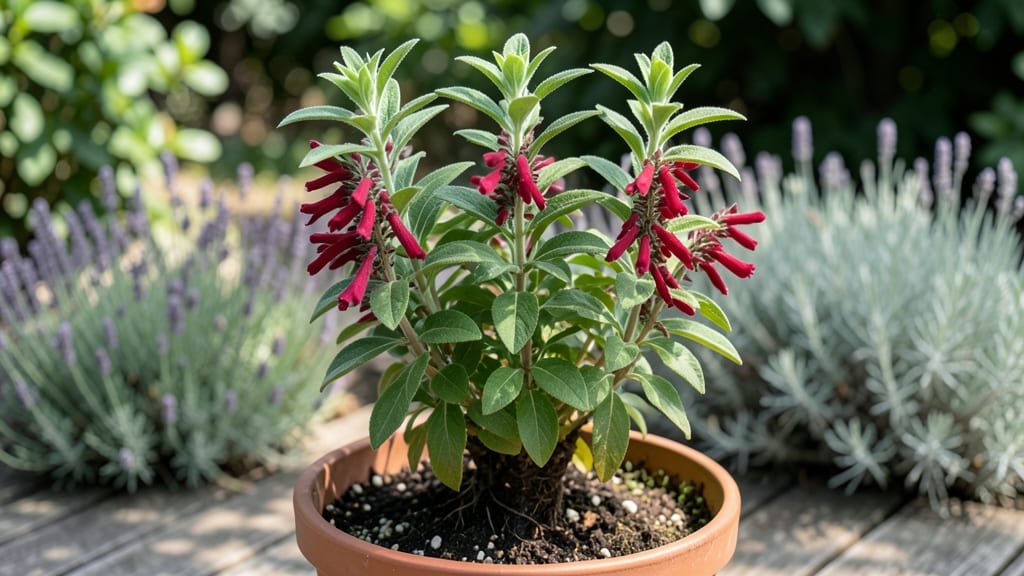
Pineapple sage behaves as a perennial only in USDA Zones 8-11, where it naturally regrows each year. Outside these zones, it dies back annually in winter and requires replanting. Strategic pruning can encourage multiple blooms during frost-free seasons.
Pineapple sage's perennial status depends entirely on your climate zone. 🌿 In warmer regions (Zones 8-11), its roots survive winter dormancy, allowing it to resprout reliably each spring. However, in colder zones, even light freezes can kill the plant back to the ground, making it behave more like an annual.
The key difference lies in how cold-hardy its root system is—below Zone 8, the roots simply can't withstand prolonged freezing temperatures.
For gardeners in colder climates, the good news is that pineapple sage can often be coaxed into lasting longer through creative growing methods. Container gardening with winter protection or cutting propagation before the first frost are both effective strategies.
Even in colder zones, you can enjoy its vibrant blooms year after year with the right care techniques.
💡 In This Article
- Pineapple Sage Cold Hardiness and Winter Survival Guide
- How to Extend Pineapple Sage’s Lifespan in Cold Climates
Pineapple sage cold hardiness and winter survival guide
The reason pineapple sage acts as a perennial only in USDA Zones 8-11 comes down to its biological tolerance for cold. This herb's root system can survive temperatures down to about 15°F, which is the threshold for Zone 8.
However, when temperatures drop below 10°F—common in Zones 7 and colder—the roots begin to suffer irreversible damage. 🌱 The plant's leaves and stems contain high moisture content (around 80% water), which freezes and ruptures cell walls during hard freezes, killing the above-ground growth instantly.
What's fascinating is how pineapple sage's hardiness compares to other sages. Common sage (Salvia officinalis) thrives in Zones 5-8, thanks to its woody stems and deeper root system that can tolerate -20°F temperatures.
Pineapple sage lacks these adaptations—its tender, herbaceous stems can't withstand prolonged exposure to freezing air, even when covered with snow. The science shows that its growth habit is more similar to tropical herbs like basil or mint, which also die back in cold climates unless protected.
In frost-free zones, pineapple sage enters a natural dormancy cycle during winter, where its growth slows dramatically but the root system remains viable. This is why you'll see regrowth as early as late winter in Zones 9-11—those roots have been conserving energy all season.
The plant's ability to rebloom multiple times in a single season (especially when pruned back after each flush of flowers) is a direct result of this perennial growth habit in warm climates.
Here's what happens in colder zones: When temperatures drop below 28°F for more than 24 hours, the plant's cells begin to experience freeze damage. The first visible sign is leaf blackening, followed by stem collapse.
Unlike woody perennials that can regenerate from dormant buds, pineapple sage has no protected growth points below ground—its roots are too shallow (6-12 inches deep) to store enough energy reserves to survive prolonged cold snaps. 🥶 This is why gardeners in Zones 6 and below often find their pineapple sage plants looking like "fried" sticks by spring.
An interesting exception occurs in microclimates where cold air pools don't settle. For example, plants growing against south-facing walls or in protected garden nooks might survive 5°F dips temporarily, though they'll still need winter protection.
The key measurement here is cumulative cold exposure—it's not just the lowest temperature that matters, but how long the plant endures those conditions. A brief 10°F night might be survivable, but a week at 15°F will likely kill it back.
Understanding these thresholds helps explain why pineapple sage behaves so differently in various climates. In Zone 8, you might get partial winter survival with proper mulching, while in Zone 9, it's likely to regrow reliably.
The 15°F line acts as a biological dividing line between perennial behavior and annual treatment. This is why gardeners in transitional zones often experiment with winter protection techniques to push the plant's limits.