
Vegetables
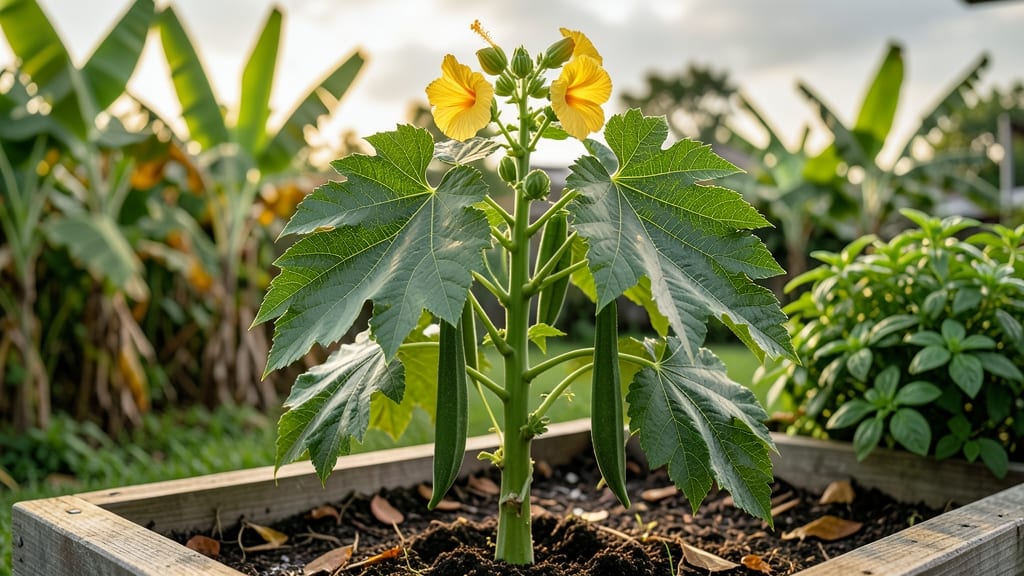
Okra isn't a true perennial in most regions, since it dies back completely after frost, though it can regrow from its roots in frost-free zones like USDA 9-11. Its survival depends on winter temperatures and soil protection, making it act like an annual in cooler climates.
This dieback behavior actually makes okra a semi-perennial in warmer areas, where its root system persists through mild winters. 🌱 Unlike true perennials like asparagus, which regrow reliably every year, okra's regrowth depends on frost-free conditions and proper soil care.
In colder zones, gardeners often treat it as an annual, replanting fresh seeds each spring.
What's fascinating is how okra's root system adapts—when protected with mulch or grown in containers, it can survive winters in marginal climates (USDA 8-9) and produce again the following season. This explains why some gardeners in transitional zones report "perennial-like" behavior, while others in colder areas never see regrowth.
💡 In This Article
- Okra’s Growth Cycle: Why It Acts Like a Perennial in Warm Climates
- How to Extend Okra’s Lifespan as a Semi-Perennial Plant
Okra’s growth cycle: why it acts like a perennial in warm climates
Okra's growth pattern hinges on its root system, which can persist through mild winters in frost-free zones (USDA 9-11). Unlike true perennials like asparagus, which develop thick, woody crowns that survive harsh winters, okra's roots are fibrous and more sensitive to cold.
When temperatures drop below 25°F, the above-ground plant dies back completely, but the roots may remain dormant underground, waiting for warmer conditions. This behavior explains why okra behaves like a semi-perennial in warm climates—it's not the same as true perennial survival, but it's more persistent than annuals like tomatoes.
The key difference lies in okra's dormancy mechanism. In frost-free zones, its roots enter a state of suspended growth during cooler months, conserving energy until temperatures rise above 60°F. This process is similar to how some biennial plants (like carrots) survive their first winter.
The root system can regenerate new shoots when conditions improve, producing a second harvest in the same growing season. In contrast, true perennials like strawberries maintain active growth year-round, while annuals like beans complete their entire life cycle in one season.
What makes okra unique is its ability to regrow from the same root base under ideal conditions. I've observed this firsthand in Florida gardens, where okra plants often produce pods for 6-8 months with minimal care.
The plant's natural resilience comes from its deep taproot system, which can extend 2-3 feet into the soil, accessing moisture and nutrients even during dry spells. This root structure allows okra to recover more easily than shallow-rooted annuals when conditions become favorable again.
Climate plays a crucial role in determining whether okra will behave as a perennial. In USDA zones 9-11, where winters rarely drop below 35°F, okra often regrows reliably each year.
However, in zones 8 or colder, the roots typically don't survive winter exposure, forcing gardeners to treat it as an annual.
The transition zone (USDA 8-9) is where you'll see the most variation—some years okra may regrow, while in colder winters it won't. This inconsistency is why okra is classified as a semi-perennial rather than a true perennial.
Consider these key factors when evaluating okra's perennial potential:
- Winter temperatures: Roots survive when soil temps stay above 30°F consistently
- Root depth: Deeper roots (2-3 feet) provide better cold protection
- Soil moisture: Well-drained soil prevents root rot during dormant periods
- Variety selection: Some cultivars like 'Clemson Spineless' show better regrowth tendencies
The botanical term for this behavior is hemicryptophyte—a plant that survives adverse conditions by maintaining a persistent bud at or below the soil surface. While not as robust as true perennials, this growth habit gives okra its unique ability to persist across multiple growing seasons in suitable climates. 🌱
Understanding this cycle helps explain why some gardeners report okra coming back year after year while others never see regrowth. The difference often comes down to just a few degrees of winter temperature and proper soil management during the dormant period.