
Planting
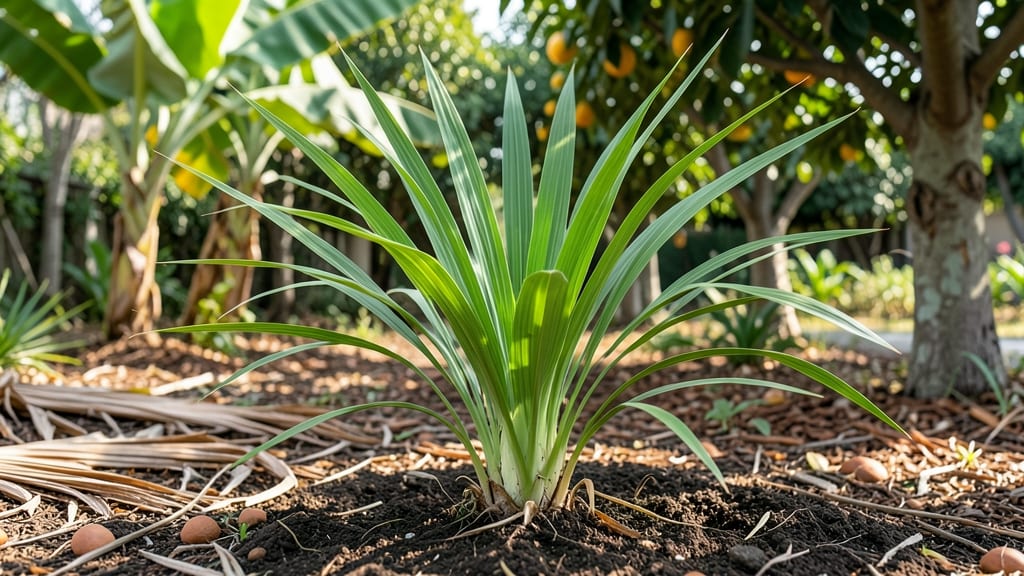
Lemongrass is not a true perennial in Zone 8—it dies back to the ground in winter but may regrow from rhizomes if temperatures stay above 20°F (-6°C). Cold snaps below 15°F (-9°C) often kill it permanently, requiring replanting each spring for consistent harvests.
Lemongrass thrives in warm climates but struggles with Zone 8 winters because its tropical roots can't tolerate prolonged cold. 🌱 The rhizomes—those thick underground stems—act as storage organs, but they only survive brief dips to 20°F (-6°C) before damage occurs.
If temperatures drop further, the plant will die back completely, leaving you to start fresh in spring. Many gardeners treat it as an annual despite its perennial classification in warmer zones, since the energy required to regrow is often not worth the effort compared to replanting.
What's interesting is how this compares to other herbs: mint, for example, often bounces back from deeper freezes, while lemongrass's delicate nature makes it more of a seasonal player in cooler climates.
For those who want to keep it around longer, overwintering in containers or heavily mulching can sometimes buy a few extra weeks—but don't expect it to survive a harsh winter unscathed.
💡 In This Article
- Why Lemongrass Freezes Out in Zone 8 Winters
- Zone 8 Lemongrass Survival Strategies: Mulching, Containers, and Overwintering
Why lemongrass freezes out in Zone 8 winters
Lemongrass's tropical origins explain why it struggles in Zone 8 winters. Native to Southeast Asia and warm climates, its growth cycle is optimized for temperatures between 75-85°F (24-29°C).
When exposed to cooler conditions, the plant's metabolic processes slow dramatically, but the real damage occurs when temperatures drop below 50°F (10°C). At this point, the plant's cellular structure begins to break down, especially in the rhizomes—the thick, fibrous underground stems that store energy.
These rhizomes act like nature's batteries, but they only have so much cold tolerance.
The critical threshold for lemongrass rhizomes is 20°F (-6°C). When exposed to this temperature for more than a few hours, the cells begin to freeze and rupture, causing irreversible damage.
This is why a single cold snap can kill a mature plant even if it survived earlier chilly nights. 🌱 For comparison, mint—a hardier herb—can often recover from temperatures as low as 10°F (-12°C) because its rhizomes have evolved to withstand cooler climates.
Ginger, another rhizomatous plant, fares slightly better but still struggles below 25°F (-4°C). The difference lies in their evolutionary adaptations: lemongrass simply hasn't developed the same cold-resistant mechanisms.
What makes this even more challenging is how quickly damage occurs. Unlike woody perennials that can endure winter dormancy, lemongrass's tender stems and leaves freeze solid at 32°F (0°C), but the real vulnerability lies in the rhizomes.
When temperatures dip below 15°F (-9°C), even the rhizomes can't survive, leaving gardeners with no option but to replant.
This is why many Zone 8 gardeners treat lemongrass as an annual—because the energy required to coax it back from near-death rhizomes often isn't worth the effort compared to simply starting fresh in spring.
There's also a physiological reason why lemongrass can't bounce back like other perennials. Its growth pattern relies on continuous warmth to maintain active rhizome growth. In cooler climates, the rhizomes enter a state of dormancy but lack the protective layers that hardy perennials develop.
Without these adaptations, the plant's energy reserves deplete faster, making it far more susceptible to winter kill. This is particularly noticeable in the spring when gardeners often find their lemongrass plants have turned brown and mushy—clear signs of internal cell damage from cold exposure.
To put it simply, lemongrass's survival in Zone 8 depends on two key factors: how quickly temperatures drop and how long they stay below freezing. A brief cold snap might only cause superficial damage, but prolonged exposure to 20°F (-6°C) or lower will almost certainly kill the plant.
This is why even experienced gardeners in Zone 8 often give up on overwintering lemongrass—because the odds of success are so slim compared to the effort required. 💫
Interestingly, this cold sensitivity isn't just about the current season's weather. Lemongrass plants that have been grown in cooler conditions for multiple years don't develop increased cold hardiness. Unlike some perennials that gradually adapt to their environment, lemongrass remains fundamentally a tropical plant.
This biological limitation means that even with the best care, Zone 8 gardeners are always playing catch-up against the clock each winter.
For those who still want to try, understanding these thresholds is crucial. If you're willing to invest time in protective measures, you might extend the plant's lifespan—but don't expect miracles. The science is clear: lemongrass's tropical nature makes it a seasonal player in cooler climates, not a reliable perennial. ✨