
Flowers
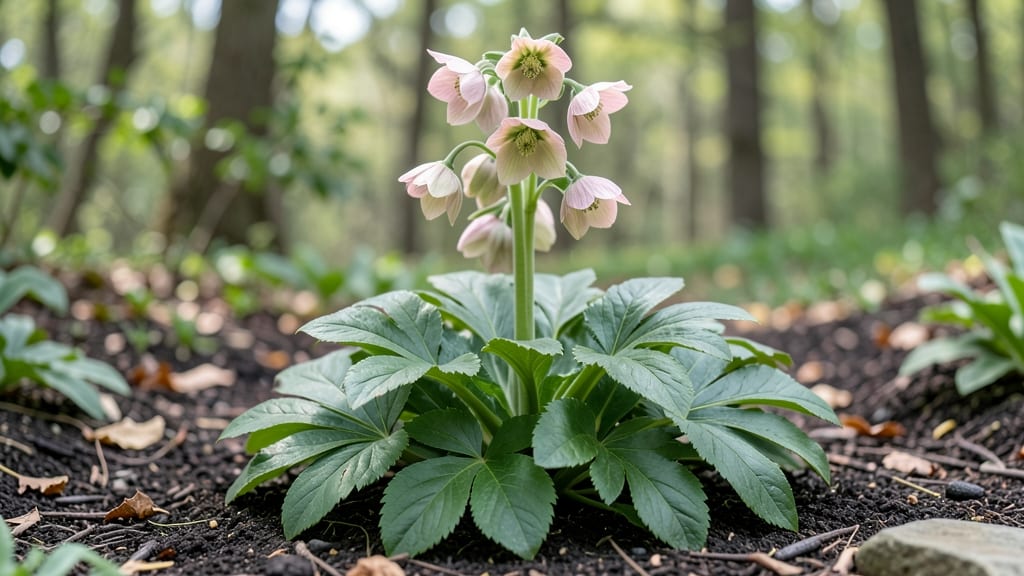
Hellebore is a perennial plant that returns year after year, showcasing its cold-resistant evergreen leaves and delicate early spring flowers, thriving in shaded garden spaces.
Hellebore earns its perennial status through its deep, fibrous root system that stores nutrients efficiently, allowing it to survive harsh winters and regrow each spring. 🌱 Unlike annuals that complete their lifecycle in one season, hellebore's evergreen foliage continues photosynthesis even in winter, fueling its growth.
This adaptability makes it perfect for woodland gardens where other plants struggle—just give it well-draining soil and partial shade to keep it flourishing for decades.
What sets hellebore apart is its ability to bloom in late winter when few other perennials are active, offering gardeners early color. Many varieties like Helleborus niger (Christmas rose) or Helleborus orientalis (Lenten rose) return reliably each year with minimal care, making them low-maintenance stars for shade lovers.
The key to long-term success lies in proper planting: hellebores hate soggy roots but tolerate dry spells once established. A mulch layer helps regulate soil moisture, while dividing mature clumps every 3-4 years prevents overcrowding.
With these simple steps, your hellebore will reward you with years of elegant blooms and lush foliage.
💡 In This Article
- Why Hellebore Thrives as a Cold-Hardy Perennial
- Best Growing Conditions for Long-Term Hellebore Care
Why hellebore thrives as a cold-hardy perennial
Hellebore's perennial nature stems from its rhizomatous root system, which stores nutrients and moisture like a natural battery.
These thick, fleshy roots can survive winter dormancy by tapping into stored reserves, allowing the plant to push through frozen ground as early as late winter when temperatures hover around 32-45°F.
This cold tolerance is why hellebore thrives in USDA hardiness zones 4-9, making it one of the few perennials that blooms before spring bulbs like daffodils even emerge.
The plant's evergreen foliage is another secret weapon—its leathery leaves continue photosynthesis at temperatures as low as 25°F, generating energy even when other plants are dormant.
This adaptation explains why hellebore maintains its vibrant green color through winter, unlike deciduous perennials that rely on spring regrowth. 🌿 The leaves also contain toxic alkaloids that deter herbivores, reducing the need for protective measures that other perennials require.
Hellebore's low-light adaptability comes from its shade-tolerant chloroplasts, which efficiently capture dim light in woodland understories. Studies show these plants can thrive with just 2-4 hours of indirect sunlight daily, making them ideal for gardens under trees where most perennials struggle.
This ability to photosynthesize in low light is why hellebore often outcompetes annuals in shaded areas, establishing itself as a long-term garden staple.
What surprises many gardeners is how hellebore's flowering mechanism works—its buds form in the previous year's growth, ensuring blooms appear even after severe winters.
Unlike annuals that must regrow from seed each season, hellebore's woody stems protect these flower buds underground, ready to burst into color as soon as conditions improve. This built-in resilience explains why mature hellebore plants can live for decades with minimal intervention.
The plant's self-propagation through seed and division further cements its perennial status. Each mature clump produces dozens of seeds that germinate readily, while established plants can be divided every 3-5 years to maintain vigor.
This natural reproduction ensures hellebore populations persist even when individual plants are damaged, a trait shared with true perennials like hostas and ferns.
One common misconception is that hellebore's early blooms signal weak winter survival—quite the opposite. The energy required to produce flowers in cold weather demonstrates the plant's efficient energy storage system.
Gardeners often notice hellebore blooming while snow still lingers, proving its ability to metabolize stored nutrients even in sub-freezing conditions. This winter activity is what makes hellebore a true perennial powerhouse in cold climates.