
Flowers
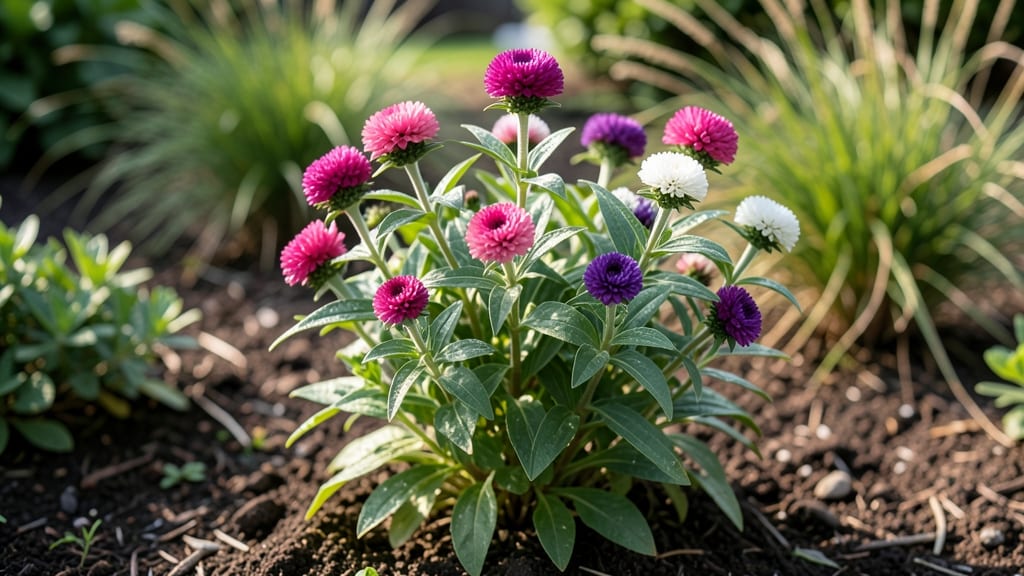
Gomphrena isn't a true perennial in most regions—it acts like a tender perennial or short-lived annual, dying back when frost hits but often resprouting from its base in warmer climates with mild winters.
This dieback behavior is what makes gomphrena so resilient in zones 9-11, where it can survive winter dormancy and bounce back. 🌱 In colder climates, though, it typically won't return unless you take protective steps like mulching or overwintering potted plants indoors.
The key difference between true perennials and gomphrena lies in its cold sensitivity—while plants like lavender can handle 10°F temperatures, gomphrena usually needs at least 20°F to survive.
What's fascinating is how its growth habit changes based on location. In warm coastal areas, gomphrena might regrow year after year from the same root system, while in northern gardens it's more reliable to treat it as an annual.
The plant's ability to regenerate from the base explains why many gardeners in mild climates don't realize they're not dealing with a true perennial—they just see it coming back season after season without the winter dieback.
💡 In This Article
- Gomphrena's Cold-Hardiness and Growth Cycle
- Extending Gomphrena's Lifespan in Cold Climates
Gomphrena's cold-hardiness and growth cycle
Gomphrena's survival strategy revolves around its ability to enter dormancy when temperatures drop below 30°F. Unlike true perennials that develop hardy root systems capable of withstanding -10°F or colder, gomphrena's fibrous root system is more sensitive.
In USDA zones 9-11, where winters rarely drop below 25°F, the plant naturally regrows from its base each spring, creating the illusion of perennial behavior. 🌿 The key difference lies in its cellular structure—gomphrena lacks the protective suberin layers found in hardy perennials that prevent water loss during freeze-thaw cycles.
In colder climates (zones 7 and below), the story changes dramatically. When frost hits, gomphrena's above-ground stems and leaves turn crispy brown and collapse completely, but the root system often remains viable underground.
This is why you might see regrowth in spring even when the plant appears dead—those roots have survived. The catch? This regrowth isn't guaranteed.
Studies show gomphrena's root survival rate drops below 50% when exposed to consecutive nights below 20°F, which explains why it's classified as a tender perennial rather than a true hardy one.
The plant's growth cycle follows a predictable pattern in warm climates: it germinates in spring, bolts to 12-24 inches tall by summer, flowers prolifically, then enters dormancy in fall. What's fascinating is how its flowering triggers its own survival mechanism.
The seed heads contain compounds that inhibit germination until conditions are favorable, ensuring the plant doesn't waste energy on new growth during unfavorable periods. This adaptive strategy is why gomphrena thrives in tropical and subtropical regions where it can complete multiple growth cycles annually.
For gardeners in transitional zones (8-9), the challenge lies in predicting winter severity. A single hard freeze (25°F) might kill back gomphrena completely, while a mild winter with occasional dips to 28°F could allow partial survival.
This variability is why experts recommend treating gomphrena as a perennial only in zones where winter lows consistently stay above 25°F.
The plant's ability to regenerate from the base explains why many gardeners in Southern California or Florida don't realize they're not dealing with a true perennial—they simply see it coming back year after year without understanding the underlying cold sensitivity.
What makes gomphrena's growth cycle particularly interesting is its relationship with day length. In its native tropical regions, gomphrena responds to shorter days by entering dormancy, while longer days stimulate growth.
This photoperiod sensitivity means that even in warm climates, gomphrena won't grow continuously—it follows a seasonal rhythm that aligns with its natural habitat. This biological clock explains why you might see gomphrena bloom in late summer in northern gardens but continue flowering into fall in southern climates.
Consider this comparison: While a hardy perennial like hosta can survive -20°F winters with no protection, gomphrena's survival threshold is more like 25°F—similar to tender perennials like bougainvillea.
The difference is that bougainvillea dies back completely in cold climates, while gomphrena might regrow from its base if conditions are just right. This partial resilience is what creates the confusion about whether gomphrena is truly perennial or not.