
Flowers
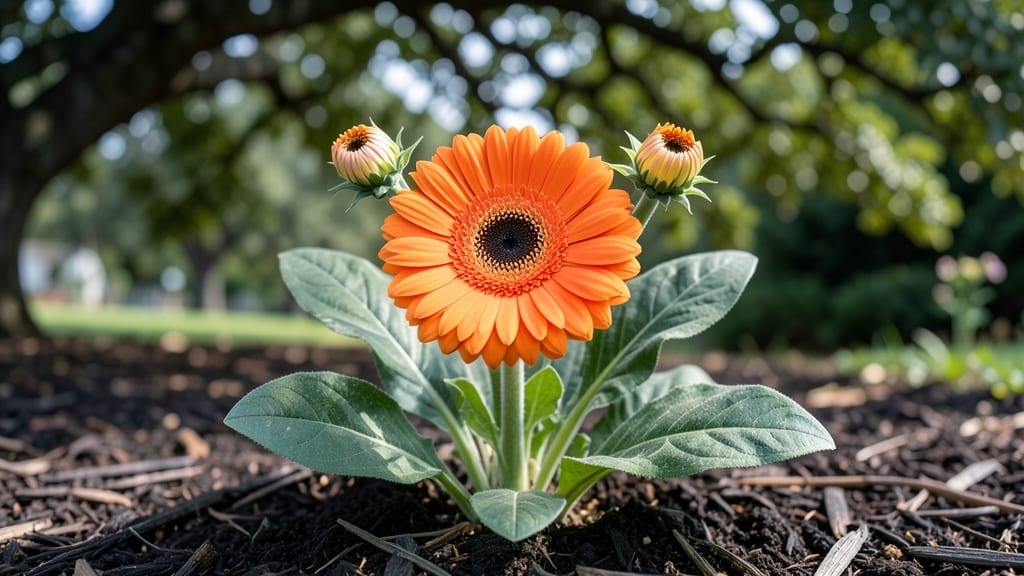
Gerbera daisies function as annuals in cold zones because their tropical roots can't survive when temperatures dip below 30°F, though they're actually tender perennials that thrive for 2-3 years in frost-free environments. The plants go dormant rather than dying completely, with roots often reviving when warmth returns.
This behavior stems from their native South African climate, where gerbera daisies evolved without frost exposure. 🌱 When nighttime temperatures consistently drop below 30°F, the entire plant shuts down to conserve energy, though the roots remain alive beneath the soil surface.
In warmer regions (zones 8-11), they bloom continuously for multiple seasons, while gardeners in colder areas must treat them as annuals or take special overwintering precautions to preserve the roots.
What's fascinating is how this dormancy cycle works differently from true annuals. Unlike plants that complete their entire lifecycle in one season, gerbera daisies have the remarkable ability to regenerate from their root systems when conditions improve.
This makes them semi-perennial in nature, though their cold sensitivity forces gardeners to approach them like annuals in most temperate climates.
💡 In This Article
- Gerbera Daisy Cold Sensitivity and Dormancy Science
- Extending Gerbera Daisy Lifespan in Cold Climates
Gerbera daisy cold sensitivity and dormancy science
The gerbera daisy's cold sensitivity stems from its tropical South African origins, where temperatures rarely drop below 50°F. When exposed to 30°F or lower, the plant's cellular membranes begin to freeze, triggering a survival mechanism called dormancy.
This isn't death—it's a metabolic slowdown where the plant redirects energy to protect vital organs, particularly the roots which can survive 28°F for short periods if protected. 🌱 The leaves and stems, however, turn brown and crispy as they prioritize root preservation over above-ground growth.
Here's what happens at the molecular level: cold stress causes the plant to produce antifreeze proteins (similar to those in cold-hardy plants) that prevent ice crystal formation in root cells. However, these proteins aren't enough to handle prolonged freezing.
The plant also increases sugar production in its roots, acting as a natural antifreeze that lowers the freezing point of cellular fluids. This biological response explains why gerbera roots often survive winter in protected conditions but fail in exposed garden beds.
The dormancy cycle differs from true annuals because gerbera daisies don't die—they simply pause. In warmer zones (8-11), this cycle repeats annually with minimal intervention. But in colder climates, gardeners must mimic these natural conditions artificially.
The key threshold is 30°F: below this, the plant's energy reserves deplete faster than they can regenerate. This is why many gardeners in zones 5-7 treat them as annuals—they can't reliably survive the winter without human assistance. 💛
What makes this even more interesting is the plant's photoperiod response. Gerbera daisies detect shortening daylight hours (below 12 hours of light) as a signal to prepare for dormancy.
This dual trigger system—cold temperatures AND reduced daylight—explains why they often go dormant even in mild winters if days grow short. The combination of these environmental cues creates the perfect storm for their annual behavior in temperate climates.
Consider this comparison: while cold-hardy perennials like peonies can withstand -20°F with proper acclimation, gerbera daisies begin showing stress at 35°F. Their root systems, though sturdy, lack the insulating adaptations of native temperate plants.
The 2-3 year lifespan in ideal conditions comes from this delicate balance between tropical origins and temperate adaptations—a fascinating example of plant evolution in action.
The science behind this dormancy reveals why gerbera daisies make such dramatic garden stars. Their ability to "shut down" completely and revive makes them perfect for container gardening in cold climates. With the right protection, you can essentially "pause" their annual cycle and extend their lifespan year after year.
This dual nature—both annual and perennial—is what makes them so adaptable yet challenging for gardeners. ✨