
Planting
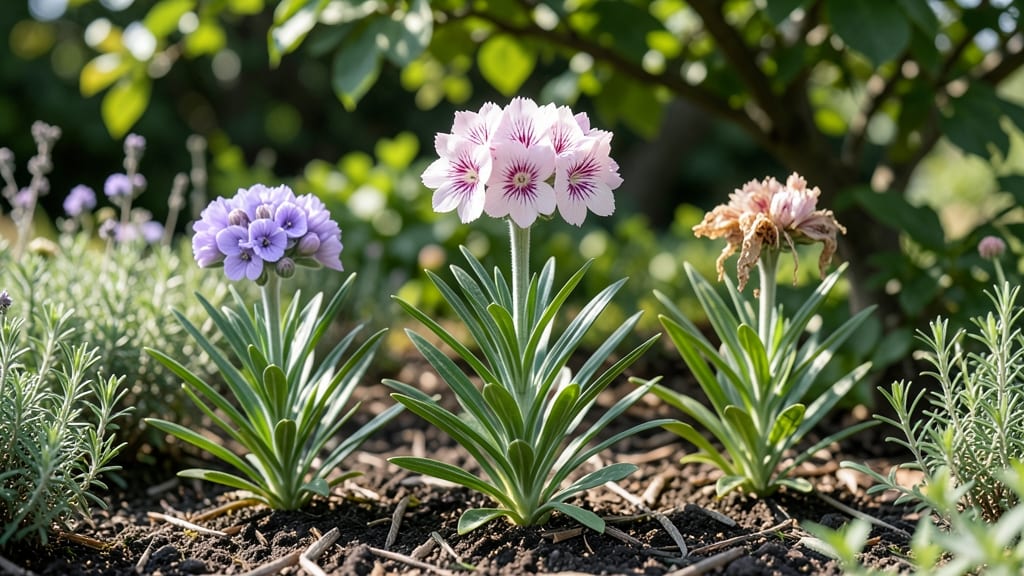
Dianthus is a perennial plant in most climates, thriving in USDA hardiness zones 3-9, though it may die back to the ground in winter before regrowing in spring. Some varieties are treated as annuals in colder regions due to frost sensitivity.
This hardy plant behaves like a true perennial in moderate climates, sending up fresh foliage and blooms each spring from roots that survive winter dormancy. 🌱 The key difference lies in its frost tolerance—while some dianthus varieties rebound beautifully after cold snaps, others simply can't handle harsh winters, forcing gardeners in colder zones to treat them as annuals.
I've found that proper mulching and choosing cold-resistant cultivars can make a huge difference in extending their perennial lifespan.
What's fascinating is how dianthus adapts: its leaves often turn brown and crispy during winter, but the crown stays alive underground, ready to burst back with vibrant blooms when temperatures rise.
This semi-hardy behavior sets it apart from both true annuals (which die completely) and evergreen perennials (which stay green year-round).
💡 In This Article
- Dianthus Perennial Lifecycle: Why It Dies Back and Regrows
- Best Dianthus Varieties for Perennial Gardening by Climate
Dianthus perennial lifecycle: why it dies back and regrows
Dianthus exhibits a fascinating survival strategy that sets it apart from true annuals and evergreens. When temperatures drop below 20°F, its aboveground growth enters a state of dormancy—similar to how many bulbs and perennials behave.
The plant's crown (the base where stems meet roots) contains specialized cells that can withstand freezing conditions by producing protective proteins and sugars that act like antifreeze. This allows the roots to remain alive even when the foliage appears completely dead, ready to regenerate when spring arrives.
The key mechanism here is called cold acclimation, where dianthus gradually prepares for winter by hardening its tissues. In zones 5-9, this process happens naturally, but in colder areas (zones 3-4), some varieties may not survive without protection.
What's unique is how dianthus stores energy—its roots build up starch reserves during the growing season that fuel the rapid regrowth of new shoots in spring. This is why you'll often see fresh green leaves emerging from what looked like dead mulch in early spring.
This semi-hardy behavior explains why dianthus is classified as a perennial in most climates but treated as an annual in harsh winters. The difference lies in the plant's ability to regenerate from its crown rather than from seeds.
Unlike true annuals (which complete their entire lifecycle in one season), dianthus can live for multiple years if its roots survive winter. However, unlike evergreen perennials (which maintain some foliage year-round), dianthus completely sheds its leaves in cold weather, making it appear dead until warmer temperatures return.
What most gardeners don't realize is that the timing of this dormancy is crucial. If you prune dianthus too late in fall, you might remove the emerging winter buds that would otherwise survive. The ideal time is after the first hard frost but before the ground freezes solid.
In my experience, varieties like 'Firewitch' and 'Matrona' show remarkable resilience, often pushing through snow to bloom earlier than expected—proof that these plants are more hardy than their delicate appearance suggests.
This lifecycle also explains why dianthus thrives in Mediterranean climates where winters are cool but not extreme. The plant's ability to handle 10-15°F dips makes it perfect for zones 7-9, where it can remain evergreen or semi-evergreen.
The trade-off comes in colder regions where even a 20°F night can cause dieback. This is why gardeners in zone 4 often treat dianthus as annuals—they'll get one glorious season of blooms before winter kills the crown completely.
Understanding this lifecycle helps explain why some gardeners report success with dianthus as perennials while others struggle.
The secret lies in proper winter care: using 3-4 inches of mulch (like straw or shredded leaves) can make the difference between a dead plant and one that surprises you with new growth in spring.
The mulch acts as insulation, maintaining soil temperatures just above freezing and protecting those vital crown cells from extreme cold.
What's truly remarkable is how quickly dianthus recovers. After winter, the roots can shoot up new growth in as little as 2-3 weeks when temperatures consistently stay above 50°F.
This rapid regrowth is one of the plant's most appealing traits for gardeners—it rewards patience with vibrant blooms that seem to appear almost magically after a long winter. 🌸