
Planting
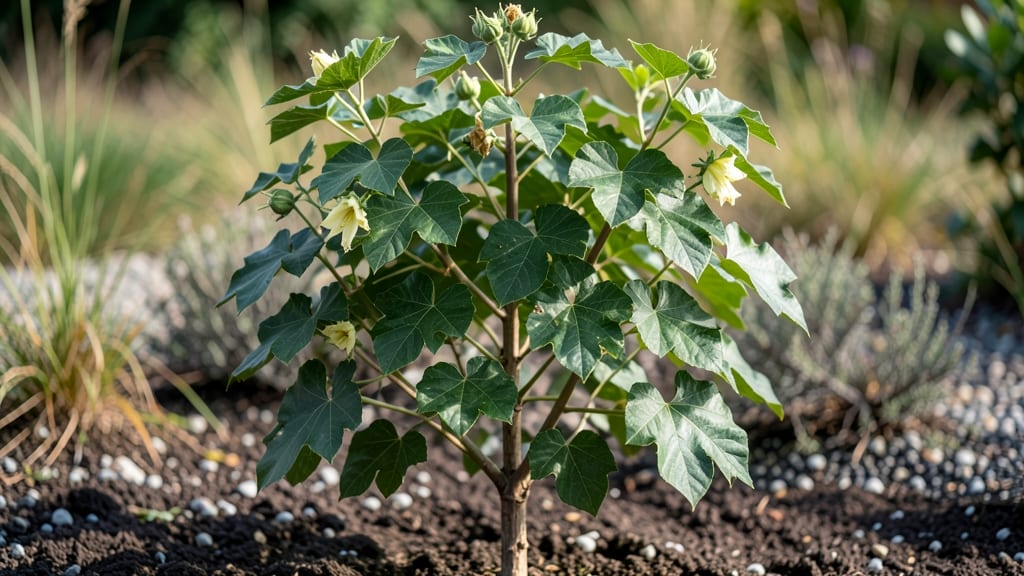
Cotton is not a true perennial plant, though it behaves like one in tropical climates by regrowing from the same root system. In temperate zones, it dies back annually after harvest, requiring replanting each season like an annual crop.
Cotton's confusing growth habits stem from its deep root systems, which can survive multiple seasons in warm climates where frost never kills them back to the ground. In tropical regions, gardeners often see cotton plants regrow year after year from the same roots, creating the illusion of perennial behavior. 🌱 However, this isn't true perennialism—it's more like a short-lived perennial that resprouts when conditions allow.
The key difference lies in temperate zones, where cotton plants die completely each winter, just like true annuals.
What throws gardeners off is that some cotton varieties develop woody stems and thick roots that persist underground, making them appear perennial at first glance. This woody growth is actually an adaptation to survive dry seasons in their native habitats, not a true perennial life cycle.
The confusion arises because many plants with similar root structures—like asparagus or rhubarb—are classified as perennials, but cotton's annual dieback in cooler climates keeps it firmly in the annual category botanically.
💡 In This Article
- Why Cotton Appears Perennial in Warm Climates
- Growing Cotton Like a Perennial: Practical Tips for Gardeners
Why cotton appears perennial in warm climates
Cotton's woody root systems are the primary reason it mimics perennial behavior in tropical regions. These roots can grow 2-3 feet deep and develop thick, woody structures that store nutrients and moisture, allowing the plant to survive dry seasons.
In areas without frost—like parts of India, Brazil, or Africa—these roots persist year-round, sprouting new shoots when conditions improve. 🌿 This regrowth creates the illusion of perennialism, but it's not the same as true perennials like lavender or asparagus, which have specialized underground storage organs like rhizomes or tubers.
The key difference lies in temperature sensitivity. Cotton plants evolved in subtropical and tropical climates where temperatures rarely drop below 50°F (10°C). When exposed to frost or freezing temperatures, the above-ground portions die back completely, just like annuals.
The roots may survive in mild winters, but the plant won't regenerate without warm soil temperatures (60°F/15°C) to stimulate new growth. This is why cotton behaves as an annual in temperate zones—its life cycle resets each spring, requiring new seeds to be planted annually.
Botanists classify cotton as a short-lived perennial or biennial in its native habitat, but this is a gray area. The confusion stems from its ability to regrow from the same root system in ideal conditions, similar to how some shrubs resprout after pruning.
However, unlike true perennials, cotton doesn't develop specialized structures like bulbs or crowns that guarantee survival through adverse conditions. Its survival strategy relies more on robust root systems than true perennial adaptations.
Consider the contrast between cotton's behavior and true perennials like strawberries. Strawberries produce runners that spread horizontally, creating new plants with independent root systems. Cotton, on the other hand, relies on a single, deep root mass that may or may not regenerate depending on climate.
This makes it behave like a perennial in warm climates but revert to annual behavior when frost enters the equation. 🌡️ The lack of true underground storage organs—like tubers or corms—keeps cotton firmly in the annual category botanically.
Another factor is cotton's native habitat. In the wild, cotton (Gossypium species) grows in regions with distinct wet and dry seasons. During dry periods, the plant goes dormant, conserving water in its deep roots. When rains return, new growth emerges from the same root system.
This cycle mimics perennial behavior, but it's an adaptation to seasonal drought rather than a true perennial life cycle. The plant's ability to "cheat" perennialism through root persistence is what confuses gardeners in tropical zones.
For example, in southern Florida, cotton plants might regrow from the same roots for 2-3 consecutive years without replanting, while in Georgia, they'd die back completely each winter.
This regional variation explains why cotton is sometimes called a "semi-perennial" in agricultural literature—it's neither fully annual nor fully perennial, but behaves differently based on climate. 🌍 The lack of a standardized classification reflects this botanical ambiguity.