
Flowers
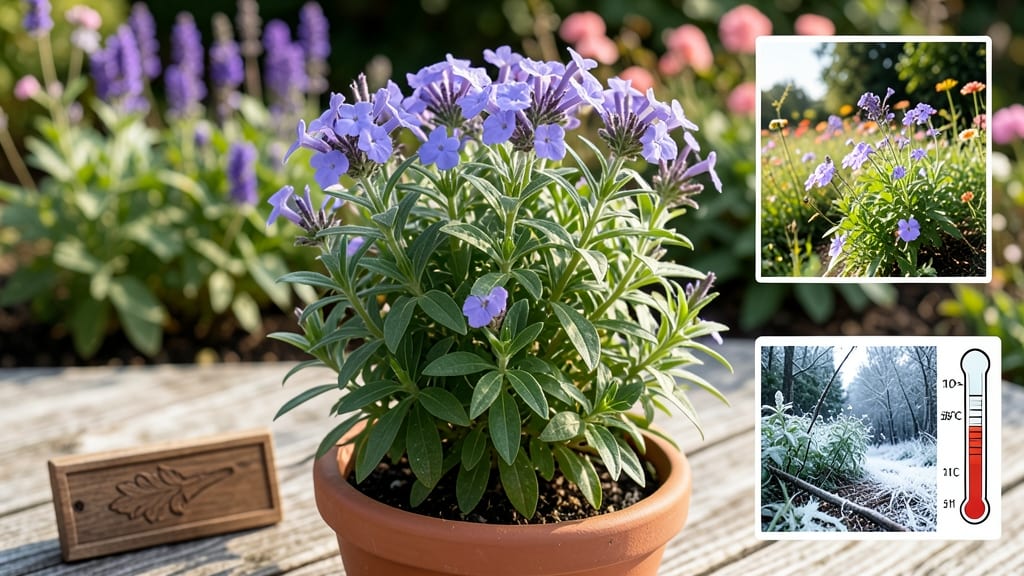
Angelonia isn't a true perennial in most cold climates, since it dies back completely when temperatures fall below 30°F (-1°C). However, its roots often survive to regrow in spring if protected, making it behave like a short-lived perennial in warmer zones or frost-free areas.
This hardiness difference comes down to your growing zone. In frost-free areas (USDA zones 9-11), Angelonia thrives year-round as a long-lived perennial, producing continuous blooms. 🌿 But in colder zones, even a single hard frost will kill the above-ground growth, though the root system may persist underground until spring.
I've seen gardeners in zone 7 successfully overwinter Angelonia by digging up tubers and storing them in cool, dry conditions—it's all about protecting those resilient roots from extreme cold.
What makes Angelonia unique is its ability to bounce back. Unlike true annuals that complete their lifecycle in one season, Angelonia's root system often survives winter dormancy, ready to sprout new growth when temperatures warm.
This explains why some gardeners treat it as a perennial in marginal climates, while others simply replant new seedlings each spring. The key is understanding your local frost patterns and adjusting care accordingly.
💡 In This Article
- Angelonia’s Cold-Hardiness and Dieback Behavior
- How to Overwinter Angelonia in Cold Climates
Angelonia’s cold-hardiness and dieback behavior
Angelonia's survival strategy hinges on its root system, which can endure temperatures down to 20°F (-7°C) when dormant, though the foliage dies back at 30°F (-1°C). This explains why it behaves like a tender perennial in zones 8-11 but acts as an annual in colder regions.
The plant enters dormancy through a process called "cold acclimation," where sugars accumulate in the roots and cell membranes strengthen to prevent ice crystal formation—similar to how some bulbs survive winter.
In containers, Angelonia's cold tolerance drops dramatically because potted plants lose heat faster than in-ground specimens.
A 5°F (3°C) difference in minimum temperature can mean the difference between survival and death. 🌱 The root zone insulation provided by soil explains why ground-planted Angelonia often regrows from roots even after severe dieback, while container-grown plants may fail entirely.
This is why gardeners in zone 7 often dig up tubers before the first frost rather than risking winterkill.
What's fascinating is how Angelonia's regrowth works. When spring temperatures reach 50°F (10°C), the roots begin metabolizing stored starches to produce new shoots. This process can take 2-4 weeks depending on soil moisture and warmth.
I've observed that plants overwintered in containers often emerge 10-14 days faster than those left in the ground, likely due to better temperature control in protected environments.
There's a common misconception that Angelonia's dieback means total plant death. In reality, the root crown often survives as long as it's protected by 3-4 inches (7-10 cm) of mulch or soil.
The plant's natural defense mechanism involves producing a protective layer of suberin—a waxy substance that prevents water loss and pathogen entry during dormancy. This explains why some gardeners successfully overwinter Angelonia in zone 6 with proper mulching techniques.
Comparing Angelonia to true perennials like lavender reveals key differences. While lavender's woody stems provide structural protection against cold, Angelonia relies entirely on its root system. This makes it more vulnerable to freeze-thaw cycles that can damage roots.
The plant's native habitat in South America's temperate zones explains its ability to handle brief cold snaps but not prolonged freezing.
Understanding these mechanics helps explain why Angelonia thrives as a perennial in frost-free zones but requires annual replanting in colder climates.
The 30°F (-1°C) threshold isn't arbitrary—it represents the point where ice crystal formation in plant tissues becomes irreversible without protective measures. 💫 This biological limit shapes all overwintering strategies for the plant.