
Planting
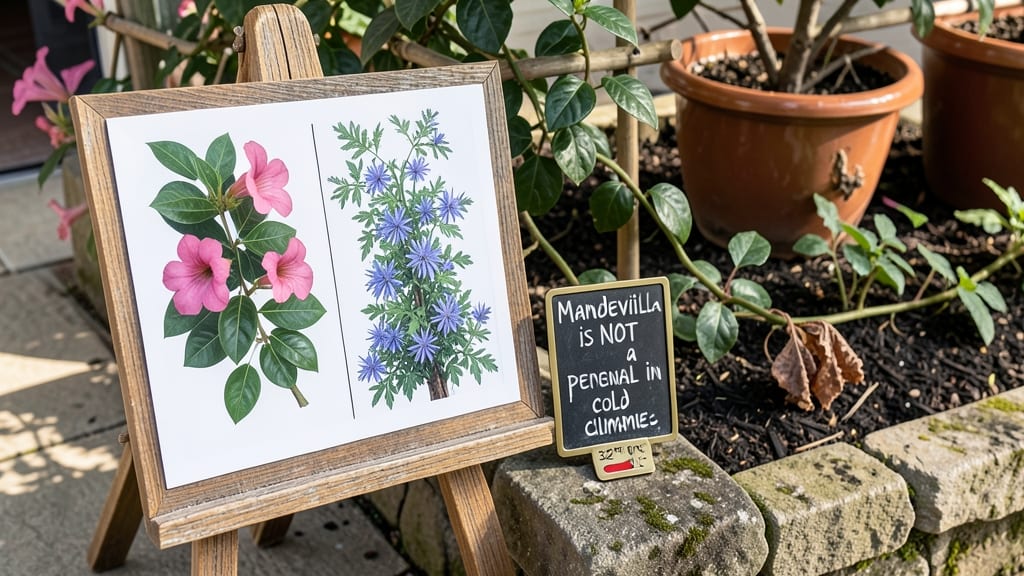
A Dipladenia plant is not a true perennial in cold climates, as it dies back to the ground in freezing temperatures but can regrow from its tuberous roots if protected or replanted in warmer zones. Its hardiness varies by cultivar and winter conditions.
A Dipladenia plant behaves more like a seasonal tropical than a traditional hardy perennial because its growth cycle depends on temperature. 🌱 While it may appear to die in winter, the tuberous roots store energy underground, allowing regrowth when conditions warm up again.
This makes it a semi-perennial in marginal climates—reliable only if you take protective measures during frost.
What sets Dipladenia apart is its cultivar-specific resilience. Some varieties tolerate brief cold snaps better than others, but none survive prolonged freezing without intervention.
The key difference from true perennials lies in its root behavior: instead of maintaining above-ground growth through winter, it goes dormant until spring triggers new shoots.
For gardeners in colder zones, this means treating Dipladenia more like an annual with survival potential than a low-maintenance perennial. The good news? With proper winter care—like mulching, container overwintering, or digging up tubers—you can extend its lifespan for multiple seasons.
💡 In This Article
- Dipladenia’s Root System and Cold Survival Mechanisms
- Winter Care Strategies for Dipladenia in Cold Zones
Dipladenia’s root system and cold survival mechanisms
Dipladenia stores its energy in thick, fleshy roots that resemble small tubers—similar to sweet potatoes but more fibrous. These roots act like natural batteries, converting starches into sugars during the growing season to fuel regrowth when temperatures rise.
Unlike true perennials (like hostas or peonies), which maintain some root activity year-round, Dipladenia’s roots go completely dormant when exposed to consistent temperatures below 40°F. This dormancy is what causes the above-ground stems to blacken and collapse, tricking many gardeners into thinking the plant is dead.
The science behind this survival strategy involves a process called cold acclimation. Dipladenia’s roots contain high levels of antifreeze proteins, which prevent ice crystals from forming in their cells—similar to how fish in icy waters survive. However, these proteins only work within a narrow range (32-45°F).
When temperatures drop below 30°F for more than 24 hours, cell membranes rupture, and the roots lose viability. This explains why some Dipladenia varieties (like the cold-tolerant 'Red Lip' cultivar) fare better than others in marginal climates.
What makes Dipladenia unique is its regeneration window. Even if the roots appear shriveled after winter, they can sprout new growth within 2-4 weeks of consistent warmth and moisture—often before the soil reaches 55°F.
This rapid rebound is possible because the tubers contain concentrated growth hormones that activate when conditions improve. In contrast, true perennials like lavender or Russian sage maintain some green foliage through winter, relying on a different survival mechanism entirely.
Consider this comparison: A true perennial (like daylilies) might lose leaves but keeps its crown alive underground, ready to shoot up when spring arrives. Dipladenia, however, fully shuts down—its stems turn to mush, and only the roots remain.
This is why gardeners in USDA Zones 8-10 often treat it as a perennial, while those in Zones 7 and colder must take active steps to protect it. The root system’s ability to regenerate depends entirely on whether it survived the freeze.
One fascinating detail is how Dipladenia’s roots prioritize energy storage. During the growing season, the plant diverts up to 60% of its photosynthates (sugars produced via photosynthesis) into the roots, creating a reserve that can sustain regrowth for 6-8 weeks without new leaves.
This is why over-fertilizing in late summer can backfire—the plant may not have enough time to store sufficient energy before winter sets in.
For those curious about the visual cues, healthy Dipladenia roots look plump and white when fresh, while frozen or dehydrated roots appear shriveled and dark brown.
When you slice into a viable tuber, you’ll see concentric rings of growth layers, much like an onion, each representing a year of stored energy. This is your best indicator of whether the plant will bounce back in spring.