
Plants
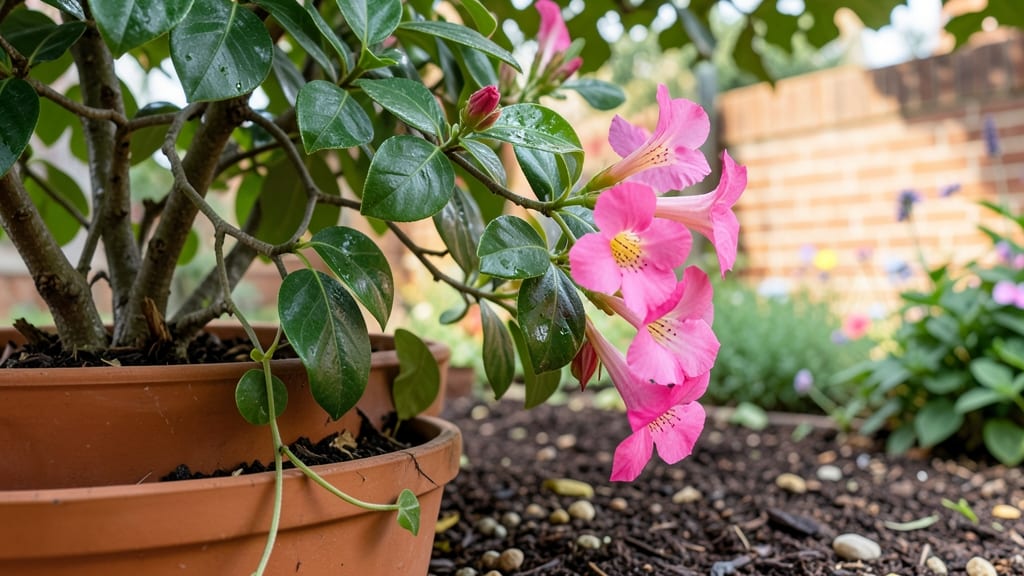
The dipladenia plant is an annual or perennial that behaves differently depending on your climate—it dies back to the ground when frost arrives but regrows from its root system each spring as soon as temperatures warm. Their cold tolerance varies by variety, with hardier types enduring mild winters while tropical types require winter protection.
The dieback-and-regrowth cycle works because dipladenia stores energy in thickened roots or tubers during dormancy, much like a built-in survival mechanism. 🌱 The plant waits for consistent soil temperatures above 55°F before sending up new growth, which is why you’ll often see fresh shoots appearing in early spring even after a complete winter kill.
What’s fascinating is how some varieties can even survive brief freezes if protected by mulch or containers.
The key difference between annual and perennial behavior lies in how they handle winter: while true perennials maintain some above-ground structure, dipladenia goes completely dormant. This makes them act more like tender perennials—plants that die back but can be coaxed back to life with proper care.
Their adaptability is what makes them so popular in warmer regions.
💡 In This Article
- How Dipladenia Survives Winter: Root System and Regrowth Process
- Extending Dipladenia’s Lifespan: Winter Care Strategies for Different Climates
How dipladenia survives winter: root system and regrowth process
Dipladenia plants rely on specialized underground structures to survive winter's chill. These structures—often thickened roots or tubers—store carbohydrates and nutrients like a natural battery, allowing the plant to shut down above-ground growth when temperatures drop below 40°F.
This dormancy mechanism is similar to how sweet potatoes or dahlias overwinter, but dipladenia's roots are more delicate and require specific conditions to regenerate. The energy reserves can sustain the plant for months, even when the foliage turns black and crispy.
The regrowth process kicks off when soil temperatures consistently reach 55-60°F—this triggers hormonal signals that awaken the dormant roots. You'll often notice the first green shoots emerging in late winter or early spring, just as the frost-free period begins.
The timing varies by climate: in Zone 9, regrowth might start by February, while Zone 7 gardeners may not see new growth until April. What's fascinating is how these shoots emerge from the same root zone where last year's plant died back, creating a perfect circle of growth.
This biological cycle explains why dipladenia behaves like a perennial in warm climates but acts more like an annual in colder regions. The key difference is the root system's resilience: while the above-ground parts freeze, the roots remain protected by the soil's insulating properties.
In tropical varieties, these roots can even survive brief freezes if protected by 3-4 inches of mulch, demonstrating how nature has equipped dipladenia with built-in survival strategies.
For gardeners in transitional zones (like Zone 8), the plant's ability to regrow from roots means it can technically live for years if winter conditions aren't extreme. However, each year's growth depends on how well the roots were protected during dormancy.
Poor winter care can weaken the root system, leading to slower or less vigorous regrowth the following spring—a clear sign the plant is struggling to maintain its energy reserves.
What most people don't realize is that dipladenia's regrowth timing is influenced by more than just temperature. Moisture levels and daylight hours also play crucial roles. The plant needs consistently moist (but not soggy) soil to resume growth, which is why early spring watering is critical.
Once the new shoots appear, they grow rapidly—sometimes 2-3 inches per week**—as they race to take advantage of the warming season before potential late frosts.
This biological adaptation explains why dipladenia thrives in regions with mild winters but struggles in areas with prolonged freezing. The plant's survival strategy is all about timing: storing energy when conditions are favorable and waiting for the perfect moment to regrow when temperatures rise. 🌱