
Flowers
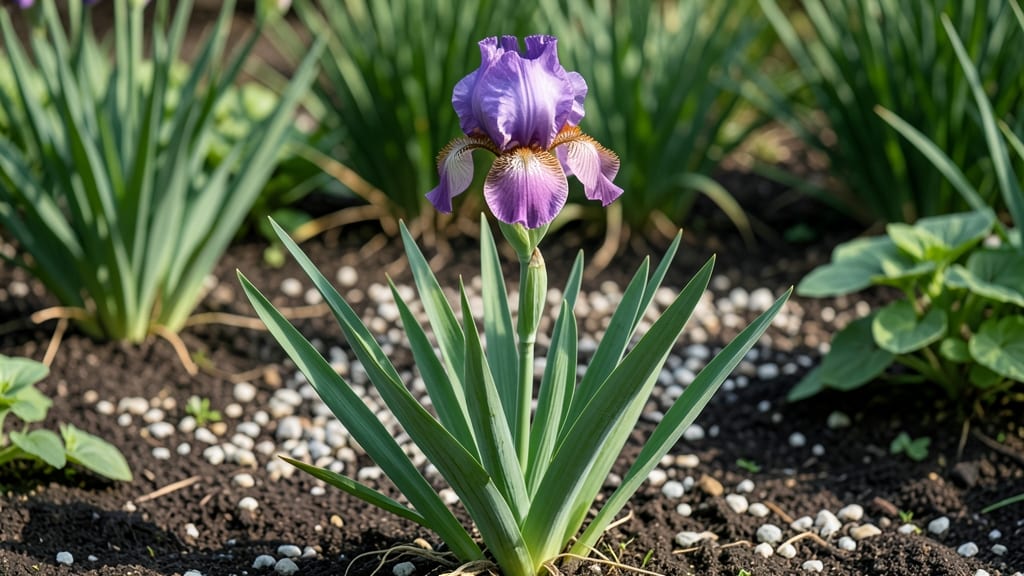
Whether iris flowers are annual or perennial depends on your climate—most thrive as perennials in temperate zones, reblooming yearly from rhizomes, while tropical varieties often act as annuals because they can't survive frost. The key factor is cold hardiness, with hardy species overwintering naturally and others needing annual replanting.
Most gardeners plant irises expecting them to return year after year, and that's true for hardy perennial varieties like the classic bearded iris, which can survive USDA zones 3-9. 🌱 These plants store energy in their rhizomes or bulbs during winter, then burst back to life with spring's warmth.
The exception? Tropical irises, which lack frost resistance and must be treated as annuals in colder regions. Even within perennial types, some varieties may die back completely in winter only to regrow from the roots—a natural survival strategy that can be mistaken for annual behavior.
The real secret lies in rhizome health and proper winter care. In colder zones, mulching or covering rhizomes with straw helps protect them from extreme temperatures, while in warmer climates, tropical irises may need to be dug up and stored indoors during winter months.
This adaptability is what makes irises so popular—they can adjust their growth patterns based on where you live.
💡 In This Article
- Understanding Iris Cold Hardiness Zones
- Choosing the Right Iris for Your Climate
Understanding iris cold hardiness zones
The lifespan of iris flowers hinges on their ability to endure winter temperatures, which is why cold hardiness zones (USDA zones 3-9) determine whether they behave as perennials or annuals.
Hardy irises like the Siberian iris or bearded iris can survive temperatures down to -40°F (-40°C) in zone 3, thanks to specialized rhizomes that store carbohydrates and water. These underground structures enter dormancy when temperatures drop below 40°F (4°C), slowing metabolic processes to conserve energy until spring.
Rhizomes act like nature's built-in survival kits, with thick, fleshy roots that insulate the plant's growing point.
When frost arrives, the above-ground foliage yellows and dies back, but the rhizome remains alive just below the soil surface. 🌱 This dormant state is triggered by shorter daylight hours and cooler temperatures, a process called vernalization.
In contrast, tropical irises like the Louisiana iris lack this cold tolerance, with their bulbs unable to withstand anything below 20°F (-6°C)—making them annuals in colder climates unless protected.
The key difference between rhizome and bulb storage adaptations explains why some irises regrow while others don't. Rhizomatous irises spread horizontally, creating multiple growth points that increase survival odds, while bulbous types rely on a single central bulb.
This is why bearded irises often return stronger each year—their rhizomes can regenerate even if partially damaged by freeze-thaw cycles. In zone 9 and warmer, where winters rarely drop below 25°F (-4°C), these same varieties thrive without dormancy, blooming continuously.
What most gardeners overlook is how soil temperature affects rhizome health. Even in cold zones, improper planting depth can expose rhizomes to lethal freezing. The top of a rhizome should sit at or slightly above soil level—burying it too deep suffocates it, while leaving it exposed risks desiccation.
This delicate balance explains why some "perennial" irises fail to return: they weren't given the right winter conditions to survive. 💫
Consider these hardiness extremes: The hardy German iris thrives in zone 3, while the delicate Japanese iris tops out at zone 8. The transition between zones 7-9 is particularly tricky, where some irises may survive winters but produce weaker blooms the following season.
This "borderline" behavior is why gardeners in these zones often experiment with mulching or microclimate protection to push their irises toward perennial performance.
For tropical regions (zones 10-11), the challenge is heat stress rather than cold. Many tropical irises struggle with summer dormancy unless given afternoon shade and consistent moisture.
This creates a paradox: what behaves as an annual in cold climates might act as a short-lived perennial in hot ones, where winter is the real threat rather than summer heat. The solution? Choose varieties bred for your specific climate extremes.