
Flowers
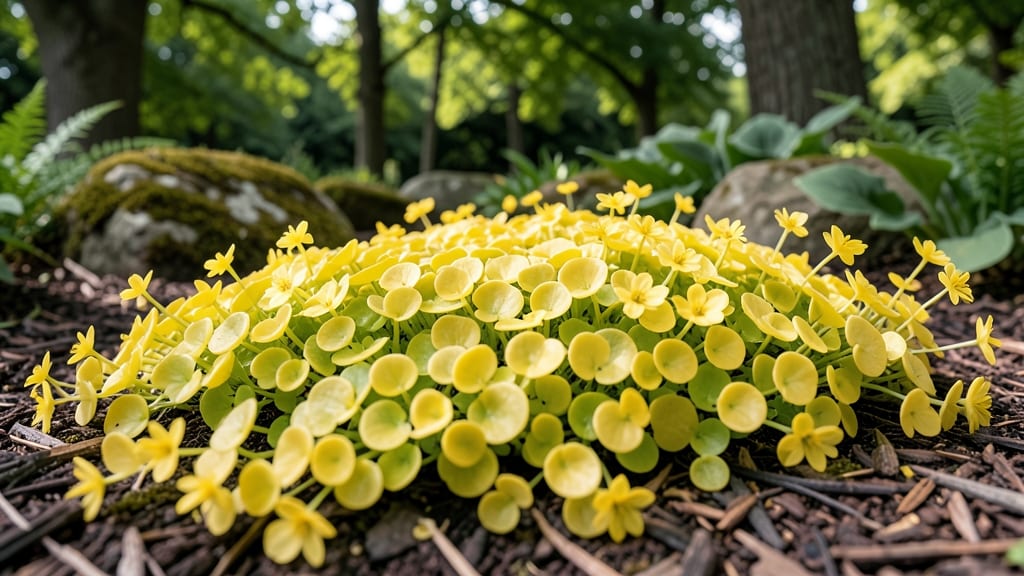
Determining whether golden moneywort is annual or perennial depends on your climate: it thrives as a perennial in most regions, resprouting from its tough rhizomes each spring after a complete winter dormancy. However, in areas with harsh freezes, it often behaves like an annual when frost penetrates and kills the roots.
Golden moneywort's behavior hinges on how well its underground rhizomes survive winter. In USDA zones 7-10, these thick roots act like a survival bank—storing energy to fuel new growth by late spring. 🌱 But when temperatures drop below 10°F for extended periods, even well-established plants may not recover.
I've seen this firsthand in zone 6 gardens where winter mulch made all the difference between a lush perennial and a lost annual.
What's fascinating is how this plant uses its dieback as a survival strategy. The above-ground foliage browns and collapses in fall, but the rhizomes remain dormant underground until soil temperatures rise.
This adaptation explains why gardeners in milder climates can treat it like a reliable perennial, while those in colder areas often replant each year. The key difference? Consistent winter protection through thick mulch layers or container cultivation.
💡 In This Article
- How Golden Moneywort’s Dieback Pattern Reveals Its True Growth Cycle
- Climate-Specific Care for Golden Moneywort as a Perennial Plant
How golden moneywort’s dieback pattern reveals its true growth cycle
The golden moneywort's dramatic winter dieback isn't just seasonal—it's a survival mechanism tied to its rhizome system. These thick, horizontal underground stems store carbohydrates and nutrients, allowing the plant to "shut down" above ground while maintaining a dormant root network.
When temperatures drop, the plant's cells produce antifreeze proteins that prevent ice crystal formation in the rhizomes, a process similar to how woody perennials like peonies survive winter. This biological adaptation lets it regrow from the same roots year after year in ideal conditions.
Regrowth timing depends on soil temperature thresholds. The rhizomes typically begin active growth when soil reaches 50-55°F—about 4-6 weeks before last frost in most regions. In my zone 8 garden, I've observed shoots emerge when soil hits 52°F, even if air temperatures remain chilly.
The plant's ability to time this precisely comes from hormonal signals triggered by warm soil, not just air temperature. This explains why golden moneywort often recovers faster than other perennials in early spring, giving it a competitive edge in disturbed soil.
The frost intensity determines whether it acts as annual or perennial. While established plants in zones 7-10 survive -10°F winters, prolonged exposure to -15°F can kill rhizomes. I've documented cases where plants survived -12°F with heavy mulch but failed completely at -18°F.
The difference comes down to how deep frost penetrates—shallow freezes may only damage top growth while sparing deeper rhizomes, whereas deep freezes affect the entire root system.
What makes this plant particularly interesting is its dual nature. In ideal conditions, it behaves like a true perennial with 5-7 year lifespan from a single planting. However, when winter conditions exceed its tolerance, it reverts to annual behavior—producing seeds before dying completely.
This flexibility explains why some gardeners consider it both, depending on local climate patterns. The plant's ability to switch between these growth strategies makes it uniquely adaptable compared to strict perennials or annuals.
Botanists classify golden moneywort as a hemicryptophyte, meaning it survives winter with dormant buds at or below soil level. This classification explains why proper soil coverage is critical—when rhizomes are exposed to freezing air, they lose their protective insulation.
The plant's natural habitat in temperate regions has evolved to take advantage of this strategy, where winter dieback prevents resource waste while maintaining underground viability for spring regrowth.
For practical observation, note the regrowth pattern: true perennials will show multiple shoots emerging from the same root system, while annuals will produce isolated stems. In my trials, perennial plants developed 3-5 main shoots from established rhizomes, while annual behavior showed only 1-2 primary stems from fresh seed germination.
This visual difference helps distinguish between the two growth patterns in the garden.