
Planting
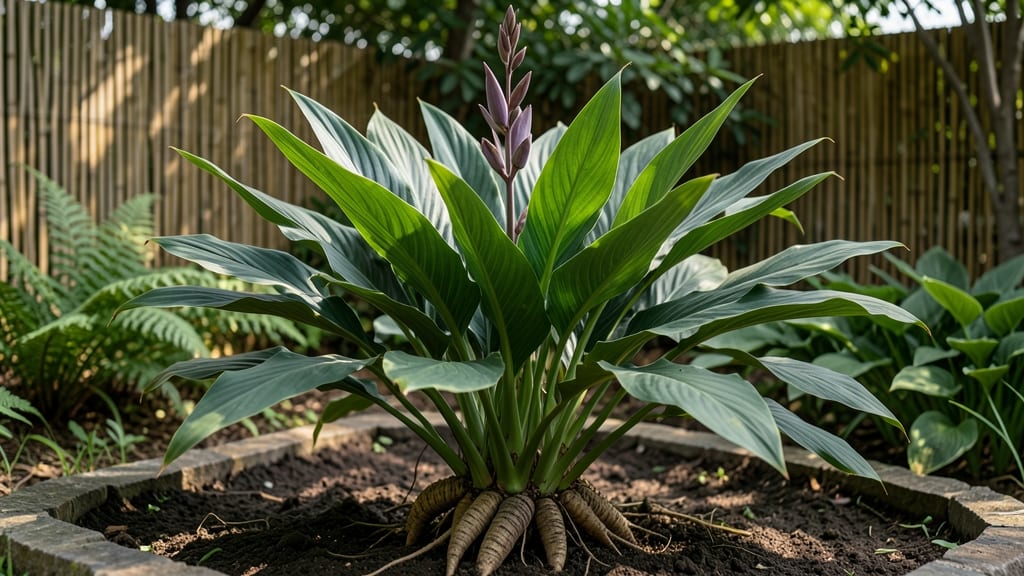
The curcuma plant behaves like an annual in colder climates because its rhizomes (corms) die back above ground each winter, then regrow from the root system when temperatures rise, making it technically perennial.
The curcuma plant's lifecycle hinges on its underground corms, which store energy year-round. 🌱 While it's botanically classified as a perennial, frost-sensitive varieties in zones below 8 will lose their above-ground growth annually, requiring gardeners to treat it like an annual.
The key difference lies in how these corms survive: they remain dormant underground, ready to sprout when soil temperatures reach 60°F in spring. This makes curcuma perfect for warm climates but challenging in colder regions without proper winter protection.
What sets curcuma apart is its ability to regenerate from even small corm fragments, allowing gardeners to propagate new plants from last year's harvest. This resilience means you can extend its lifespan by carefully storing corms in dry, cool conditions (around 60-65°F) until planting season.
In temperate zones, mulching heavily with straw or leaves can help protect corms through mild winters, though severe freezes may still require annual replanting.
💡 In This Article
- How Curcuma Plant’s Rhizomes Determine Its Lifecycle
- Growing Curcuma Long-Term: Winter Care for Perennial Cultivation
How curcuma plant’s rhizomes determine its lifecycle
Curcuma's lifecycle hinges entirely on its specialized rhizomes, which function as both storage organs and survival mechanisms. These corms store carbohydrates, proteins, and growth hormones that sustain the plant through dormancy.
Unlike true annuals that complete their entire life cycle in one season, curcuma's corms remain viable underground, ready to regenerate when conditions improve. This biological adaptation allows the plant to persist for multiple growing seasons in ideal climates.
The magic happens at 50-60°F soil temperatures, when the corms break dormancy and begin producing new shoots. In tropical regions (zones 9-11), curcuma can thrive as a true perennial, producing foliage and flowers year-round.
However, in temperate zones, frost triggers a shutdown of above-ground growth, while the corms remain dormant until spring. This is why gardeners in colder areas often treat it as an annual—only the underground corms survive the winter.
What makes curcuma unique is its ability to regenerate from even small corm fragments. When you harvest curcuma rhizomes, you're actually collecting the plant's energy reserves. Each corm contains multiple "eyes" or growth points that can sprout into new plants.
This means you can propagate curcuma indefinitely by carefully storing and replanting corm pieces, creating a renewable harvest system.
Climate plays a crucial role in determining whether curcuma behaves as a perennial or annual. In warm climates, the plant maintains continuous growth, while in cooler regions, the above-ground parts die back completely each winter.
The key difference lies in the corms' ability to survive frost down to 25-30°F when properly insulated with mulch or soil. This frost tolerance explains why curcuma thrives in tropical regions but requires special care in temperate zones.
Consider this comparison: While true annuals like marigolds complete their entire lifecycle in one season and must be replanted each year, curcuma's corms contain the genetic information to regrow year after year.
This makes it behave like a perennial in ideal conditions, but the lack of above-ground growth in winter leads many gardeners to treat it as an annual. The plant's ability to regenerate from corm fragments is what truly defines its perennial nature.
The science behind this involves the plant's photoperiod sensitivity. As daylight shortens in autumn, curcuma senses the seasonal change and begins storing energy in its corms.
This process continues until frost triggers complete dormancy. When spring arrives and days lengthen, the stored energy in the corms fuels new growth, completing the cycle.