
Flowers
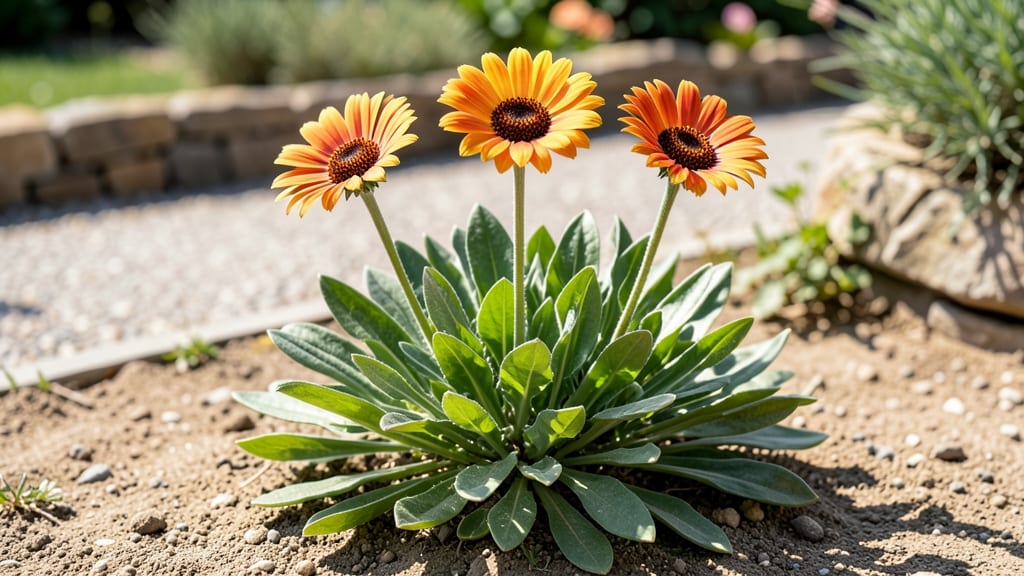
Whether gazania plants are annual or perennial depends on your climate: they act as frost-sensitive annuals in cold zones, dying back below 40°F, but in warmer regions, their roots survive winter, regrowing each spring as tender perennials.
This dual behavior stems from gazania's tropical origins—naturally adapted to mild winters but easily killed by frost. 🌱 The confusion arises because their root systems persist in frost-free areas, allowing regrowth, while northern gardeners typically treat them as season-long bloomers that must be replanted yearly.
If you live in Zone 8 or warmer, you can often coax them back with minimal winter protection, while colder climates require treating them as annuals for consistent summer color.
The key difference lies in their cold tolerance: true perennials survive 20°F or lower, but gazania's roots only endure brief dips to 30°F—making them "tender perennials" rather than hardy ones. This explains why they're often sold as annuals in northern nurseries despite their perennial tendencies in suitable climates.
💡 In This Article
- Why Gazania Dies Back in Cold Weather
- How to Extend Gazania’s Growing Season
Why gazania dies back in cold weather
Gazania's cold sensitivity stems from its tropical African origins, where it evolved in regions with consistent warmth and minimal frost. The plant's cellular structure lacks the protective mechanisms found in true perennials, like antifreeze proteins that prevent ice crystal formation in hardy plants.
When temperatures dip below 40°F, gazania's above-ground growth freezes and dies, but its roots often survive if protected from prolonged cold—this is why they regrow in warmer climates.
The key difference between gazania and true annuals lies in their root systems. Annuals complete their life cycle in one season, dying entirely when conditions turn harsh. Gazania, however, stores energy in its roots during dormancy, allowing regrowth when temperatures rise above 50°F.
This makes them "tender perennials"—plants that behave like perennials in frost-free zones but die back like annuals in colder areas. 🌡️ For comparison, hardy perennials like coneflowers survive -20°F winters, while gazania's roots typically perish below 20°F without protection.
This biological mechanism explains why gazania thrives in USDA Zones 8-11 but struggles in colder regions. The plant's leaves and stems contain high moisture content (about 85% water), which freezes and ruptures cell walls when exposed to frost.
Even a light frost can trigger irreversible damage to the foliage, though the roots may remain viable for weeks in mild winters. This is why gardeners in Zone 7 often see gazania regrow after a brief cold snap—only prolonged freezing kills the entire plant.
What most gardeners don't realize is that gazania's dormancy isn't true hibernation like bulbs. Instead, it's a survival strategy where the plant sheds all above-ground growth to conserve energy in its roots. This process is similar to how succulents survive drought, but gazania's response is temperature-triggered rather than water-dependent.
The root system can remain dormant for months, waiting for spring warmth to restart growth—a trait that makes it behave like a perennial in suitable climates.
To understand this better, consider how gazania compares to other tender perennials like geraniums. Both plants die back in frost but regrow from roots in warmer areas. However, gazania's roots are less cold-hardy—geraniums can survive brief dips to 25°F, while gazania's roots typically perish below 28°F without protection.
This explains why gazania is rarely sold as a perennial in northern nurseries, despite its perennial tendencies in frost-free regions.
The confusion arises because gazania's classification depends entirely on climate. In cold climates, it behaves like an annual because the entire plant dies back. In warmer zones, it acts as a perennial because the roots survive winter.
This dual nature is why gardeners often see gazania labeled differently depending on their region—annual in northern catalogs, perennial in southern ones. The biological reality lies somewhere in between. 🌱