
Flowers
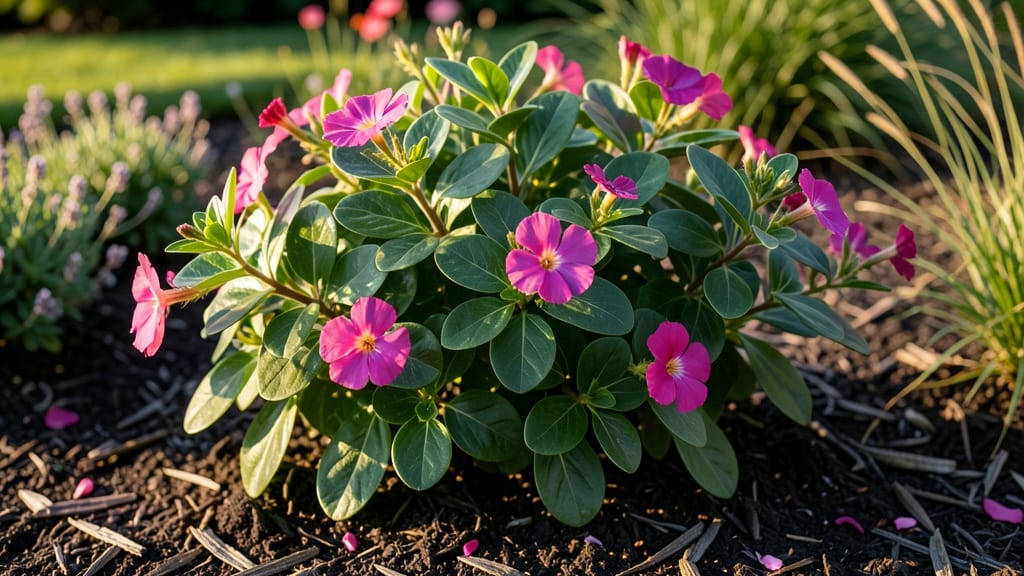
Deciding whether vinca vine is annual or perennial depends on your climate: it thrives as a perennial in warm zones but dies back to the roots each winter in colder regions, regrowing when temperatures consistently stay above 50°F (10°C).
This behavior comes down to its hardiness—vinca vine stores energy in its root system during dormancy, allowing it to bounce back once spring arrives. 🌱 In colder zones (USDA 7 and below), the above-ground growth will freeze, but the roots remain alive underground until warm weather triggers new shoots.
Think of it like a hibernating plant: it’s not truly dead, just waiting for the right conditions to return.
What makes this interesting is how quickly it recovers—sometimes within just a few weeks of consistent warmth.
If you live in a marginal zone, proper winter care (like extra mulch or protective cover) can make all the difference in whether your vinca returns as a perennial or needs replanting each year.
💡 In This Article
- How Vinca Vine’s Perennial Growth Cycle Works in Cold Zones
- Tips for Overwintering Vinca Vine in Cold Climates
How vinca vine’s perennial growth cycle works in cold zones
The key to understanding vinca vine’s behavior lies in its root system, which acts like a biological battery. Vinca stores carbohydrates in its fibrous roots during the growing season—think of it as saving energy for a rainy day.
When temperatures drop below 32°F (0°C), the above-ground foliage freezes, but the roots remain dormant, protected by a natural antifreeze-like compound called proline that prevents cellular damage. This is why vinca survives winters in zones 7-11 as a perennial, even though it looks dead above ground. 🌱
Regrowth kicks in when soil temperatures consistently stay above 50°F (10°C) for at least 7-10 days. At this point, the roots begin metabolizing stored energy to produce new shoots.
The timing varies by region—gardeners in zone 8 might see sprouts by early March, while those in zone 7 could wait until April.
What’s fascinating is how vinca prioritizes root health over rapid growth: if winter damage occurs, the plant will delay regrowth until it’s confident the roots are stable enough to support new foliage.
This survival strategy is similar to other cold-hardy perennials like daylilies or hostas, but vinca’s roots are particularly resilient. Studies show vinca roots can survive brief exposures to -5°F (-21°C) if they’re well-mulched, though prolonged cold below 20°F (-7°C) increases the risk of dieback.
The plant’s ability to regenerate from just a few inches of root makes it incredibly adaptable—even if 90% of the root system is damaged, the remaining portion can often recover. 💪
Here’s where USDA hardiness zones come into play: vinca is officially rated for zones 7-11, but its performance varies. In zone 7, it may struggle without winter protection, while in zone 10, it grows as a true perennial with minimal care.
The transition zone (zone 7-8) is where vinca’s behavior shifts—sometimes it returns reliably, other years it may need help. This variability is why gardeners in marginal zones often treat it as a "semi-perennial," meaning it might not survive every winter without intervention.
What most gardeners don’t realize is how vinca’s growth cycle is tied to photoperiod (day length) as much as temperature. As days lengthen in spring, the roots detect increased light exposure through a process called photomorphogenesis, triggering hormone production that stimulates shoot growth.
This dual reliance on temperature and light explains why vinca sometimes regrows unevenly—some stems may appear first in sunnier microclimates before spreading to shadier areas. 🌿
For those curious about the science, vinca’s dormancy is a classic example of bud dormancy, where the plant’s growth points (buds) remain inactive until specific environmental cues are met.
Unlike true annuals, which complete their life cycle in one season, vinca’s roots contain meristematic cells that can reactivate year after year, provided they’re not killed by extreme cold or drought. This biological mechanism is what allows vinca to cheat death in cold climates—literally.