
Flowers
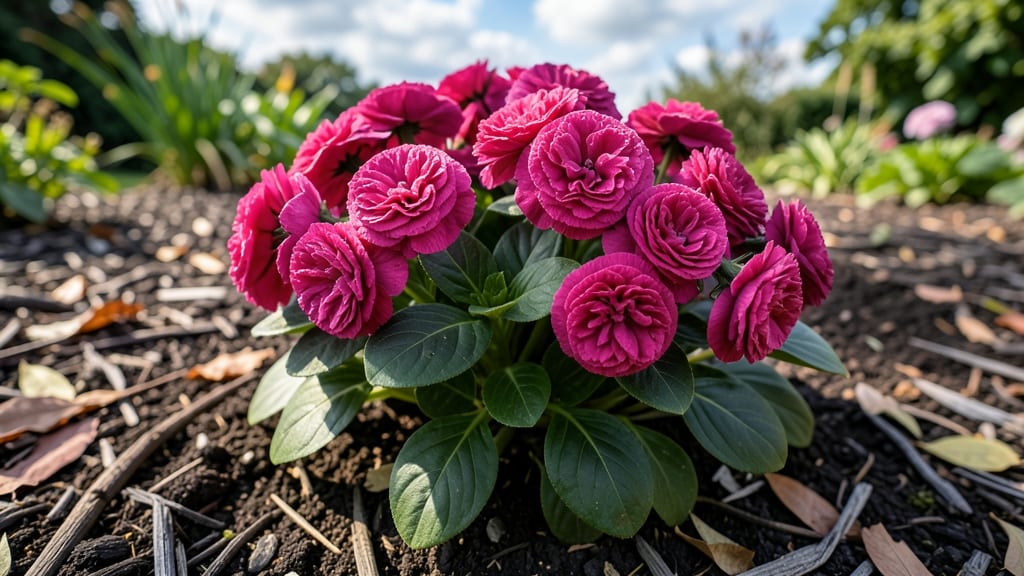
Double impatiens function as an annual or perennial, completing their life cycle in one season before dying back completely in colder climates, though they may self-seed or regrow from tubers in warmer regions.
Determining whether double impatiens are annual or perennial hinges entirely on your hardiness zone. 🌱 In colder climates (USDA zones 3-7), these plants behave like true annuals—they thrive through spring and summer, bloom profusely, then succumb to frost without returning.
However, in frost-free areas (zones 8-11), they often persist as self-sustaining plants, producing new growth from seed or underground tubers each year. This makes them semi-perennial in tropical conditions but annuals everywhere else.
The key difference lies in their frost tolerance: double impatiens cannot withstand temperatures below 32°F. Even a light freeze will kill the foliage, and since they don't have true woody stems, they won't regenerate from established roots like some perennials.
Instead, they rely on seed germination or tuber survival in protected microclimates to continue their cycle.
💡 In This Article
- How Climate Affects Double Impatiens’ Life Cycle
- Pro Tips for Extending Double Impatiens’ Season
How climate affects double impatiens’ life cycle
Double impatiens thrive as annuals in most climates because their biology is tightly linked to temperature. These plants originate from tropical regions where they evolved without exposure to freezing temperatures. When grown in zones where frost occurs (below 32°F), their cells rupture from ice crystal formation, causing irreversible damage.
Unlike hardy perennials such as hostas or daylilies, double impatiens lack protective mechanisms like deep root systems or insulating bark to survive winter.
Their life cycle is triggered by warm temperatures—typically between 65-75°F—which stimulate rapid growth and flowering. In tropical zones (8-11), where winters stay above 40°F, double impatiens often persist as semi-perennials. They produce underground tubers that store energy, allowing regrowth from the same rootstock when conditions warm again.
This is similar to how caladiums or cannas behave in frost-free climates, but with less robust survival structures.
Light exposure also plays a critical role. Double impatiens require partial shade (3-6 hours of morning sun) to prevent leaf scorch, but they won’t flower well in deep shade.
In colder regions, gardeners often treat them as annuals because the plants exhaust their energy producing flowers and seeds before frost arrives, leaving no reserves for regrowth. The contrast with begonias—another shade-loving annual—is striking: begonias can sometimes survive mild winters in containers, while impatiens rarely do.
Water availability further influences their annual behavior. Double impatiens demand consistently moist soil (1-2 inches of water per week) to prevent stress-induced dormancy. In drought conditions, they may produce fewer flowers and weaker stems, accelerating their decline.
This moisture requirement makes them particularly vulnerable to winter dieback, as frozen soil prevents root uptake even if temperatures hover just above freezing.
What most gardeners overlook is the role of photoperiodism—the plant’s response to daylight length. As days shorten in autumn, double impatiens shift focus from vegetative growth to flowering and seed production, a process that depletes their energy reserves.
In tropical zones, this shift occurs gradually, allowing tubers to form and persist, while in colder climates, the process completes before winter sets in, leaving no biological mechanism for survival.
Consider this comparison: In Zone 5 (where winters dip to -15°F), double impatiens will die back completely after frost, whereas in Zone 10 (mild winters), they may self-seed prolifically or regrow from tubers.
The difference isn’t just about temperature tolerance—it’s about the plant’s ability to balance growth, reproduction, and survival strategies within its environment.