
Flowers
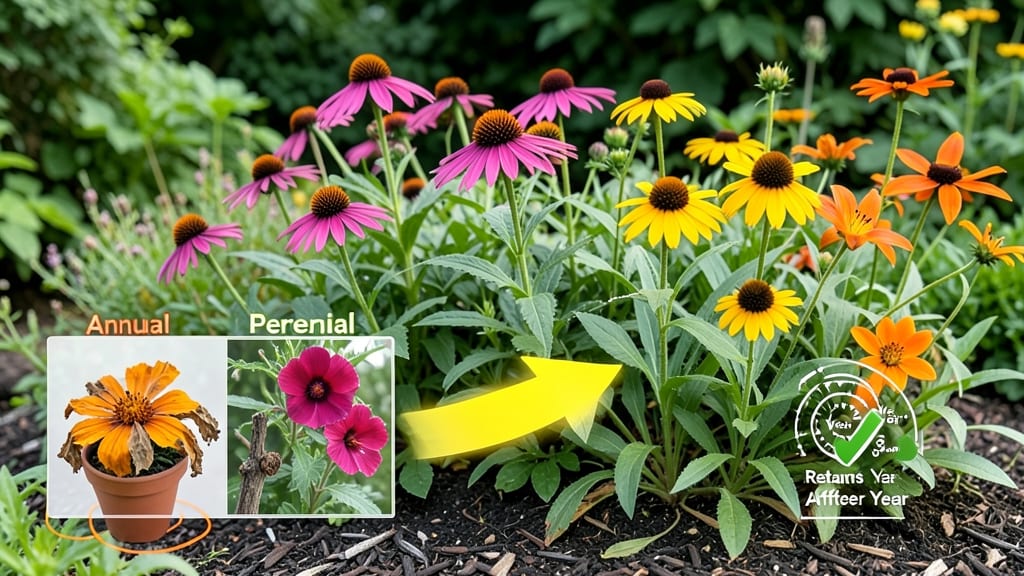
When we call a plant "perennial," it doesn't mean every year without fail, but rather that it has the potential to return for multiple seasons under the right growing conditions. Most perennials survive for 5+ years, though some may weaken or require renewal over time.
Perennials earn their name because they're designed to come back year after year—but that doesn't mean they're indestructible. 🌱 The key difference lies in their root systems, which store energy to regrow after seasonal dormancy.
For example, peonies can live for decades with proper care, while others like hostas might need division every few years to stay vigorous. Your local climate plays a huge role too—some perennials thrive in Zone 5 winters but struggle in hotter regions.
Think of them as reliable long-term investments rather than plants that never need attention.
What often confuses gardeners is the idea of "perfect" yearly returns. In reality, perennials may go dormant in winter or even die back to the ground, only to bounce back when conditions improve. This seasonal cycle is completely normal and part of their natural lifecycle.
The term "perennial" simply means they have the potential for multiple growing seasons—not that they're guaranteed to live forever without any care.
💡 In This Article
- How Perennial Plant Lifecycles Differ from Annuals and Biennials
- Choosing Perennials for Your Climate: Longevity Tips
How perennial plant lifecycles differ from annuals and biennials
The defining feature of perennials is their persistent root systems, which store carbohydrates and nutrients to fuel regrowth each season. Unlike annuals that complete their entire lifecycle in one growing season and die, perennials develop deep, woody roots or underground stems (like rhizomes or tubers) that survive winter dormancy.
For example, a peony's crown can live for 50+ years because it stores energy in its thick, fleshy roots, while an annual like marigold produces seeds and dies after flowering once.
Dormancy is where the confusion often arises. Many perennials go completely dormant in winter, with above-ground growth dying back to the soil level—this doesn't mean they're dead, just conserving energy. The roots remain alive, waiting for warmer temperatures to trigger regrowth.
In contrast, biennials like foxglove complete their lifecycle in two years: they grow vegetatively first year, flower and set seed the second year, then die. Perennials skip this two-year cycle entirely, returning year after year from the same root system.
Climate plays a crucial role in how reliably perennials return. Plants like coneflowers thrive in USDA Zone 3-9 winters, while tropical perennials like cannas must be dug up and stored indoors in colder regions.
Soil health also matters—poor drainage or compacted soil can weaken root systems over time, reducing a plant's ability to regenerate. Even well-established perennials may skip a year if conditions are extreme, proving that "perennial" doesn't guarantee yearly performance without proper care.
What sets perennials apart biologically is their ability to reproduce both sexually (via seeds) and asexually (via roots or stems). This dual strategy gives them resilience—if flowers fail to set seed one year, the roots can still regenerate.
Annuals rely solely on seed production, making them far more vulnerable to environmental stresses. The trade-off? Perennials often grow more slowly initially because they're investing energy in building robust root systems rather than quick top growth.
Consider the classic example of hostas versus petunias. Hostas are perennials that may take 2-3 years to reach full size but then return reliably for decades with proper division. Petunias, as annuals, burst into colorful blooms quickly but must be replanted each spring.
The perennial's delayed gratification pays off in long-term garden reliability—once established, they require less maintenance than annuals that need yearly replanting.
One common misconception is that all perennials are low-maintenance. In reality, some like daylilies spread aggressively and need regular division to prevent overcrowding, while others like lavender may decline after 5-7 years without renewal.
The "perennial" label describes potential, not a guarantee of eternal youthfulness—proper care determines how many years that potential lasts.