
Flowers
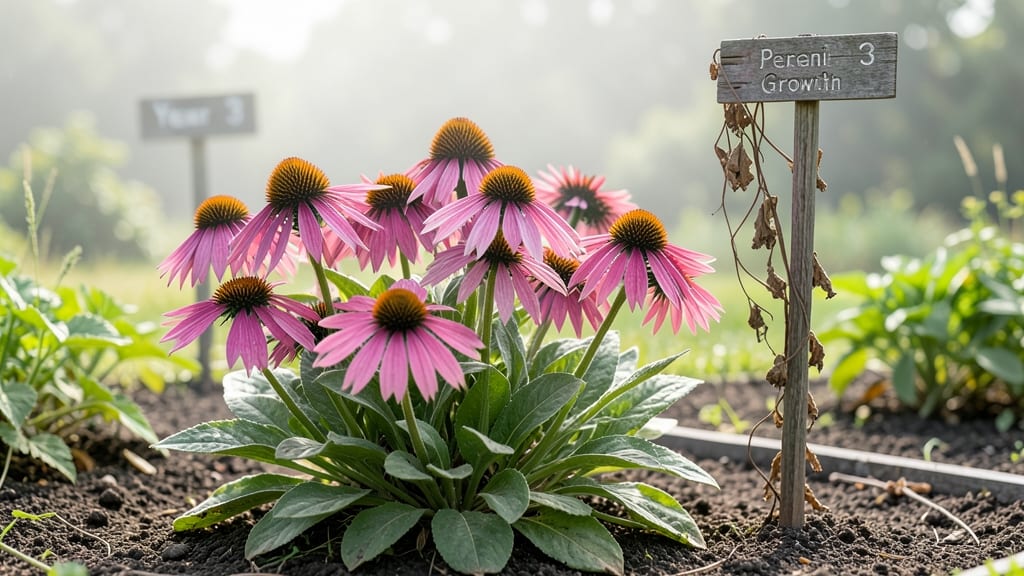
Perennial flowers do come up every year, but their survival depends on proper winter care, soil conditions, and species-specific hardiness. Some appear dormant during cold months only to regrow when temperatures rise, while others may die back to the ground before resprouting in spring.
Perennial flowers often seem to disappear in winter, but that doesn't mean they're dead—many simply enter a dormant phase to survive harsh conditions. 🌱 The key difference lies in their root systems: hardy perennials like black-eyed Susans and daylilies store energy underground, ready to burst back when temperatures warm.
Others, such as peony and hosta, may look completely gone above ground but retain living roots beneath the soil. What you might mistake for death is often just their natural overwintering strategy.
To help them thrive, focus on three critical factors: mulching (at least 3 inches of organic material), well-draining soil (to prevent rot), and proper pruning (cutting back dead foliage in late winter). These steps protect their energy reserves and encourage vigorous regrowth when spring arrives.
The right care makes all the difference between a garden that fades away and one that returns stronger each year.
💡 In This Article
- Why Some Perennial Flowers Disappear (And How to Tell If They’re Really Dead)
- How to Ensure Perennial Flowers Return Year After Year
Why some perennial flowers disappear (and how to tell if they’re really dead)
Perennial flowers like peony and hosta often vanish above ground in winter, but this isn't death—it's a survival strategy called seasonal dieback. These plants store carbohydrates in their roots and rhizomes during warm months, converting them into sugars that act as antifreeze.
When temperatures drop below 32°F, the plant's cells release these sugars, lowering their freezing point to around -10°F in hardy species like coneflowers. This biological process, called cold acclimation, allows them to survive winter while appearing dormant.
The key difference between dormancy and death lies in the root system. Healthy perennials maintain living roots beneath the soil, even when above-ground foliage dies back completely. For example, black-eyed Susans can regrow from roots that remain viable for years, while daylilies store nutrients in their thick rhizomes.
To test if roots are alive, gently dig near the base in early spring—if you find firm, white roots, the plant is alive but dormant. Dark, mushy roots indicate rot or death, often caused by poor drainage or overwatering during winter.
Cold hardiness zones play a crucial role in this process. Plants labeled for Zone 3 (like Russian sage) can survive -40°F winters, while Zone 7 perennials (such as beard tongue) may struggle below 0°F.
This is why some perennials die back more dramatically in colder climates—they're not dead, but conserving energy until conditions improve. The confusion often arises because perennials like lilies may lose all foliage but retain their bulbs, which can sprout new growth within weeks of warming soil.
Another clue is the timing of regrowth. True perennials typically emerge within 2-4 weeks of consistent soil temperatures above 50°F. If you see no signs of new growth by late spring, the plant may have died from factors like rodent damage, disease, or prolonged freezing.
For instance, peony crowns can survive -30°F but may rot if buried too deeply under mulch. This is why proper winter care—like using 3-4 inches of straw mulch—can mean the difference between a plant that returns and one that doesn't.
Consider the texture of the remaining stems as another indicator. Healthy perennials often leave behind woody, brown stems that feel dry and papery, while dead plants collapse into soft, slimy material. For example, hostas may look completely gone by winter but leave behind their distinctive rhizomes just below the surface.
These underground structures can remain viable for years, waiting for the right conditions to regenerate. This is why gardeners often mistake winter dieback for death—what seems like failure is actually a carefully timed survival mechanism.
One advanced technique to verify dormancy is the scratch test: gently scrape the base of a stem with your fingernail. If you see green tissue underneath, the plant is alive. If the area turns brown or crumbles, it's likely dead.
This simple check can save you from needlessly replacing perennials that are just biding their time. The science behind this involves meristem cells, which remain active in the roots and can quickly produce new growth when conditions improve.
What most gardeners don't realize is that even perennials that appear completely dead can sometimes surprise you. For example, bleeding heart plants may lose all foliage in harsh winters but regrow from their crowns the following spring.
This resilience is built into their DNA—perennials have evolved to prioritize survival over immediate growth, making them far more adaptable than annuals. The trick is giving them the right conditions to wake up when spring arrives. 🌿