
Plants
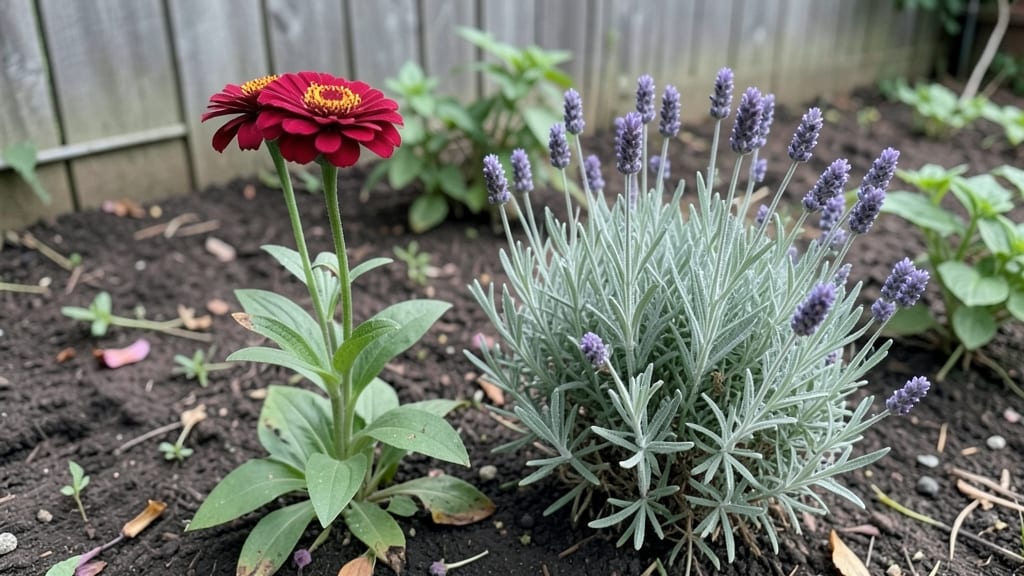
Annual and perennial plants are defined by their lifespans: annuals grow, flower, and die in one season, while perennials return year after year from their root systems. Biennials take two years to complete their cycle, and climate plays a key role in how these plants behave.
Understanding these differences helps gardeners plan better.
Annuals like marigolds or sunflowers deliver quick color but require replanting each year, while perennials such as lavender or coneflowers establish deep roots that make them hardier and low-maintenance. 🌱 The secret to their longevity lies in how they store energy underground—perennials develop woody stems or thick roots that survive winter, while annuals focus all their energy on rapid above-ground growth and seed production.
Climate matters too: what grows as a perennial in warm zones might act as an annual in colder areas.
💡 In This Article
- How Plant Lifespans Affect Gardening Strategies
- Best Annual and Perennial Plants for Your Garden
How plant lifespans affect gardening strategies
The key difference between annual and perennial plants lies in their root systems and energy storage mechanisms. Annuals like tomatoes or basil invest all their energy in rapid above-ground growth, producing flowers and seeds within 60-120 days before dying.
Their fibrous roots spread shallowly to maximize nutrient absorption during this short window. Perennials, however, develop specialized underground structures—like rhizomes in ginger or tubers in potatoes—that store carbohydrates and nutrients for regrowth each spring.
This underground storage system allows perennials to survive harsh winters or dry spells by maintaining a dormant but living root system.
Climate zones dramatically influence how plants behave. In USDA Zone 5 (where winters drop below -20°F), hardy perennials like peony or daylily thrive because their woody stems insulate vital tissues.
But in Zone 10 (mild winters), the same plants may act as annuals—they simply can't survive the heat stress of summer dormancy.
What's fascinating is how some plants act as "tender perennials": they grow like perennials in warm climates but die back to the ground in colder regions, requiring replanting each year. 🌿 The transition point often occurs around Zone 7, where plants like geraniums may survive winters with protection but perish without it.
This biological difference translates directly to gardening strategies. Annuals excel in seasonal color displays because you can swap varieties every few months—think zinnias in summer followed by pansies in fall. Perennials, meanwhile, offer low-maintenance beauty once established, with deep roots that reduce watering needs by 30-50% compared to annuals.
The tradeoff? Perennials often take 2-3 years to reach full maturity, while annuals deliver instant gratification. For example, a lavender bush planted in spring might produce minimal flowers its first year but become a fragrant powerhouse by year three.
Dormancy is where perennials outsmart annuals. During winter, perennials enter a metabolic slowdown where they redirect resources to repair cellular damage and rebuild energy reserves. This process, called endodormancy, is triggered by shorter daylight hours and cooler temperatures.
Annuals, lacking this ability, simply senesce—their cells break down and die when temperatures drop below 40°F. The exception? Some annuals like winter wheat have evolved to survive mild winters as overwintering plants, but they're still classified as annuals because they complete their life cycle in one growing season.
Here's what most gardeners don't realize: the line between annual and perennial isn't always clear-cut. Many plants exhibit biennial behavior—like hollyhocks—where they focus on leaf growth in year one, then flower and seed in year two.
Others, like asparagus, take 3 years to establish before producing harvestable spears. Understanding these patterns helps you plan for succession planting or extended harvests.
For instance, planting carrots in early spring (annual) and again in late summer ensures fresh harvests all season, while perennials like rhubarb provide 20+ years of harvest with minimal replanting.
For climate-sensitive gardeners, the hardiness zone map becomes your best friend. A plant listed as perennial for Zone 6 might only survive Zone 5 winters if given winter protection like mulch or row covers.
The science behind this is fascinating: perennials in colder zones develop antifreeze proteins that prevent ice crystal formation in their cells, similar to how some fish survive Arctic winters.
Annuals, lacking these adaptations, simply can't compete in extreme conditions. 🌍 This is why your Zone 3 garden might look very different from a Zone 9 one—what's a hardy perennial in one area might be a delicate annual in another.