
Flowers
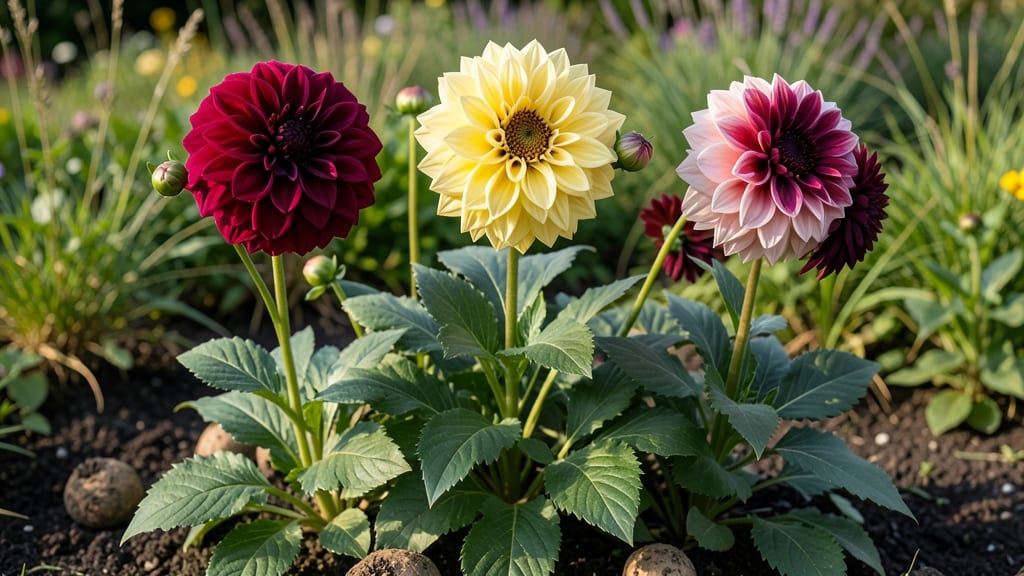
Dahlias are perennials in USDA hardiness zones 8-11, where they thrive year-round with proper winter care, but in colder climates (zones 3-7), they die back to the ground and require digging up and indoor storage to survive.
Dahlias are classified as perennials because they regrow each season from their underground tubers—when given the right conditions. 💫 In warmer zones (8-11), they naturally overwinter in the soil, while in colder regions, gardeners must mimic these conditions by storing tubers in cool, dry spaces until spring.
This distinction explains why you'll often see dahlias treated as annuals in northern gardens—they simply can't survive freezing temperatures without human intervention.
What sets dahlias apart is their adaptability. Their tuberous roots act like natural storage organs, allowing them to "sleep" through harsh winters when protected. This biological trait makes them unique among flowering plants, where most either die back completely or require different care strategies.
💡 In This Article
- Dahlia Hardiness Zones Explained
- Winter Care for Dahlias in Cold Climates
Dahlia hardiness zones explained
The USDA hardiness zones determine whether dahlias survive winters outdoors or need human intervention. Dahlias thrive naturally in zones 8-11, where winter temperatures rarely drop below 10°F (-12°C). In these regions, their tuberous roots remain dormant but protected underground, insulated by soil and organic matter.
The key difference lies in how cold the climate gets—dahlias can tolerate brief chills but perish when exposed to prolonged freezing (28°F/-2°C or colder) for more than a few hours.
In zones 3-7, where winters dip below -10°F (-23°C), dahlias behave like tender perennials. Their tubers lack the natural cold resistance of hardy perennials like peonies or daylilies, which have specialized root structures to withstand freezing.
Instead, dahlia tubers contain high moisture levels that freeze and rupture cell walls, causing irreversible damage. This is why gardeners in these zones must dig up tubers before the first frost—typically when nighttime temperatures consistently fall below 40°F (4°C).
The science behind this involves tuber dormancy mechanisms. Dahlias enter dormancy as daylight shortens in fall, but their tubers remain metabolically active until temperatures drop. In cold climates, this natural process is disrupted by frost, which triggers cell death. The good news?
With proper storage at 35-45°F (2-7°C) and 50-70% humidity, tubers can survive months in dormancy, ready to regrow when replanted in spring. This biological adaptation explains why dahlias can "come back" year after year when cared for correctly.
Zone variations also affect tuber size and vigor. In warmer zones, tubers often produce larger clumps because they photosynthesize longer each season. In colder zones, gardeners must select varieties bred for shorter seasons (like 'Café au Lait' or 'Mignon' series) that mature quickly before frost.
The trade-off? These varieties may produce slightly smaller blooms compared to their tropical cousins, but they compensate with earlier and more reliable flowering.
What most gardeners overlook is how soil temperature interacts with air temperature. Even in zone 7, tubers left in the ground may survive if buried 12-18 inches deep in well-draining soil with mulch protection.
The 10°F threshold isn't absolute—it's more accurate to say tubers can handle brief exposure to 20°F (-6°C) if protected, but prolonged cold kills them. This nuance explains why some zone 7 gardeners succeed with overwintering while others fail.
Consider this comparison: A dahlia tuber in zone 10 might weigh 1-2 pounds after winter, while a stored tuber from zone 5 could shrink to half that size due to moisture loss during dormancy.
The storage process itself—whether in peat moss, vermiculite, or cardboard boxes—affects how well tubers maintain their energy reserves for spring regrowth. 🌱