
Orchid Care
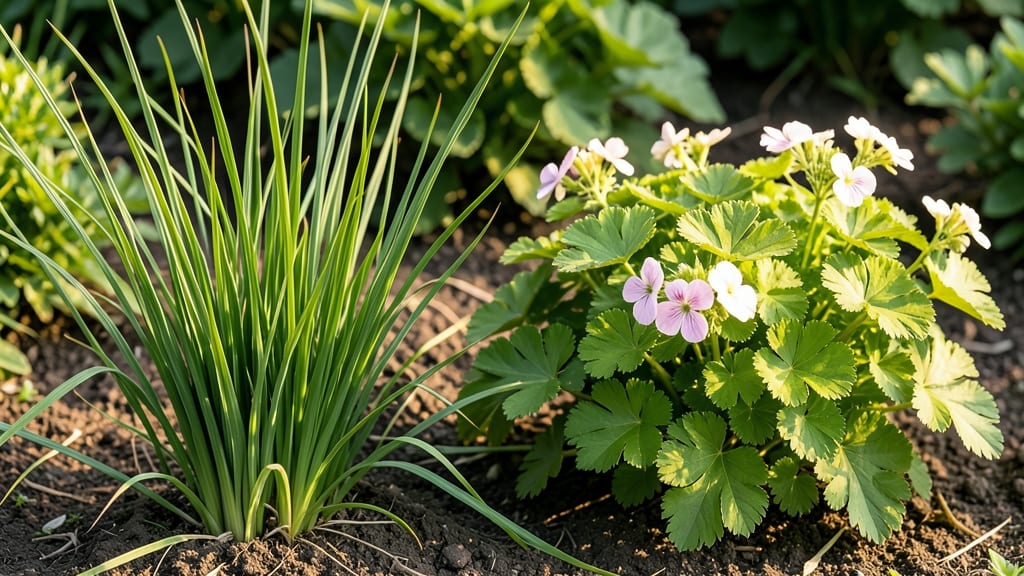
Deciding whether citronella is an annual or perennial depends on your climate: it thrives as an annual in cold zones where frost kills it back, but some hardier varieties may survive mild winters. Most gardeners replant seeds each spring for reliable growth and mosquito-repelling benefits.
Citronella's tropical origins mean it can't handle freezing temperatures—most varieties die when thermometers drop below 30°F. 🌱 That's why gardeners in colder regions treat it as an annual, replanting fresh seeds each spring. The good news?
Even if your plants don't survive winter, new growth appears quickly once soil warms to 60°F or higher. Some tropical varieties might push it to USDA Zone 10, but frost will still be fatal. The key is understanding your local freeze dates and planning your replanting schedule accordingly.
For gardeners in frost-prone areas, the annual approach actually has advantages. 🌿 Fresh plants mean fewer pests and diseases, and you can choose the most potent mosquito-repelling varieties each year.
The trade-off is the initial effort of replanting, but many find the consistent performance worth it—especially when comparing it to struggling perennial attempts that often disappoint after winter.
💡 In This Article
- Why Citronella Dies in Cold Climates
- Protecting Citronella in Cold Zones: Year-Round Strategies
Why citronella dies in cold climates
Citronella's tropical origins make it highly sensitive to cold—its native habitat in Southeast Asia never experiences temperatures below 50°F. When exposed to frost (32°F), the plant's cell membranes rupture due to ice crystal formation, causing irreversible damage.
The roots, which thrive in warm, humid soil, simply can't survive when soil temperatures drop below 40°F for extended periods. 🌱 This is why even hardy varieties struggle in USDA Zones 9 and below.
The critical threshold is 30°F—most citronella varieties begin dying when nighttime temperatures consistently drop below this point. The plant's essential oils, which give it that signature mosquito-repelling aroma, actually become more concentrated as a stress response to cold.
However, this survival mechanism comes at a cost: the plant's energy shifts from growth to defense, weakening its overall structure. In extreme cold (20°F), the entire plant turns brown within 24 hours as cellular dehydration occurs.
Root systems are particularly vulnerable because freezing soil disrupts water uptake. The roots' delicate mycorrhizal fungi partnerships (which help absorb nutrients) collapse when soil temperatures drop below 45°F.
This explains why even container-grown citronella plants often fail to recover after winter—once the roots die, the entire plant's ability to regenerate is compromised. The good news is that new plants grow remarkably fast from seed once soil warms to 60°F or higher in spring.
Hardiness varies slightly between varieties, with Cymbopogon nardus (the most common type) being more frost-sensitive than Cymbopogon winterianus.
The latter can sometimes survive brief dips to 25°F if protected, but prolonged exposure will still kill it. 💫 What most gardeners don't realize is that even partial dieback affects the plant's ability to recover—once 50% of the foliage is damaged, the remaining plant struggles to photosynthesize enough to regenerate properly.
Here's what happens at the cellular level: frost causes ice crystals to form in the plant's vascular system, blocking water transport. This creates a chain reaction where leaves wilt from dehydration while roots simultaneously suffocate from frozen soil.
The plant's natural antifreeze compounds (like proline amino acids) can only delay this process for so long—typically until 28°F for most varieties.
For gardeners in transitional zones (like Zone 8), the key is understanding your specific frost dates. A single hard freeze (25°F) can kill established plants, while multiple nights below 30°F will ensure complete dieback.
This is why the annual approach is often more reliable—starting fresh each spring guarantees you're working with healthy, pest-free plants rather than struggling to revive weakened survivors.