
Orchid Care
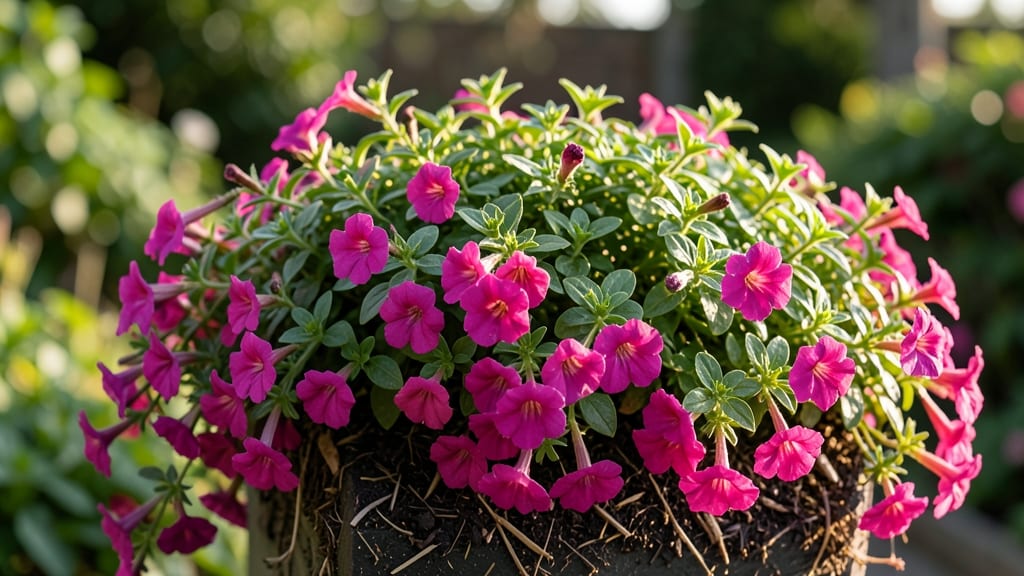
Deciding whether calibrachoa is a perennial or annual depends on your climate: it thrives as a tender perennial in USDA zones 9-11 but dies back annually in colder regions, often self-seeding or regrowing from roots if conditions are right. In cooler areas, growing it as an annual ensures consistent blooms each season.
Whether your calibrachoa comes back year after year depends entirely on winter temperatures. 🌿 In frost-free zones, these plants naturally overwinter, sending up new growth from dormant roots or even self-sowing from dropped seeds.
However, in colder climates where frost is a regular threat, the entire plant typically dies back to the ground—only to regrow from seed or surviving rootstock if the conditions are just right. This behavior explains why gardeners in marginal zones often treat calibrachoa as an annual for predictable results.
What makes this plant so adaptable is its ability to handle brief cold snaps if protected properly. For example, mulching heavily around the base or using frost blankets can sometimes save the crown in zones 8-9, allowing regrowth in spring.
In contrast, areas with harsh winters (zones 7 and below) rarely see natural regrowth, making annual replanting the safer choice for vibrant summer blooms.
💡 In This Article
- How Calibrachoa Survives Winter in Different Climates
- Year-Round Calibrachoa Care: Extending Blooms Beyond One Season
How calibrachoa survives winter in different climates
Calibrachoa's survival strategy hinges on its tender perennial nature, meaning it avoids freezing by relying on either dormant roots or seed banks rather than cold-hardy stems. In USDA zones 9-11, where winter temperatures rarely drop below 30°F (-1°C), the plant naturally overwinters with minimal protection.
Its fibrous root system stores carbohydrates that fuel regrowth when temperatures rise above 50°F (10°C) in spring. This is why you'll often see calibrachoa popping up spontaneously in frost-free areas—it's not just self-seeding but also leveraging residual root energy.
The magic happens at the cellular level: calibrachoa's meristematic tissues (growth points) remain protected deep in the root crown, while above-ground growth dies back when nighttime temperatures dip below 40°F (4°C) for prolonged periods. 🌱 In zones 8-9, where brief freezes occur, the plant may survive if the ground doesn't freeze solid—a phenomenon called "crown survival."
However, once temperatures hit 20°F (-7°C) for more than 24 hours, even protected roots struggle, which explains why gardeners in these zones often see hit-or-miss regrowth.
Seed dormancy plays a crucial backup role. Calibrachoa produces thousands of tiny seeds that remain viable in the soil for 2-3 years, waiting for ideal conditions to germinate.
This explains why you might suddenly find calibrachoa sprouting in unexpected places—it's not just from last year's plant but potentially from seeds dropped three seasons ago.
The germination trigger is a combination of moisture and soil temperatures above 60°F (15°C), which typically aligns with spring planting times in cooler climates.
What most gardeners miss is the plant's frost sensitivity threshold: calibrachoa's leaves begin showing damage at 32°F (0°C), while stems die at 28°F (-2°C). This explains why even a light frost can kill back the entire plant in marginal zones. The good news?
The root system can often regenerate if protected by 3-4 inches (7.5-10 cm) of mulch or covered with frost blankets during critical freeze events. This protection creates a 5-10°F (3-5°C) buffer around the plant, making all the difference between total loss and spring regrowth.
For visual learners, imagine calibrachoa's survival as a three-tier system: Zone 9-11 (perennial with minimal protection), Zone 8-9 (crown survival with active protection), and Zone 7 and below (annual treatment with seed banking).
The transition between these zones isn't abrupt but depends on microclimate factors like afternoon sun exposure, soil type, and proximity to large bodies of water that moderate temperatures.
Here's what the science shows about calibrachoa's cold tolerance compared to similar plants: while petunias (its close relative) can handle 25°F (-4°C) with protection, calibrachoa's more delicate nature means it typically succumbs 5°F (3°C) warmer than petunias.
This explains why calibrachoa is rarely found in traditional perennial gardens outside frost-free zones—its survival mechanisms are finely tuned to warm climates.