
Orchid Care
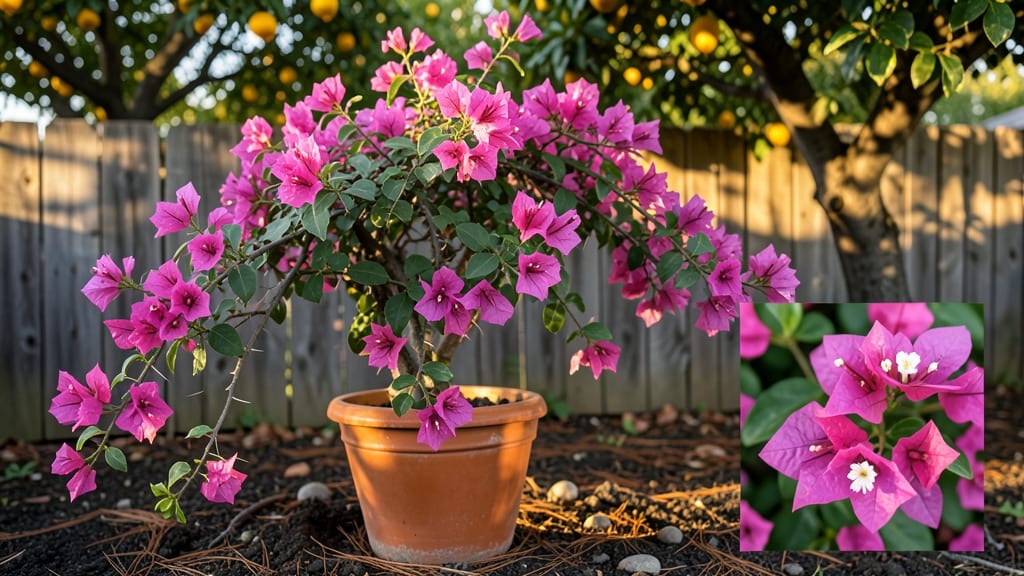
Whether bougainvillea is a perennial or annual depends on your climate: it thrives as a perennial in warm zones (USDA 9-11) thanks to its nutrient-storing corms, but dies back annually in colder areas unless you protect it. With proper winter care, you can coax it to regrow year after year.
Bougainvillea's underground corms are its secret weapon—these swollen, bulb-like structures act like nature's battery, storing energy to fuel regrowth after dormancy. 🌱 In frost-free zones, the plant naturally returns each spring from these corms, making it a true perennial.
But when temperatures drop below 20°F, the stems and leaves blacken, tricking many gardeners into thinking it's an annual. The key difference? Corm health. Healthy corms left undisturbed in mild winters will sprout new shoots, while frozen or neglected ones may fail to regenerate.
For colder climates, think of bougainvillea as a semi-perennial—it can live multiple years if you give it proper winter care. Digging up corms before the first frost and storing them in dry, cool conditions (like a garage) lets you replant them come spring.
Some gardeners even grow bougainvillea in containers and move them indoors for winter, giving them full control over the plant's lifespan. The right approach turns this tropical beauty into a long-term garden staple, not just a seasonal flash.
💡 In This Article
- How Bougainvillea Corms Determine Its Perennial Behavior
- Extending Bougainvillea’s Lifespan in Cold Climates
How bougainvillea corms determine its perennial behavior
Bougainvillea's underground corms are its biological superpower—these thick, fleshy storage organs (similar to a gladioli corm but denser) act like a plant battery, packed with starches and nutrients to fuel regrowth after dormancy.
Unlike true bulbs (like tulips), which have layered scales, bougainvillea corms store energy in a single, swollen base that can weigh up to 2-3 pounds in mature plants.
This concentrated energy reserve lets the plant survive dry spells and cold snaps, making it a true perennial in frost-free zones like USDA 9-11.
The magic happens in late fall when temperatures drop below 50°F: bougainvillea sheds its leaves and stems, but the corms remain dormant underground, respiring slowly to conserve energy. In warm climates, these corms naturally sprout new shoots in spring, often within 4-6 weeks of consistent warmth.
Compare this to tropical plants like hibiscus, which die back to the ground annually but don't have the same corm-based resilience—bougainvillea's underground system gives it a survival edge in marginal climates.
Temperature is the game-changer: corms can survive brief dips to 20°F if dry, but prolonged freezing (10°F or lower) kills them. This is why bougainvillea acts like an annual in colder regions—the stems and leaves die, but the corms might still lurk underground, waiting for the right conditions.
The key difference? In warm zones, the corms regenerate naturally; in cold zones, they need human intervention to survive.
Here's what's happening at the cellular level: bougainvillea corms contain high concentrations of sucrose and fructose, which act as antifreeze agents, protecting cells from ice crystal formation. This is similar to how winter wheat survives freezing temperatures.
However, once the corm's moisture content exceeds 20% by weight, it becomes vulnerable to frost damage—this is why proper drainage and winter mulching are critical.
For gardeners in transitional zones (like USDA 8), the corms' behavior offers a middle ground: they can persist for multiple years if protected, making bougainvillea a semi-perennial.
This is why some gardeners report their plants returning for 3-5 years with minimal care, while others see them die back annually—it all depends on how well the corms are insulated from winter's worst.
Consider this comparison: a bougainvillea corm is like a potato's cousin—both store energy, but bougainvillea's version is more specialized for drought and temperature fluctuations.
While potatoes thrive in temperate climates, bougainvillea corms have evolved to handle the hot-dry summers and mild winters of its native Brazil, making it uniquely adaptable when given the right conditions.