
Plants
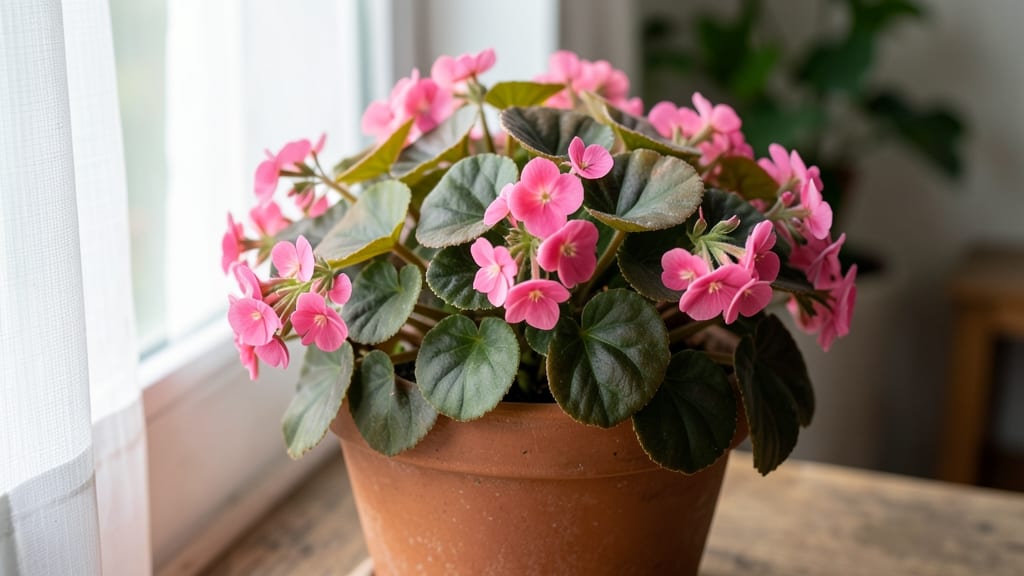
Wax begonias aren't true perennials in colder regions but act like tender perennials in USDA Zones 10-12, where they naturally die back each winter. With careful overwintering, they can regrow yearly, though most gardeners grow them as annuals for simplicity.
The key difference lies in their frost sensitivity—wax begonias originate from tropical regions and can't survive freezing temperatures. 🌱 In warmer climates, their roots often persist through winter, allowing them to regrow when conditions improve.
However, in colder areas, even the hardiest varieties will succumb to frost, making them behave more like annuals unless you take steps to protect them indoors during winter months.
This dieback cycle isn't a sign of poor health but rather a natural survival mechanism. Many gardeners who love their wax begonias' vibrant blooms choose to overwinter them as houseplants, bringing them inside before temperatures drop.
The trade-off? You get to enjoy their colorful foliage and flowers year after year, though you'll need to provide consistent light and humidity to keep them thriving through the winter months.
💡 In This Article
- Wax Begonia Lifecycle: Why They Die Back in Winter
- How to Overwinter Wax Begonias for Repeat Growth
Wax begonia lifecycle: why they die back in winter
Wax begonias originate from tropical regions of Brazil, where temperatures rarely drop below 50°F (10°C). Their biological makeup makes them highly sensitive to frost—even a light freeze (32°F/0°C) can cause irreversible cell damage to their leaves and stems.
The plant's survival strategy involves entering a state of dormancy when stressed by cold, but unlike hardy perennials, wax begonias lack the protective mechanisms (like deep root systems or insulating bark) to withstand prolonged freezing.
The dieback process begins when nighttime temperatures consistently fall below 55°F (13°C). You'll notice the leaves first yellowing and wilting, followed by a complete collapse of the above-ground growth. What most gardeners don't realize is that the roots often remain viable if protected from freezing soil.
In USDA Zones 10-12, where winter lows rarely dip below 30°F (-1°C), the roots can survive and regrow when spring warmth returns—this is why they behave like perennials in these regions.
This lifecycle differs dramatically from hardy perennials like hostas or daylilies, which can tolerate -10°F to -20°F (-23°C to -29°C) temperatures. Wax begonias lack the antifreeze proteins found in cold-hardy plants, which prevent ice crystal formation in cells.
Instead, their survival depends entirely on environmental conditions—specifically, whether their roots stay warm enough to avoid freezing. In colder climates, this means gardeners must intervene to mimic tropical conditions during winter.
Here's what happens biologically: When temperatures drop, the plant's meristematic cells (growth centers) become inactive, halting new leaf and stem production. The chlorophyll breaks down, causing the vibrant foliage to fade. However, the root system remains metabolically active as long as soil temperatures stay above 40°F (4°C).
This is why proper overwintering focuses on protecting these roots—whether through container insulation or indoor potting.
Consider this comparison: A hardy perennial like peonies can lose all their foliage in winter but regrow from their crowns because they've developed protective layers. Wax begonias, however, have no such adaptations.
Their entire above-ground structure must be protected, and even then, their roots are only marginally cold-tolerant. This fundamental difference explains why they're classified as tender perennials rather than true perennials.
The good news is that wax begonias are remarkably resilient when given proper care. Even after a complete winter dieback, their roots can often regenerate new growth when returned to warm conditions.
This makes them ideal candidates for indoor overwintering—if you're willing to put in the effort to recreate their tropical environment during the colder months.