
Plants
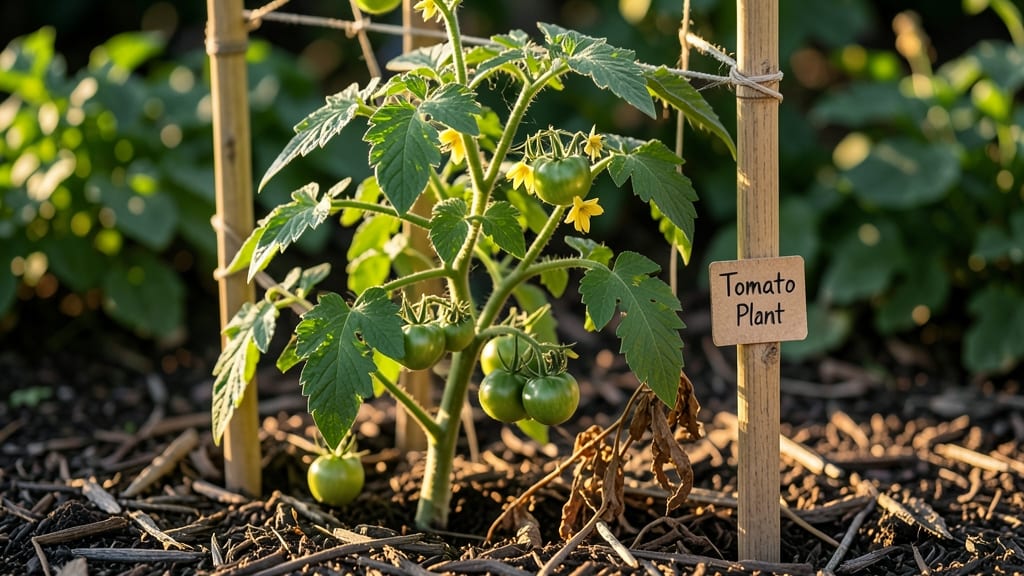
Tomato plants are not perennial—they die back after producing fruit each growing season, though their roots may persist in warm climates. Most gardeners treat them as annuals, replanting yearly for new harvests.
Tomato plants follow a determinate lifecycle where their energy focuses on fruit production rather than long-term survival. 🌱 Unlike perennials like asparagus or raspberries, tomatoes prioritize growing fruit over maintaining their stems and leaves through winter.
In colder regions, frost alone will kill them back to the ground, but even in mild climates, they'll eventually decline after fruiting. The good news? Some varieties in warm zones may regrow from roots if conditions stay ideal, but this isn't reliable enough for true perennial behavior.
What makes this interesting is how gardeners adapt to this lifecycle. Many treat tomatoes like annuals, planting fresh seeds each spring, while others in warmer areas experiment with overwintering techniques. The key difference between true perennials and tomatoes lies in their biological priorities—fruit first, survival second.
💡 In This Article
- Why Tomato Plants Die Annually: Climate and Biological Factors
- Extending Tomato Plant Lifespan: Overwintering and Perennial Hacks
Why tomato plants die annually: climate and biological factors
Tomato plants prioritize fruit production over survival, making them biologically programmed to decline after fruiting. Their energy allocation shifts dramatically during the growing season—around 60-70% of their resources go toward developing tomatoes rather than maintaining woody stems or roots for winter.
This is why you'll see healthy plants with abundant fruit but weak, brittle stems by late summer. 🌱 In contrast, true perennials like strawberries or asparagus allocate only 20-30% of their energy to fruit, reserving the rest for root and crown development.
The real killer for tomatoes comes when temperatures drop below 32°F (0°C). Unlike hardy perennials that can withstand freezing, tomato plants are tropical natives with delicate cell structures that rupture at frost. Even in mild climates, the combination of shorter daylight hours and cooler nights triggers a natural decline.
What's fascinating is how some tropical tomato varieties (like Solanum lycopersicum var. cerasiforme) may persist in Zone 10+ with minimal dieback, but they still won't regrow robustly like true perennials.
Here's what happens at the cellular level: Tomato plants produce abscisic acid, a hormone that accelerates leaf senescence (aging) after fruiting. This chemical signal causes chlorophyll breakdown, turning leaves yellow and making them fall off.
Meanwhile, the roots begin to degrade as the plant redirects nutrients to the developing fruit. In warm climates, some roots may survive underground, but without proper dormancy mechanisms, they can't sustain regrowth like perennial roots.
Consider this comparison: A heirloom tomato plant might produce 50-100 pounds of fruit in one season, but this massive output exhausts its energy reserves. Meanwhile, a raspberry plant might produce 1-2 pounds but has decades of root storage to draw from.
The trade-off is clear—tomatoes are built for explosive growth and reproduction, not longevity.
What most gardeners don't realize is that even in warm climates, tomato plants rarely become true perennials. While you might see regrowth from roots in Zone 9-10, these new shoots are often weak and disease-prone because the original plant's genetic programming hasn't evolved for perennial survival.
The closest you'll get is treating them as semi-perennial in ideal conditions, but this requires careful management.
One exception worth noting is the wild tomato species (like Solanum peruvianum), which can persist in their native Andean environments.
These wild relatives have developed some perennial traits, but domesticated varieties have lost these adaptations through selective breeding for higher yields. 🌿 This genetic divergence explains why your backyard tomatoes behave so differently from their wild ancestors.