
Vegetables
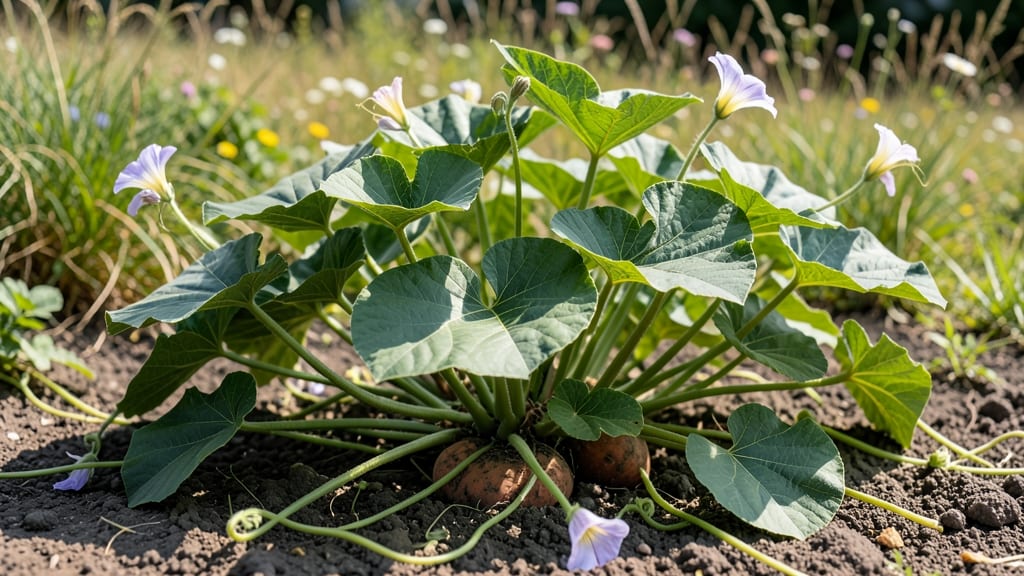
Sweet potatoes aren't true perennial plants—they die back after harvest, but the mother plant can regenerate tubers through slips (new shoots) for multiple years in warm climates. Unlike annuals or true perennials, their edible roots don't naturally regrow from the soil each season.
Here's what makes this interesting: while sweet potatoes don't qualify as botanical perennials, their mother plants can live for years in tropical climates, producing fresh tubers annually. 🌱 The key difference lies in their growth cycle—true perennials regrow from the same root system, while sweet potatoes rely on new slips to generate harvestable roots.
This explains why gardeners can sometimes get multiple harvests from a single planting over several seasons.
In cooler regions, you'll need to treat them more like annuals—saving slips each year is the secret to maintaining a continuous crop. The plant itself may not survive winter, but with proper care, you can propagate new plants from stored slips to keep your garden producing.
💡 In This Article
- Why Sweet Potatoes Act Like Perennials in Some Climates
- How to Grow Sweet Potatoes Year-After-Year in Gardens
Why sweet potatoes act like perennials in some climates
Sweet potatoes (Ipomoea batatas) belong to the morning glory family and thrive in tropical and subtropical climates where temperatures rarely drop below 50°F (10°C). In these regions, the mother plant can persist year-round, producing new shoots called slips from its underground stems.
These slips develop into full plants that generate fresh tubers, creating the illusion of perennial behavior. The key difference is that true perennials regrow from the same root system, while sweet potatoes rely on these new shoots to produce harvestable roots each season.
The plant's ability to regenerate stems from its crown (the base where leaves and roots meet) is what allows it to mimic perennial behavior.
When grown in ideal conditions—well-draining soil, full sunlight (6-8 hours daily), and consistent moisture—the mother plant can continue producing slips for 3-5 years or more.
This is why gardeners in Florida or Hawaii can harvest sweet potatoes year after year from the same planting without replanting slips. 🌿 The tubers themselves don't regrow from the soil like true perennials, but the plant's ability to generate new growth points makes it behave similarly in warm climates.
In cooler regions, the plant's ability to persist is limited by frost. Sweet potatoes are sensitive to cold temperatures below 40°F (4°C), which can kill the above-ground parts and even damage the crown.
This is why gardeners in temperate zones must treat them as annuals unless they take steps to protect the plant or save slips for replanting.
The plant's natural dormancy cycle in cooler climates means it won't regenerate tubers from the same root system, but the mother plant's ability to produce slips in warm seasons is what gives it a perennial-like quality.
What makes this even more fascinating is the plant's ability to store energy in its stems and roots. During the growing season, the plant converts sunlight into carbohydrates, which are stored in the tubers and crown. These stored reserves allow the plant to regenerate new shoots when conditions are favorable.
This energy storage system is similar to how true perennials like asparagus or rhubarb survive winter, but sweet potatoes lack the same underground rhizomes that allow true perennials to regrow from the same root system every year.
Consider this comparison: while sweet potatoes may not be true perennials, their growth habit in warm climates is more akin to semi-perennial behavior. For example, bananas (Musa spp.) are also not true perennials but can produce fruit year-round in tropical climates from the same mother plant.
Similarly, sweet potatoes can continue producing harvestable tubers as long as the mother plant remains healthy and the climate stays warm enough to support continuous growth. This is why some gardeners refer to them as "pseudo-perennials" in suitable environments.
The plant's reliance on slips for regeneration also explains why gardeners in cooler climates must save and replant slips each year. Without this intervention, the mother plant won't survive the winter, and the tubers won't regrow from the soil.
This is a critical distinction between sweet potatoes and true perennials like artichokes or horseradish, which can regrow from their roots even after the above-ground parts die back. 🌱