
Vegetables
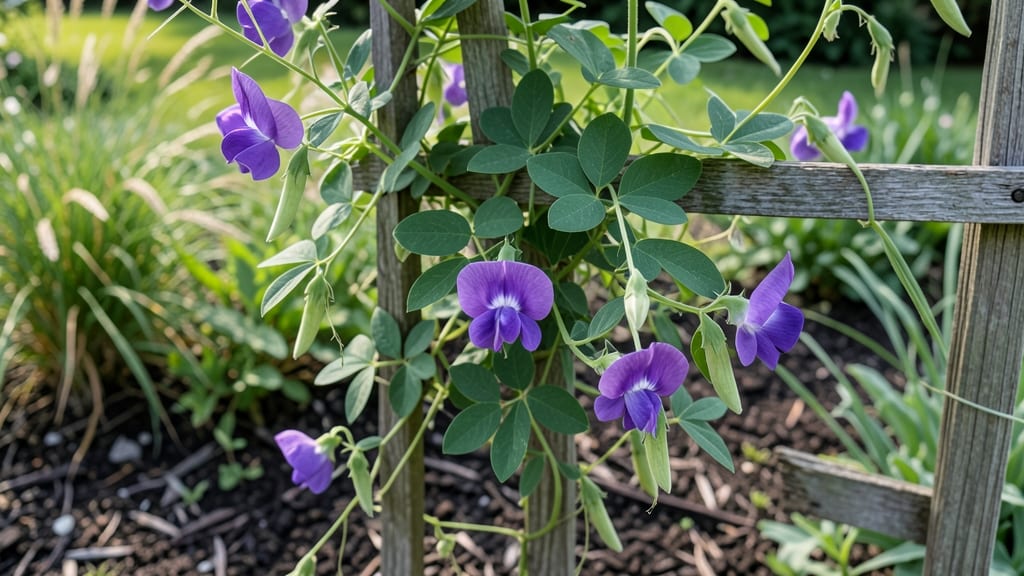
Sweet peas are not true perennials—they die back annually in winter but often regrow from the same roots if conditions are right, though they’re typically grown as cool-season annuals for reliable blooms.
Sweet peas behave like semi-perennial plants—their roots survive winter in mild climates (like zones 7-9), but cold snaps or frost force them into dormancy. 🌱 Unlike true perennials, they won’t bloom again without careful overwintering care.
Many gardeners treat them as annuals for simplicity, but with proper protection (mulch, pruning), you can coax regrowth for a second spring harvest.
This dual nature makes sweet peas unique: they thrive as cool-season crops but can persist for years if given the right conditions. The key is understanding their hardiness limits—most varieties won’t survive harsh winters, but their roots may linger until spring warmth returns.
💡 In This Article
- Why Sweet Peas Die Back in Winter: Root Survival vs True Perennialism
- How to Extend Sweet Peas’ Lifespan: Overwintering Tips for Gardening Zones 5-9
Why sweet peas die back in winter: root survival vs true perennialism
Sweet peas exhibit what botanists call "semi-perennial" behavior—a hybrid between true annuals and perennials. Their roots contain specialized cells called meristematic tissues, which can survive mild winters (down to 15-20°F) by entering dormancy.
However, these roots lack the robust protective layers of true perennials like asparagus or rhubarb, making them vulnerable to prolonged cold (10°F or below) or freeze-thaw cycles that disrupt cellular integrity. 🌱
The confusion stems from their growth habit: sweet peas produce a single cycle of blooms and pods in their first season, then die back completely if exposed to freezing temperatures.
True perennials, like lavender, regrow from the same crown year after year because their underground stems (rhizomes or tubers) store energy reserves. Sweet peas, however, rely on shallow fibrous roots that store minimal starch—just enough to sprout again if conditions improve.
This is why gardeners in USDA zones 5-7 often see regrowth, while those in colder zones (zone 3-4) must replant annually.
What triggers dieback? The critical factor is frost penetration depth. Sweet pea roots typically extend only 6-12 inches below soil, while true perennials may go 2-3 feet deep. When winter frost reaches these shallow roots, the meristematic cells freeze and die, halting regrowth.
Even in mild climates, the plant’s energy reserves deplete if it’s not given a chance to photosynthesize before dormancy sets in—hence the need for late-season pruning to redirect nutrients to root storage. ⚡
Here’s the key distinction: true perennials retain their above-ground structure (like woody stems) to protect the growing point, while sweet peas shed everything above ground, leaving only roots. This makes them behave like annuals in harsh winters but act as perennials in frost-free zones.
For example, in zone 9, sweet peas may resprout for 3-5 years without replanting, while in zone 5, they’ll rarely survive beyond one winter without protection.
Soil type plays a surprising role too. Sandy soils drain quickly, accelerating root dehydration during winter, while clay holds moisture longer but can suffocate roots if compacted.
The ideal medium for overwintering is loamy soil with 30-40% organic matter—this balances moisture retention and aeration, giving roots a fighting chance. 💫
Think of it like a hibernating animal: sweet peas can "wake up" if their den (the root zone) stays above freezing. But unlike a bear, they lack the fat reserves to survive prolonged cold snaps.
That’s why gardeners in transitional zones (like zone 6-7) often see spotty regrowth—some roots survive, others don’t, leading to patchy blooms the following spring.