
Vegetables
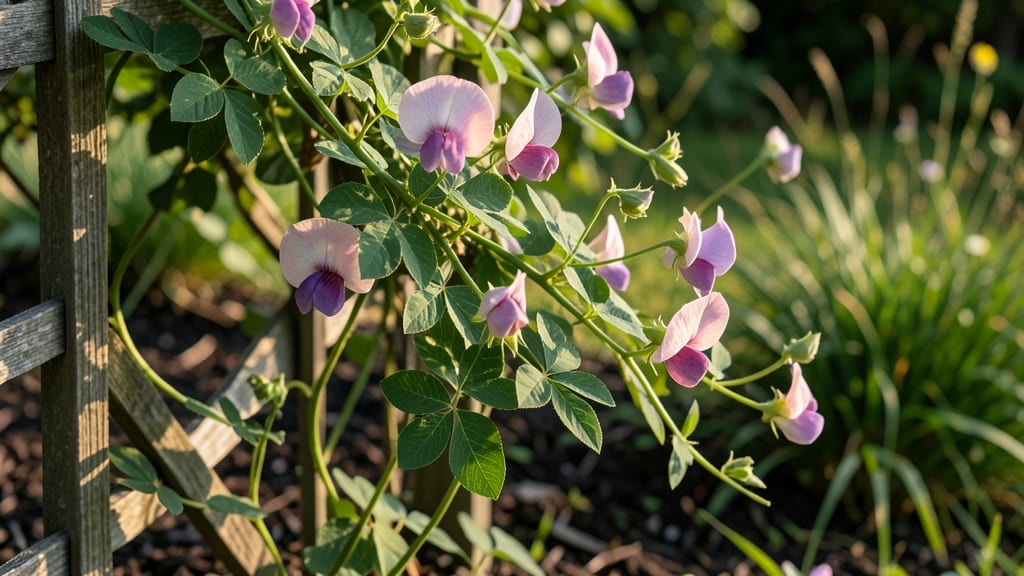
Sweet peas behave like annuals in most gardens because their tender roots rarely survive freezing temperatures or poor soil conditions, but they’re botanically classified as perennials capable of living 2-3 years in frost-free zones with proper care.
Most gardeners treat sweet peas as annuals because their delicate root systems simply can't withstand freezing temperatures or heavy winter soils. 🌱 However, in warmer climates—especially with cold-hardy varieties like Lathyrus odoratus—these plants can return for multiple growing seasons if protected from frost and given rich, well-draining soil.
The key difference lies in their underground resilience: while they may die back in harsh winters, their roots can persist if conditions remain mild.
The confusion stems from how gardeners typically grow them—planting fresh seeds each spring to ensure reliable blooms. But with the right overwintering techniques, like heavy mulching or protective covers, you can coax perennial growth from these charming climbers. This makes them a rewarding plant for patient gardeners in suitable climates!
💡 In This Article
- Sweet Pea Life Cycle: Why Most Gardeners Treat Them as Annuals
- How to Extend Sweet Peas’ Lifespan: Overwintering Tips for Perennial Growth
Sweet pea life cycle: why most gardeners treat them as annuals
Sweet peas (Lathyrus odoratus) are classified as hardy perennials in their native Mediterranean climates, where they naturally survive multiple growing seasons. Their underground roots can live for 2-3 years under ideal conditions, storing energy in fibrous root systems that regenerate foliage each spring.
However, these roots are extremely sensitive to frost—temperatures below 20°F cause irreversible damage, which is why gardeners in colder zones typically replant them yearly. 🌱
The key difference lies in their root structure: sweet peas develop a shallow, fibrous root system that thrives in well-draining, nutrient-rich soil but lacks the deep taproots of true perennials like asparagus.
In frost-free zones (USDA Hardiness Zones 8-10), their roots can persist through mild winters, especially when protected by 6+ inches of mulch. Varieties like 'Cupid' or 'Perfume Delight' are bred for slightly better cold tolerance but still struggle below 15°F.
Disease buildup in the soil also forces annual planting. Sweet peas are susceptible to fungal infections like root rot, which accumulate in the same planting spots over time. Their short-lived vigor—typically 1 growing season of peak performance—means replanting often yields better blooms than trying to revive older plants.
This is why commercial growers and home gardeners in colder regions default to treating them as annuals, despite their botanical perennial classification.
Climate plays a massive role in their lifespan. In Zone 7, where winters dip to 0-10°F, sweet peas rarely survive more than one season without artificial protection. Meanwhile, in Zone 9, they can return for 3+ years with minimal care.
The transition between annual and perennial behavior hinges on whether the plant's roots can safely enter dormancy—a process disrupted by freezing temperatures or waterlogged soil.
Botanically, sweet peas belong to the legume family (Fabaceae), which includes many perennials like clover or alfalfa. However, their delicate growth habit sets them apart. Unlike hardy perennials, sweet peas prioritize rapid above-ground growth over root development, making them vulnerable to environmental stress.
This trade-off explains why they’re often grown as annuals: their energy goes into producing 100+ fragrant blooms per plant rather than fortifying their roots for winter.
Consider this comparison: in Zone 5, sweet peas planted in spring will bolt to seed by summer, while in Zone 10, the same variety might produce flowers for 2-3 consecutive years with proper mulching.
The difference isn’t just temperature—it’s the cumulative effect of frost, soil health, and seasonal light exposure on their root systems. 💫