
Vegetables
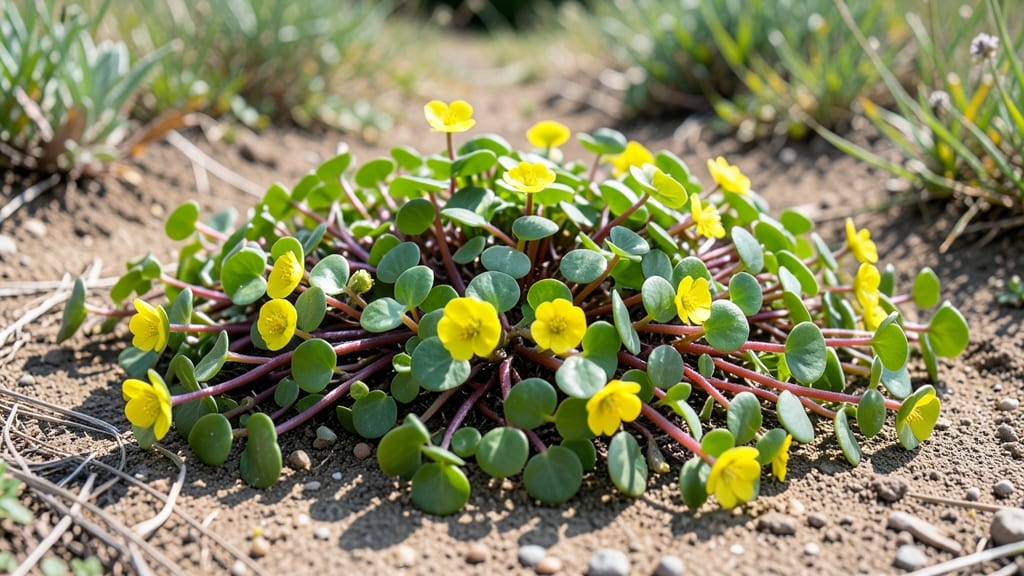
Purslane isn't a perennial in most climates, growing as an annual or short-lived winter annual in colder regions but often self-seeding prolifically. In warmer areas like USDA Zones 9-11, it can behave like a tender perennial with consistent care.
Purslane's lifespan depends entirely on your climate and growing conditions. 🌱 In cooler regions, its succulent stems simply can't withstand frost—even light freezes will kill the plant back to the ground.
However, its ability to self-seed means you'll often find new volunteers popping up each spring, creating a natural cycle that mimics perennial behavior without the plant itself surviving winter.
The key difference from true perennials is that purslane lacks true woody stems or underground storage structures to regenerate after cold snaps.
What this means for gardeners is that while you won't get the same reliable harvests from year to year as with true perennials, you can create a semi-perennial effect through smart growing practices.
Many gardeners in marginal zones treat it like a winter annual but take cuttings before frost to propagate indoors or in heated greenhouses, effectively extending its growing season.
The plant's remarkable drought tolerance and rapid growth make it a favorite for container gardening in cold climates, where you can bring pots indoors before winter sets in.
💡 In This Article
- Why Purslane Dies in Cold Climates
- How to Extend Purslane’s Lifespan in Gardens
Why purslane dies in cold climates
Purslane's succulent stems contain 90% water by weight, making it extremely vulnerable to frost damage. When temperatures drop below 32°F, the water in its thick, jelly-like leaves and stems freezes and expands, causing cellular rupture.
This is why even light frosts (28-32°F) will blacken purslane foliage within hours, killing the plant back to the ground. Unlike true perennials that develop woody stems or underground storage organs, purslane relies entirely on its soft, water-rich tissues for growth—making it functionally an annual in cold climates.
Botanically, purslane belongs to the Portulacaceae family but lacks the hardy survival mechanisms of its relative, Portulaca grandiflora (moss rose). While moss rose can tolerate brief cold snaps down to 20°F with proper mulching, purslane's optimal growing range sits between 65-75°F.
In USDA Zones 3-7, gardeners typically treat it as a short-lived winter annual, harvesting before first frost and relying on self-seeding for next year's crop. The plant's inability to enter true dormancy further limits its cold-climate survival.
What makes this especially frustrating is how aggressively purslane grows when conditions are right. In summer heat, it can reach 12-18 inches tall in just 4-6 weeks, producing thousands of tiny black seeds that scatter with the slightest disturbance.
This prolific seeding explains why many gardeners mistakenly believe it's a perennial—they see new plants appearing each spring without realizing they're from the previous year's seeds rather than surviving plants.
Temperature thresholds reveal the stark contrast between purslane's behavior and true perennials. Most edible perennials like asparagus or rhubarb can survive -10°F to -20°F with proper protection, while purslane's maximum cold tolerance is about 30°F for brief periods.
This explains why even in Zone 8, where winters are mild, purslane often dies back completely during cold snaps, only to regrow from seed in spring.
One fascinating exception occurs in microclimates where purslane finds protected niches. Along south-facing walls or under dense mulch layers, the soil may stay 5-10°F warmer than ambient air temperatures, allowing purslane to persist through mild winters.
However, these are exceptions rather than the rule—most gardeners in cooler climates must accept purslane's annual nature or implement special overwintering strategies to extend its growing season.
The plant's growth cycle also differs dramatically from true perennials. While perennials like thyme or oregano develop persistent root systems that regenerate each spring, purslane's roots are shallow and fibrous, designed for rapid nutrient uptake rather than long-term storage.
This biological specialization explains why it thrives as a summer ephemeral but struggles to persist through winter dormancy periods.
Understanding these botanical limitations helps gardeners set realistic expectations. While you won't get perennial harvests, you can create a semi-perennial effect through strategic planting and seed collection—effectively turning purslane into a renewable resource that behaves like a perennial in your garden ecosystem. 🌱