
Flowers
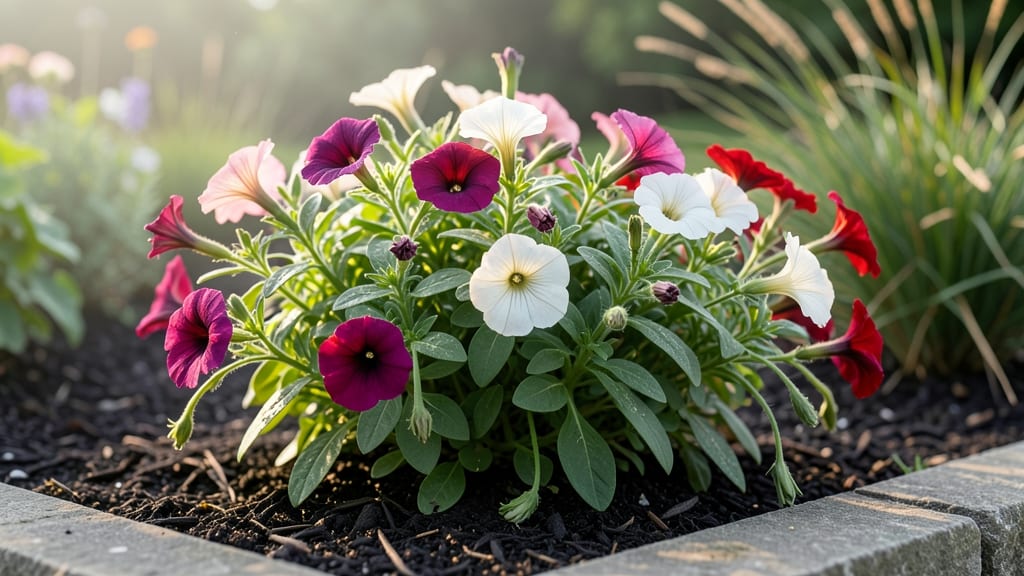
Petunias are not perennial flowers in most climates—they die back after frost and must be replanted annually in cold regions, though they self-seed in warmer zones like USDA 10-11. Their hardiness depends on winter temperatures and soil conditions.
Petunias actually behave more like annuals in most of the U.S. because they originated in South America's tropical regions, where freezing temperatures never occur. 🌱 When nighttime temps drop below 32°F, their delicate foliage and stems turn black within hours, and the roots often fail to survive even mild freezes.
That's why gardeners in colder zones treat them as seasonal plants—unless you're willing to bring them indoors or use protective measures.
The good news? In warmer microclimates (like coastal areas or greenhouses), petunias sometimes return on their own through self-seeding. Some hybrid varieties also show slightly better cold tolerance, but don't expect them to behave like true perennials like coneflowers or daylilies.
The key difference lies in their root systems—petunias store minimal energy underground compared to hardy perennials.
💡 In This Article
- Why Petunias Die Back in Winter: Science of Cold Sensitivity
- How to Overwinter Petunias in Cold Climates
Why petunias die back in winter: science of cold sensitivity
Petunias originate from South America's tropical regions, where temperatures rarely drop below 50°F—this genetic heritage explains their extreme frost sensitivity. Their cells lack the antifreeze proteins found in hardy perennials like peonies, which allow those plants to survive -20°F winters.
Instead, petunia cells rupture when ice crystals form in their tissues, causing the characteristic blackened, mushy foliage within 2-4 hours of frost exposure.
The damage starts at the leaves but quickly spreads to stems and roots.
Even a light frost (30-32°F) triggers cell membrane breakdown, while wet soil accelerates the process by conducting cold deeper into the root zone. 🌬️ In contrast, perennials like lavender store carbohydrates in their roots, creating a natural insulation layer that protects against freezing.
Petunias, however, allocate most of their energy to above-ground growth during their short growing season, leaving minimal reserves for winter survival.
What makes this especially tricky is how petunias handle moisture differently than perennials. While many hardy plants benefit from winter snow cover (which provides insulation), petunias' shallow root systems can't tolerate prolonged saturation.
Even 1 inch of snow melt sitting on frozen soil can suffocate their roots by blocking oxygen exchange—a process called "anaerobic stress" that kills tissue within 48 hours.
Another critical factor is the plant's growth habit. Petunias grow rapidly in warm weather, producing tender new growth that freezes first. Unlike perennials that harden off in fall, petunias remain physiologically young until killed by frost.
This is why gardeners in USDA Zone 8 (where winter lows reach 10-15°F) often see petunias survive one winter but fail the next—they're simply not built for repeated freeze-thaw cycles.
Interestingly, some wild petunia species (Petunia axillaris) show slightly better cold tolerance, surviving brief exposures to 28°F. However, these varieties still can't compete with true perennials. The confusion arises because petunias often self-seed in mild winters, giving the false impression of perennial behavior.
In reality, these "volunteer" plants emerge from seeds dropped the previous season, not from surviving roots.
For gardeners in marginal zones (USDA 9-10), the key is understanding these biological limits. While you can't turn petunias into perennials through wishful thinking, you can extend their growing season with protective measures—like bringing containers indoors or using row covers—though these are workarounds rather than true perennial behavior.