
Vegetables
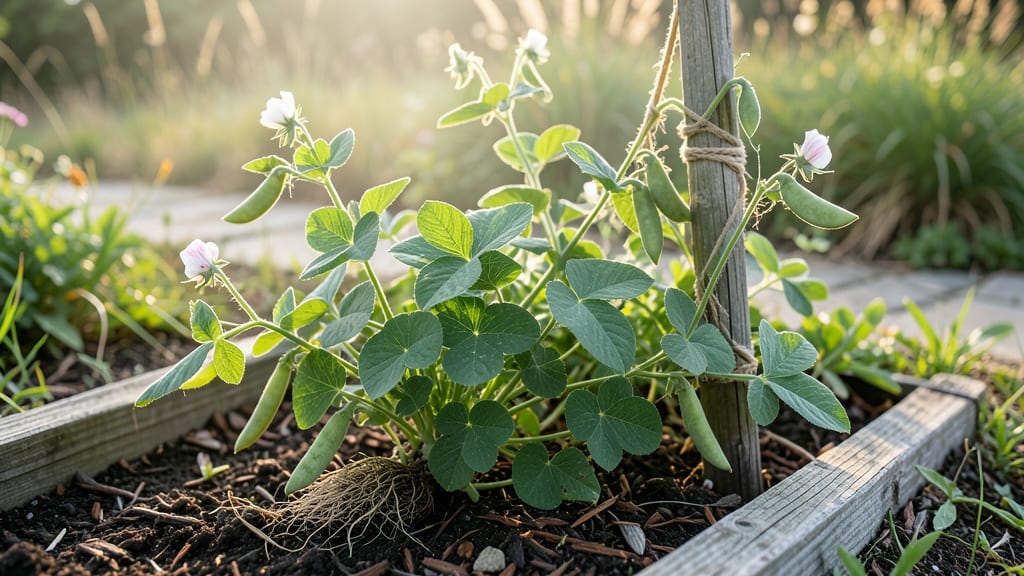
Peas are not perennial—they are cool-season annuals that complete their life cycle in one growing season, typically dying off after producing pods. However, some gardeners extend their harvest by planting successive crops or using trellises for vertical growth.
Peas thrive as annual plants because their entire growth cycle—from seed to pod—unfolds in just 60-90 days, after which the plant exhausts its energy. 🌱 Unlike perennials that regrow from the same root system year after year, peas allocate all their resources to flowering and seed production, leaving nothing for winter survival.
The key difference lies in their temperature sensitivity: while they sprout in cool spring soil, they bolt (flower prematurely) when summer heat arrives, signaling the end of their productive life.
That said, gardeners can mimic perennial behavior through smart techniques. Planting every 2-3 weeks in early spring creates overlapping harvest windows, while trellises maximize vertical space, allowing more plants per square foot.
Some varieties, like sugar snap peas, even produce more pods when supported, giving you a longer fresh supply without replanting.
💡 In This Article
- Why Peas Are Classified as Annuals
- Maximizing Pea Harvests in Your Garden
Why peas are classified as annuals
Peas are classified as annuals because their entire life cycle—from seed germination to seed production—unfolds in just 60-90 days, after which the plant dies. Unlike perennials, which store energy in roots or tubers to regrow annually, peas allocate nearly all their resources to flowering and pod development.
This rapid growth is an evolutionary adaptation to their cool-season preference, where they must complete their cycle before summer heat arrives and triggers bolting (premature flowering). 🌱
The process begins with seed germination in soil temperatures between 45-85°F, but once temperatures exceed 80°F consistently, peas shift from vegetative growth to reproductive mode. Their energy reserves are fully exhausted by the time pods mature, leaving no capacity for winter survival.
Even if left in the ground, peas will die back after frost, unlike perennial vegetables like asparagus or rhubarb that regenerate from crowns.
Another key factor is their shallow root system, which prioritizes quick nutrient uptake for rapid growth rather than deep storage. Peas develop fibrous roots that spread horizontally, maximizing surface area for water and nutrient absorption during their short lifespan.
This contrasts with perennial roots, which grow vertically to store starches and sugars for multiple seasons. The trade-off is clear: peas prioritize speed and reproduction over longevity.
Botanists categorize peas as cool-season annuals because they thrive in temperatures below 75°F and cannot tolerate prolonged heat. When summer arrives, their leaves yellow and die back—a process called senescence—signaling the end of their productive life.
This biological clock ensures peas complete their cycle before resource depletion, but it also means they cannot persist year after year like true perennials.
Interestingly, some gardeners confuse peas with perennial vining plants like sweet peas (Lathyrus odoratus), which are actually annuals too despite their climbing habit. The confusion arises because sweet peas can self-seed prolifically, creating the illusion of perennial behavior.
However, each plant still completes its life cycle in one season, just like edible peas. 💫
Understanding this botanical reality helps explain why peas require annual replanting. Their entire energy budget is allocated to one harvest cycle, leaving no reserves for regrowth. This is why gardeners rely on succession planting or trellising to extend their harvest window—both strategies compensate for the plant's inherent annual nature.