
Plants
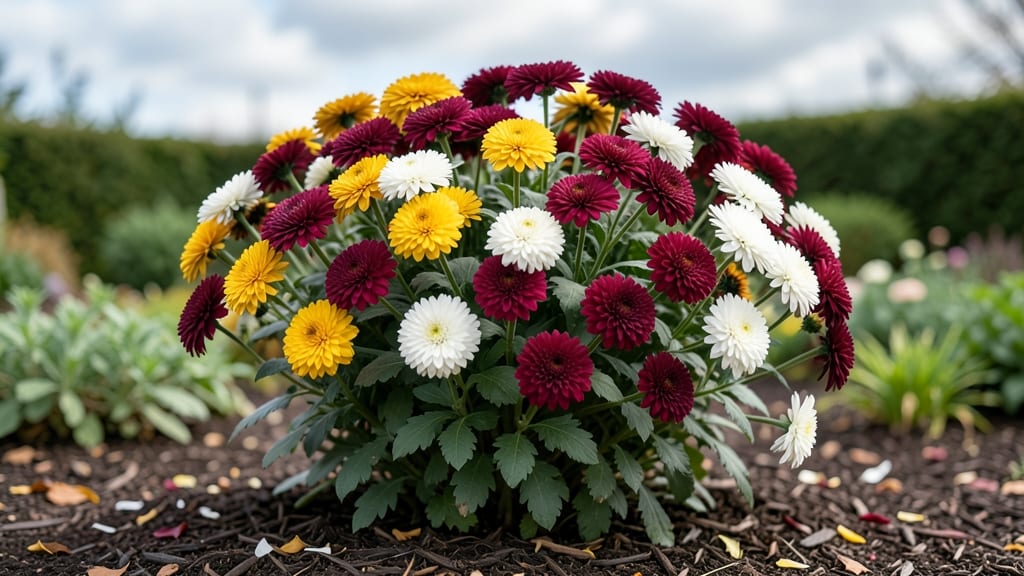
Mums (chrysanthemums) are not reliably perennials in Zone 7 without winter protection, though hardy varieties like 'Hardy Gold' or 'Dwarf Bonanza' may survive mild winters with dormant rhizomes. Most require mulching or overwintering indoors to persist beyond one season.
Zone 7's fluctuating temperatures—where winters dip below 10°F but can rebound quickly—pose a real challenge for mums. 🌱 The key to their survival lies in those underground rhizomes, which store energy for regrowth.
Hardy varieties like 'Hardy Gold' can tolerate brief cold snaps, but most chrysanthemums need extra insulation to avoid frost damage. Without protection, even established plants often die back to the ground, leaving you to replant each spring.
Think of mulching as a winter blanket for your mums—adding 3-4 inches of straw or shredded leaves creates an insulating layer that shields roots from temperature swings. For extra security, I've found that digging up container-grown mums and storing them in a cool, dark garage works wonders for repeat blooms.
The secret? Timing—wait until after the first frost but before hard freezes to move them indoors.
💡 In This Article
- How Chrysanthemum Rhizomes Survive Winter in Zone 7
- Protecting Mums Through Zone 7 Winters: Step-by-Step Guide
How chrysanthemum rhizomes survive winter in Zone 7
Chrysanthemum rhizomes enter a deep dormancy when temperatures drop, but their survival hinges on how well they endure freezing soil.
In Zone 7, where winter lows can dip to 10°F or lower, most mum varieties struggle because their rhizomes lack the natural frost tolerance of true perennials like peonies or hostas.
The hardiest cultivars—such as 'Hardy Gold' or 'Dwarf Bonanza'—can withstand brief exposure to 15°F thanks to their thicker rhizomes, which store more starch reserves. These reserves act like a natural antifreeze, slowing metabolic processes to prevent cell damage.
The real battle happens when soil temperatures hover around 28-32°F for extended periods. At this threshold, ice crystals form within the rhizome cells, disrupting their structure. Mulching with 3-4 inches of straw or shredded leaves creates an insulating layer that maintains soil temps 5-10°F warmer than ambient air.
This buffer zone is critical—studies show that even a 5°F difference can mean the difference between survival and dieback. 🌱 The rhizome’s ability to regrow in spring depends entirely on how well it preserves these energy reserves.
Not all chrysanthemums are created equal when it comes to cold hardiness. Garden varieties (like those bred for fall color) often top out at Zone 5-6 tolerance, while hardy mums can push to Zone 4-5 with proper care.
The distinction lies in their genetic makeup—hardy types have evolved thicker rhizomes and waxier leaf coatings that reduce moisture loss during dormancy. For example, 'Hardy Gold' can survive -10°F if the ground isn’t saturated, whereas a typical florist mum will succumb to 20°F exposure.
This is why choosing the right cultivar is half the battle.
What most gardeners overlook is the role of soil moisture during dormancy. Wet rhizomes freeze faster and suffer more ice damage than dry ones. That’s why well-draining soil is non-negotiable—it prevents the rhizomes from sitting in cold, soggy conditions.
A sandy loam mix with 10-20% organic matter strikes the right balance, allowing excess water to drain while retaining enough moisture to keep the rhizome hydrated but not waterlogged. 💧 This subtle balance is what turns a marginal climate into a survivable one.
Here’s the science behind why mulching works so well: organic mulch decomposes slowly, releasing heat as microbial activity continues—even in winter. This process, called "mulch insulation," can raise soil temps by 10-15°F compared to bare ground.
For container-grown mums, this effect is even more dramatic because pots lack the thermal mass of in-ground soil. That’s why overwintering potted mums in a garage (where temps stay 32-40°F) gives them the best shot at regrowth.
The rhizomes stay dormant but alive, ready to burst into growth when spring arrives.
One final twist: the timing of dormancy matters. Chrysanthemums naturally slow down as daylight shortens in fall, but if you’re growing them in containers, you can trick them into dormancy earlier by reducing water and moving them to a cooler spot.
This mimics the natural freeze-up process and gives the rhizomes a head start on storing energy. 🌿 By the time Zone 7’s first hard freeze hits, the rhizomes are already in a state of preparedness—like a hibernating bear with a full winter stash.