
Plants
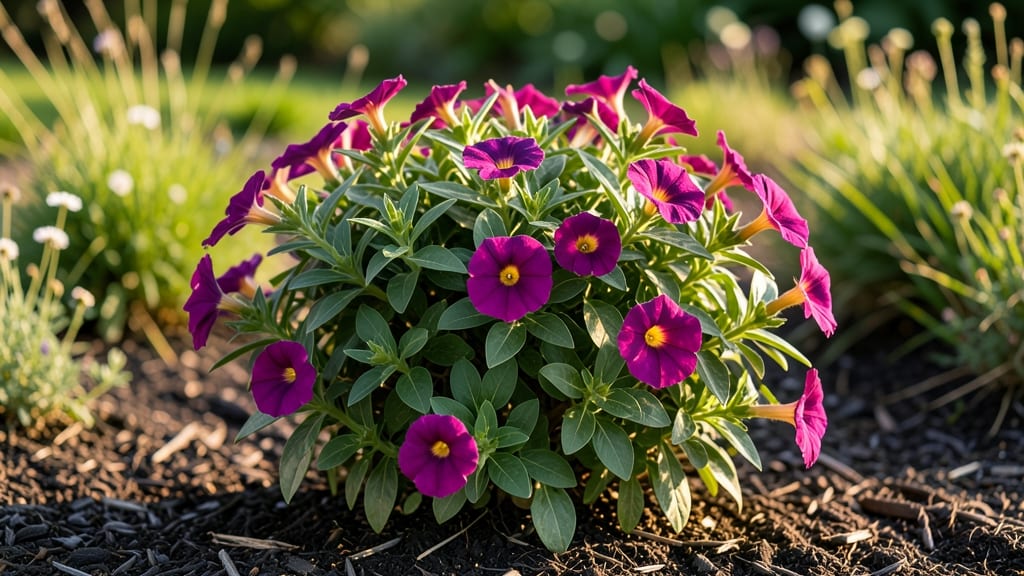
Mexican petunias are not perennials in most climates, dying back to the ground after frost but often returning from fibrous roots if conditions are favorable. They thrive as annuals in colder regions but may persist for years in warm zones with proper care.
Mexican petunias act more like tender perennials—they survive winter underground in mild climates but need protection in frost-prone areas. 🌱 The key lies in their fibrous root systems, which store energy to regrow when temperatures warm.
Unlike true perennials like salvias, they lack the hardiness to withstand freezing temperatures consistently. In zones 8-11, they often return year after year, while colder regions treat them as annuals for their stunning summer blooms.
What sets them apart is their resilience—even when they die back, their roots can regenerate if given the right conditions. This makes them a favorite for gardeners who want long-lasting color without the commitment of true perennials.
The trick is preparing them properly for winter, whether through mulching or bringing pots indoors.
💡 In This Article
- Why Mexican Petunias Die Back in Cold Climates
- How to Extend Mexican Petunia Longevity Year After Year
Why Mexican petunias die back in cold climates
Mexican petunias (Ruellia brittoniana) belong to a group of plants called tender perennials, meaning they survive winter only in specific conditions. Their sensitivity to frost stems from their tropical origins—they evolved in warm climates where temperatures rarely drop below 40°F (4°C).
When frost hits, their above-ground foliage freezes and dies, but their fibrous root system remains dormant underground, storing energy for potential regrowth.
The critical difference between Mexican petunias and true perennials (like salvias or verbenas) lies in their hardiness. True perennials develop woody stems or deep taproots that can withstand -10°F (-23°C) or colder, while Mexican petunias lack these adaptations.
Their roots are fibrous and shallow, storing just enough starch to regenerate if winter conditions aren’t too harsh. In zones 8-11, they often return year after year, but in colder zones (5-7), they’re treated as annuals because frost typically kills them to the ground.
Here’s what happens botanically: frost triggers a dormancy response in Mexican petunias. The plant’s cells lose water and enter a state of suspended growth, similar to how bulbs (like tulips) survive winter.
However, unlike bulbs, Mexican petunias don’t have specialized storage organs—their survival depends entirely on the roots’ ability to retain moisture and nutrients.
This is why mulching (adding 3-4 inches of organic matter) is critical: it insulates the roots and prevents soil temperature fluctuations that could wake them too early or freeze them solid.
Comparing them to salvias highlights the contrast: salvias have thick, woody stems that act as insulation, while Mexican petunias rely on their leaves for photosynthesis and can’t regrow from stem tissue if damaged.
Their blooms also play a role—heavy flowers can weigh down stems, making them more vulnerable to frost damage. In colder climates, gardeners often treat them as annuals, replanting each spring for their vibrant pink, purple, or white flowers that bloom from spring to fall.
Temperature thresholds are key: Mexican petunias can tolerate brief dips to 30°F (-1°C) but suffer damage below 28°F (-2°C). This is why they thrive in containers—you can move pots indoors or wrap them in frost cloth during unexpected cold snaps.
Their resilience in warm zones comes from their ability to regenerate quickly from roots, often pushing new growth within 2-3 weeks of spring’s arrival, provided the roots weren’t frozen solid.
What most gardeners overlook is the role of soil moisture during dormancy. Overly dry or waterlogged soil can stress roots, reducing their ability to regrow. Aim for moderately moist soil (like a wrung-out sponge) during winter to support root health.
In ideal conditions, their fibrous roots can live for 3-5 years, though their vigor declines without proper care.