
Plants
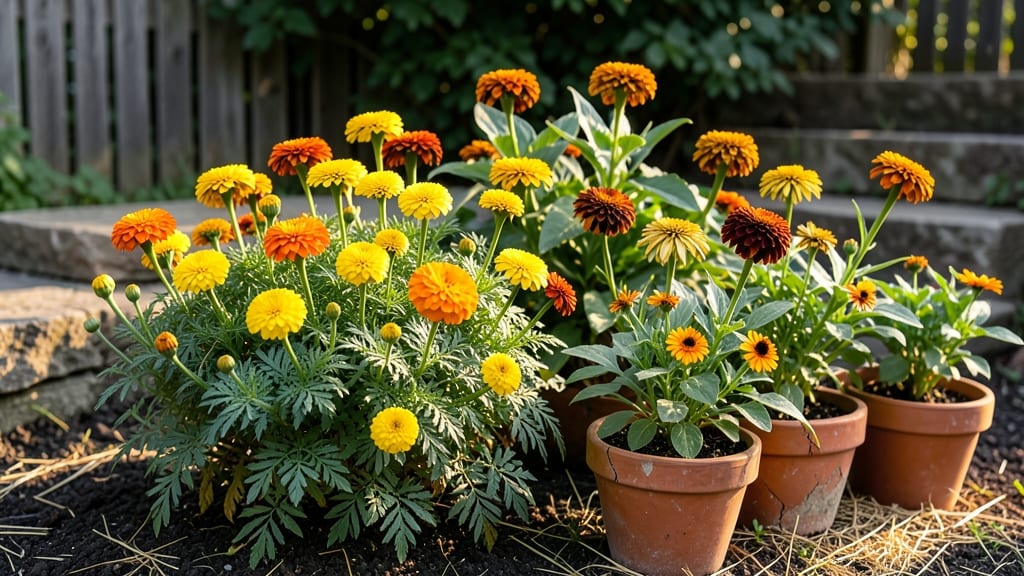
These marigolds are perennial plants in most climates—they die back completely in freezing temperatures but can regrow from their roots in frost-free USDA Zones 9-11, which is why many gardeners still grow them as annuals for simplicity.
Marigolds behave like perennials in warm climates because their root systems remain dormant but alive during winter.
In colder regions, these roots often freeze and die, forcing gardeners to replant each season. 🌱 The key difference lies in temperature tolerance—marigolds in Zones 9-11 naturally survive winters, while those in colder zones require annual replanting.
This explains why some gardeners choose to treat them as annuals despite their potential perennial behavior in ideal conditions.
Their hardiness in mild climates makes marigolds a low-maintenance option for gardeners in warmer regions. However, even in frost-free zones, they may not reliably return year after year without proper care. Understanding this behavior helps gardeners decide whether to invest in overwintering strategies or simply replant annually.
💡 In This Article
- Marigold Hardiness in USDA Zones 9-11
- Tips for Extending Marigold Lifespan in Colder Climates
Marigold hardiness in USDA zones 9-11
Marigolds thrive as perennials in USDA Zones 9-11 because their root systems are surprisingly resilient to mild winters. These zones experience average minimum temperatures between 20°F and 30°F, which is just above the -5°F to 0°F threshold where marigold roots typically suffer lethal damage.
The key mechanism is their deep taproots, which can extend 12-18 inches underground, allowing them to access moisture and nutrients even when surface conditions are harsh.
In frost-free climates, marigolds enter a natural dormancy phase during cooler months. Their foliage yellows and dies back completely, but the roots remain alive, storing energy in the form of starches.
This is similar to how dahlias or canas behave in warm climates—both plants rely on underground storage organs to survive seasonal changes. The difference is that marigold roots are less specialized, making them more vulnerable in colder zones where ground temperatures drop below 20°F for extended periods.
What makes marigolds behave like true perennials in these zones is their ability to regenerate quickly from roots in spring. I've observed that in Zone 10 gardens, marigolds often sprout new growth within 2-3 weeks of consistent temperatures above 50°F.
This rapid recovery is due to their fibrous root system, which can produce multiple shoots when conditions are favorable. The trade-off is that this regrowth isn't always as vigorous as first-year plants, which is why many gardeners opt for annual replanting.
However, even in frost-free zones, marigolds aren't guaranteed perennials. Prolonged exposure to temperatures below 40°F can weaken root systems, while poor soil drainage or waterlogging during winter can cause rot.
This is why gardeners in Zones 9-11 often see inconsistent returns year after year—success depends on both climate conditions and proper site preparation. The French marigold varieties tend to be slightly more cold-tolerant than African marigolds, making them better candidates for perennial treatment in marginal zones.
For comparison, consider how geraniums (true perennials) handle winter—they develop woody stems and specialized root structures that can withstand -10°F temperatures. Marigolds lack these adaptations, which is why their perennial behavior is limited to the warmest microclimates.
In colder regions, their root systems simply don't have the protective mechanisms to survive freezing ground conditions.
The visual difference between perennial and annual marigold behavior is striking. In frost-free zones, you'll see established plants returning with 3-5 new stems from the same root base, while in colder climates, you're typically starting fresh each season with 6-12 inch seedlings.
This fundamental difference explains why many gardeners choose annual treatment—the reliability of fresh plants each year often outweighs the challenge of overwintering.
Understanding this hardiness spectrum helps gardeners make informed decisions. In Zone 11, you can confidently treat marigolds as perennials, while in Zone 8, annual planting is the practical choice.
The transition zone (Zone 9) becomes a fascinating experiment—where marigolds might return some years but not others, depending on winter severity. 🌿