
Orchid Care
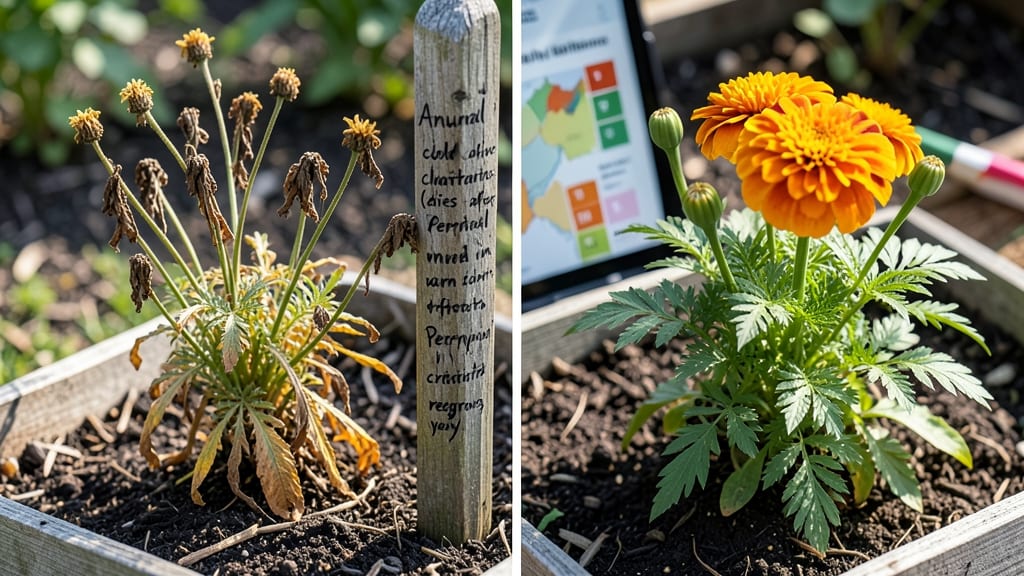
Whether marigolds are annuals or perennials depends entirely on your climate—cold regions treat them as annuals, while warm zones like USDA 10-11 let them thrive as perennials through self-seeding and winter survival.
This distinction comes down to frost tolerance: marigolds die back when temperatures drop below 28°F, but in frost-free areas, they regrow from their roots each spring. 🌱 The key difference is how they handle winter—annuals complete their life cycle in one season, while perennials in warm climates establish deep root systems that persist year-round.
If you're in a cooler zone, you can still extend their lifespan by saving seeds or growing them in containers you bring indoors during winter.
For gardeners in transitional zones (like USDA 9), marigolds often act like short-lived perennials—they may survive mild winters but struggle with hard freezes. This is why many gardeners in these areas treat them as annuals for simplicity, though some varieties like 'French Marigold' show better cold resistance than others.
💡 In This Article
- How Climate Affects Marigold Lifespan
- Extending Marigold Growth in Cold Regions
How climate affects marigold lifespan
Marigolds' classification as annuals or perennials hinges on their frost sensitivity threshold—when nighttime temperatures drop below 28°F, their tender stems and leaves freeze, killing the plant above ground.
This is why gardeners in USDA zones 1-8 typically treat them as annuals: the cold triggers dormancy, and the plant completes its life cycle in one growing season. 🌱 In warmer zones (9-11), however, marigolds develop deep taproots that insulate against mild winter chills, allowing them to regrow from the same root system year after year.
The botanical mechanism involves dormancy triggers. In cold climates, marigolds allocate energy to flowering and seed production before frost, prioritizing reproduction over survival.
In contrast, perennial marigolds in frost-free zones invest in root expansion—some varieties like 'Mexican Marigold' can grow roots up to 3 feet deep, storing nutrients to fuel regrowth.
This explains why you'll see marigolds self-seeding aggressively in warm zones: they're not just annuals dying and resowing—they're strategically persisting through underground reserves.
Temperature isn't the only factor—day length plays a role too. Marigolds are short-day plants, meaning they flower when daylight hours shorten (typically in late summer). In perennial climates, this cycle repeats annually, while in annual zones, gardeners must replant each spring.
The 30-60 day growth cycle from seed to bloom means even a few weeks of frost can disrupt this timeline entirely in colder regions.
Here's the science behind the shift: marigolds belong to the Asteraceae family, which includes many perennials. Their perennial potential is genetically suppressed in cold climates due to evolutionary pressure—surviving one growing season was more advantageous than risking winter die-off.
In warm zones, this suppression lifts, allowing them to express their full perennial growth habit. 🔥 This is why you'll find marigolds thriving as perennials in Hawaii or Southern California but struggling to return in Minnesota.
Consider this comparison: in USDA zone 10, marigolds may produce three blooming cycles per year, while in zone 5, they'll only complete one before frost.
The difference comes down to heat accumulation—perennial marigolds in warm zones experience over 2,400 heating degree days annually, while annual zones see just 1,200-1,800, insufficient for perennial survival.
This heat threshold explains why even "perennial" marigolds in marginal zones (like zone 9) often revert to annual behavior during harsh winters.
The visual difference is striking: perennial marigolds develop woody stems at their base after several years, while annuals remain herbaceous. This woody growth is your telltale sign that a marigold is behaving like a true perennial—it's the plant's way of reinforcing its root system against seasonal stress.
In frost-free climates, you'll also notice more robust foliage and larger flowers as the plant matures over multiple seasons.