
Trees
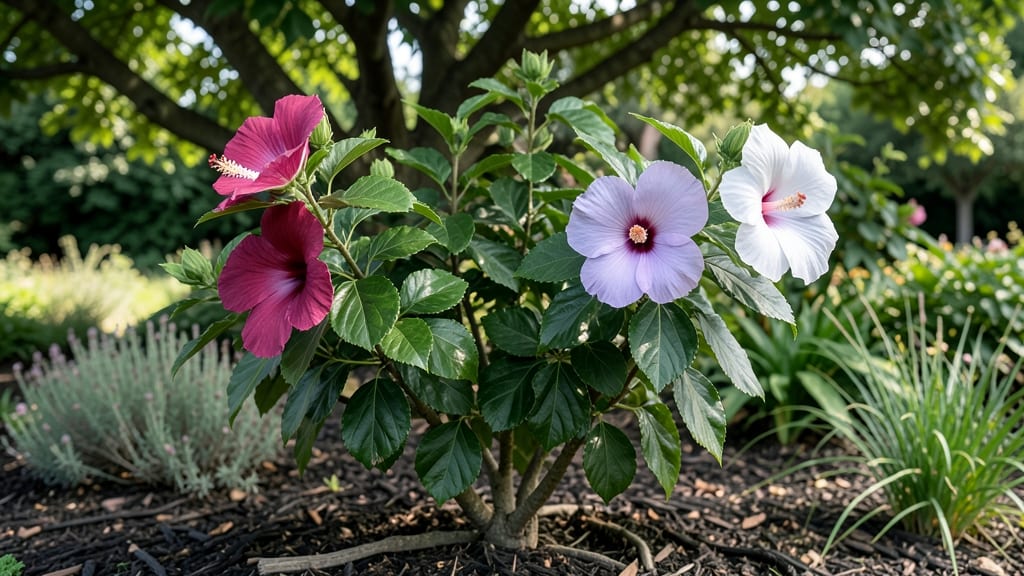
Hibiscus trees are not perennials in cold climates—they die back to the ground in frost but regrow from roots if protected. Tropical hibiscus thrive year-round in warm zones, while hardy varieties like Hibiscus moscheutos survive mild winters with proper care.
Hibiscus trees behave differently depending on your climate zone. In colder regions (USDA zones 5–8), they act like seasonal herbaceous perennials—their above-ground growth freezes back, but the roots remain alive underground.
This is why you'll see them regrow in spring if protected properly. 🌱 Tropical hibiscus, however, are true perennials in warm zones (9–11), growing continuously without dormancy. The key difference lies in their genetic adaptation to temperature extremes.
What makes this interesting is how hibiscus roots handle cold: they store energy like bulbs, allowing them to push new shoots when temperatures rise. Hardy varieties like Hibiscus moscheutos have evolved thicker stems and deeper root systems to withstand brief freezes, while tropical types lack these adaptations.
This explains why some gardeners in zone 8 can grow hibiscus successfully while others struggle—it's all about the right variety and winter prep.
💡 In This Article
- Hibiscus Cold Hardiness Zones and Dieback Science
- Winterizing Hibiscus Trees for Longevity
Hibiscus cold hardiness zones and dieback science
Hibiscus trees trigger dormancy through a biological response to temperature drops below 28°F. When frost hits, the plant's cells release protective sugars that act like antifreeze, preventing ice crystal formation in stems.
This is why tropical hibiscus (like Hibiscus rosa-sinensis) die completely in zone 8 winters—their cells lack the cold tolerance mechanisms found in hardy species.
The USDA zone system maps these differences precisely: zone 9-11 hibiscus grow continuously, while zone 5-8 varieties enter full dormancy, dropping leaves and stems but preserving roots.
The root system plays a crucial role in survival. Hardy hibiscus like Hibiscus moscheutos develop thick, woody roots that can withstand 15-20°F temperatures, while tropical roots freeze at 32°F. What's fascinating is how these roots store starches during summer growth—these reserves fuel regrowth in spring.
For example, a well-established Hibiscus moscheutos can regenerate from roots even after stems die back to the ground, while tropical hibiscus need full winter protection to survive even mild freezes.
This biological adaptation explains why some gardeners in zone 8 successfully grow hibiscus while others fail. The key difference lies in root depth: hardy varieties develop roots 3-4 feet deep, while tropical species typically stay shallow.
When winter arrives, deeper roots access soil warmth from lower layers, creating a microclimate that protects the plant's core. This is why mulching with 4-6 inches of organic matter becomes critical—it insulates roots and prevents soil temperature fluctuations.
What most people overlook is the timing of dormancy. Hibiscus don't just react to cold—they need a period of cool weather (below 50°F) for 4-6 weeks before winter to trigger proper dormancy. Without this acclimation period, the plant remains vulnerable to sudden freezes.
This explains why hibiscus grown in containers often fail in cold climates—their roots don't have the same insulation as in-ground plants, and container soil freezes more quickly.
For visual comparison, imagine two hibiscus plants side by side: one tropical (Hibiscus rosa-sinensis) and one hardy (Hibiscus moscheutos). When temperatures drop to 25°F, the tropical variety will show brown, crispy stems while the hardy one remains dormant but intact.
The difference isn't just survival—it's about the plant's entire growth strategy. Hardy hibiscus allocate more energy to root development during summer, creating a stronger foundation for winter survival.
This scientific understanding explains why gardeners in marginal zones (like zone 8) often need to take extra precautions. The plant's ability to regrow depends entirely on whether its roots survived the winter intact. Even a few degrees difference can mean the difference between a thriving hibiscus and a lost investment.