
Shrubs
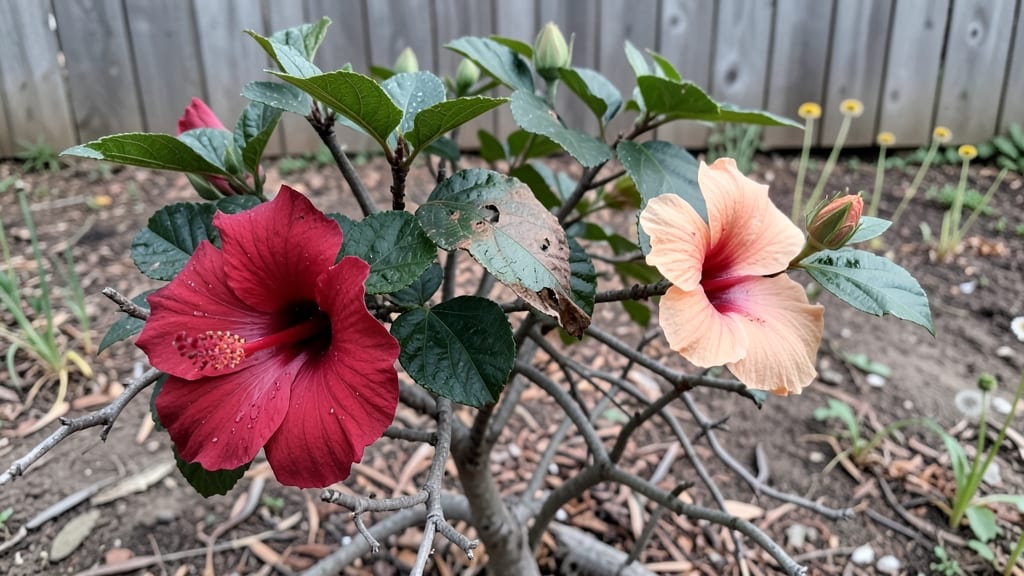
Hawaiian Punch hibiscus plants are not true perennials—they thrive as tender perennials or annuals in most climates, dying back to the ground in frost but often regrowing from roots if conditions improve. They require protection in cold zones (below USDA 9b) to survive winter.
Hawaiian Punch hibiscus behaves like a seasonal plant because its tropical origins make it sensitive to frost.
While it may return from the roots in milder winters, true hardiness requires USDA zones 9b-11—any colder, and the plant acts like an annual. 🌿 The key difference is that even in frost-free zones, hibiscus plants often lose their leaves and enter dormancy, only to rebound with new growth when temperatures warm again.
What sets these plants apart is their resilience—even if the top growth dies, the root system often survives underground, ready to push new shoots when conditions improve. This makes them perfect for warmer climates but requires extra care in transitional zones where late frosts can be deadly.
For gardeners in cooler areas, overwintering strategies like mulching or container protection become essential.
💡 In This Article
- Hawaiian Punch Hibiscus Cold Hardiness Limits
- How to Overwinter Hawaiian Punch Hibiscus
Hawaiian Punch hibiscus cold hardiness limits
The Hawaiian Punch hibiscus (Hibiscus rosa-sinensis varieties) thrives in USDA hardiness zones 9b-11, where winter temperatures rarely drop below 25°F. This tropical plant's natural habitat lacks freezing conditions, making it highly sensitive to frost.
The plant's cells contain high moisture content (about 75-80% water), which freezes and ruptures at 32°F or below—this is why foliage blackens and wilts during cold snaps. 🌡️
What makes hibiscus unique is its root resilience. Even when tops die back, the thick, fibrous roots (often 1-2 inches in diameter) can survive down to 20°F if protected by mulch or soil insulation.
Think of it like a dormant bulb: the energy stored in the roots fuels regrowth when temperatures rise above 50°F. In zones 8a-9a, roots may survive brief cold snaps but typically require 3-4 inches of mulch for protection.
The science behind this involves cellular dehydration tolerance. Unlike true perennials (e.g., roses), hibiscus lacks specialized antifreeze proteins. Instead, it relies on osmotic adjustment—cells increase sugar concentrations to lower their freezing point. This works only in mild winters; prolonged exposure to 25°F or colder kills roots too. 🌱
Here's how zones break down practically:
- Zones 9b-11: Hibiscus behaves as a true perennial—roots survive winters, and plants regrow annually.
- Zones 8a-9a: Acts like a "conditional perennial"—roots may survive with protection, but growth is unreliable.
- Zones 7b and colder: Functions as an annual—roots typically die, requiring replanting each spring.
Gardeners often mistake hibiscus for a true perennial because it can rebound from roots in USDA 9b winters where temperatures dip to 25°F for only 2-3 days. However, prolonged cold or repeated freeze-thaw cycles (common in zone 8) will kill the plant entirely. The key difference from true perennials is hibiscus lacks the cold acclimation process seen in hardy plants like peonies or hostas.
For visual reference, imagine a hibiscus plant in zone 10a (mild winters): it may drop leaves in 40°F weather but regrows fully by spring. In zone 8a, the same plant would likely die back completely and not recover without human intervention.
This zone-dependent behavior explains why hibiscus is classified as a tender perennial—it survives winters only under specific conditions. 🌿