
Vegetables
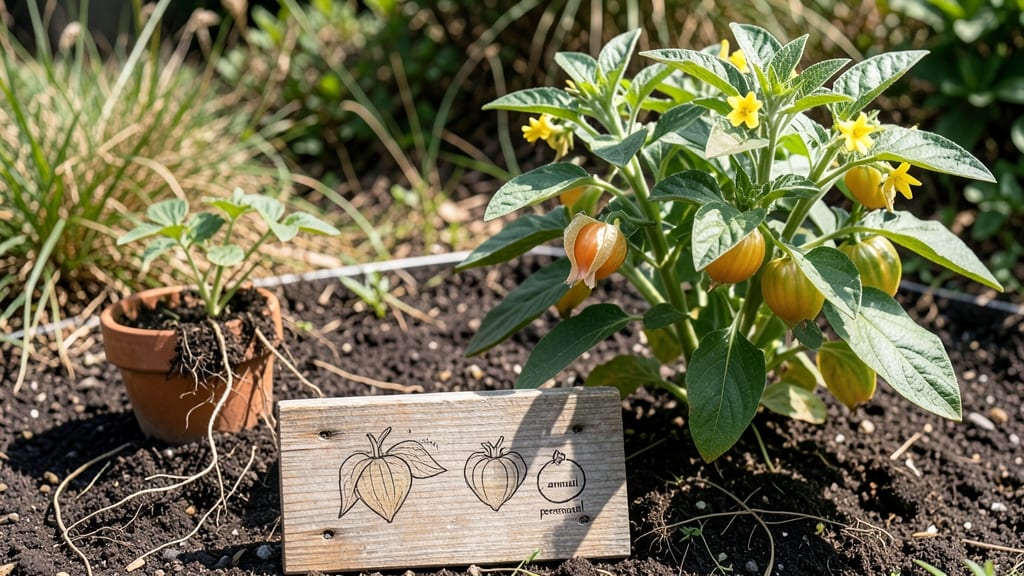
Ground cherries are not perennial in most climates, dying back annually after producing fruit, though their roots may persist in warmer regions or with winter protection. Cold-hardy varieties can regrow from the base if protected, but they typically require replanting each season in colder areas.
Ground cherries behave more like tender perennials than true hardy plants, meaning their above-ground growth dies with frost but their roots often survive underground. 🌱 In milder climates (USDA zones 8-10), you might see regrowth from the same root system year after year, though the vigor rarely matches a fresh planting.
The key difference comes down to winter protection—without insulation or shelter, those roots won't make it through freezing temperatures.
What most gardeners discover is that even when roots persist, the plant's productivity declines after 2-3 years without renewal. This makes ground cherries function practically as annuals in most home gardens, despite their biological ability to regenerate.
The trade-off? Selecting cold-resistant varieties like 'Pineapple' or 'Black Beauty' gives you the best shot at multi-year growth with minimal replanting.
💡 In This Article
- Climate Factors Affecting Ground Cherry Lifespan
- How to Extend Ground Cherry Growth Beyond One Season
Climate factors affecting ground cherry lifespan
Ground cherries (genus Physalis) are frost-sensitive plants that behave as annuals in most temperate climates because their above-ground growth dies when temperatures drop below 28°F.
The key difference between true perennials and ground cherries lies in their root systems: while the stems and leaves succumb to cold, the roots often survive in milder winters (USDA zones 8-10), where soil temperatures rarely fall below 20°F.
This root persistence explains why some gardeners observe regrowth in warmer microclimates or protected locations.
The plant's dormancy triggers are primarily temperature-based. As daylight shortens and nights grow cooler, ground cherries enter a semi-dormant state where growth slows but roots remain metabolically active. In colder regions (USDA zones 5-7), these roots typically freeze back completely, requiring new plantings each spring.
The critical threshold is 15°F soil temperature - below this, even protected roots struggle to survive. Interestingly, ground cherries share this sensitivity with their relatives, cape gooseberries, which also require warm climates to persist.
Soil conditions play a secondary but important role in determining whether roots survive winter. Well-draining soil with organic matter helps insulate roots against temperature fluctuations, while heavy clay soils can cause frost penetration deeper into the ground.
The ideal soil pH for ground cherries is 6.0-7.0, which also supports beneficial microbial activity that may help roots withstand mild cold stress. In contrast, waterlogged soils accelerate root rot, making plants more vulnerable to winter kill. 🌱
Regional climate patterns create significant variability in ground cherry behavior. For example, in California's coastal zones (zone 9), ground cherries often regrow annually from the same roots, while inland areas with colder winters (zone 7) require annual replanting.
This geographic sensitivity means gardeners in transitional zones (like zone 8) can sometimes achieve multi-year growth with proper winter protection, but results vary dramatically based on microclimate and specific variety.
What most people don't realize is that ground cherries actually produce more vigorous regrowth when they're not overcrowded. In their native South American habitats, these plants grow as perennials in tropical climates where they experience no frost.
The annual behavior we observe in temperate zones is essentially a survival adaptation to cold stress. This explains why second-year plants often produce smaller yields - they're diverting energy toward root maintenance rather than fruit production.
For gardeners in marginal climates, understanding these factors helps set realistic expectations. Even with perfect winter protection, ground cherries typically don't live more than 3-4 years in the same location before productivity declines.
The most reliable way to maintain a continuous harvest is to treat them as annuals while selecting varieties with the best cold tolerance for your specific hardiness zone. 💫