
Companion Plants
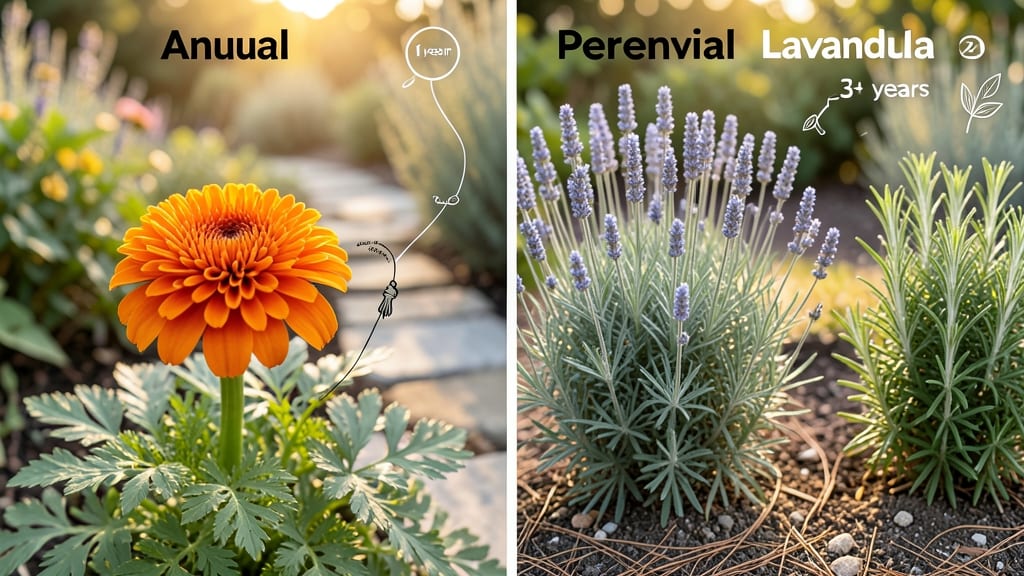
What does annual and perennial plants mean? These terms describe plants with fundamentally different lifespans: annuals complete their life cycle in one season, while perennials regrow each year from their root systems.
Understanding these terms helps gardeners plan better.
Annuals like marigolds or zinnias offer vibrant seasonal color but require replanting each year, while perennials such as lavender or coneflowers establish deep roots that survive winter, delivering consistent blooms with less effort. 🌱 The key difference lies in their root systems—annuals focus energy on quick growth and reproduction, whereas perennials invest in long-term survival through robust underground structures.
This distinction impacts everything from planting schedules to maintenance routines, making it essential for designing resilient gardens.
For example, if you want a garden that bursts with color every summer, annuals are ideal for quick impact, but they demand more frequent care. On the other hand, perennials like hostas or peonies provide low-maintenance beauty that builds over time, rewarding patience with decades of growth.
The choice often comes down to your goals: fast results versus long-term investment.
💡 In This Article
- Lifespan and Growth Cycle Differences Between Annuals and Perennials
- Choosing Annual vs Perennial Plants for Your Garden
Lifespan and growth cycle differences between annuals and perennials
The fundamental difference between annual and perennial plants lies in their biological strategies for survival. Annuals like sunflowers or basil are programmed to complete their entire life cycle—germination, growth, flowering, seed production, and death—in just one growing season.
This rapid life cycle is driven by a genetic trigger that prioritizes reproduction over long-term survival. Their shallow root systems focus energy on quick growth and seed production, often reaching maturity in as little as 6-8 weeks for fast-growing varieties like radishes.
Perennials, on the other hand, employ a radically different survival strategy. Plants like black-eyed Susans or daylilies develop extensive root systems that store nutrients and energy underground during dormancy. These roots can extend 3-5 feet deep in some species, allowing them to access water and nutrients even in harsh conditions.
The key mechanism here is bud dormancy—perennials enter a state of suspended growth during winter, with buds protected just below the soil surface. When spring arrives, these buds reactivate, drawing on stored reserves to produce new shoots and flowers with minimal energy expenditure.
Seasonal adaptation plays a critical role in these differences. Annuals thrive in climates where winter kills them off entirely, but their seeds remain viable in the soil until conditions improve.
For example, a marigold seed planted in spring might germinate, bloom, and die by fall—but its seeds can lie dormant for years until disturbed or warmed by sunlight. Perennials, however, have evolved to handle seasonal extremes.
Some, like peonies, produce thick, fleshy roots that store starches, while others, such as asparagus, develop extensive rhizomes that spread underground each year.
The trade-off between these strategies becomes clear when examining their energy allocation. Annuals invest nearly all their resources into rapid above-ground growth and seed production, often producing thousands of seeds in a single season.
Perennials, meanwhile, allocate energy to both reproduction and root development, creating a more balanced but slower growth pattern. This is why a perennial like lavender might take 2-3 years to reach full maturity but then thrive for decades with minimal care.
Consider the example of a garden in a cold climate. Annuals like pansies or sweet peas will bloom vibrantly in spring but die back completely by summer's end. Their seeds, however, can germinate again the following spring.
In contrast, a perennial like coneflower will send up new shoots each spring from its surviving root crown, producing flowers year after year without needing replanting. This biological difference explains why gardeners often mix both types—annuals for seasonal color and perennials for structure and longevity.
What most gardeners don't realize is how these growth patterns interact with soil health. Annuals often enrich the soil with organic matter as they decompose, while perennials contribute to long-term soil stability through their extensive root networks.
This creates a feedback loop where annuals boost fertility in the short term, while perennials improve soil structure over time. 🌱