
Plants
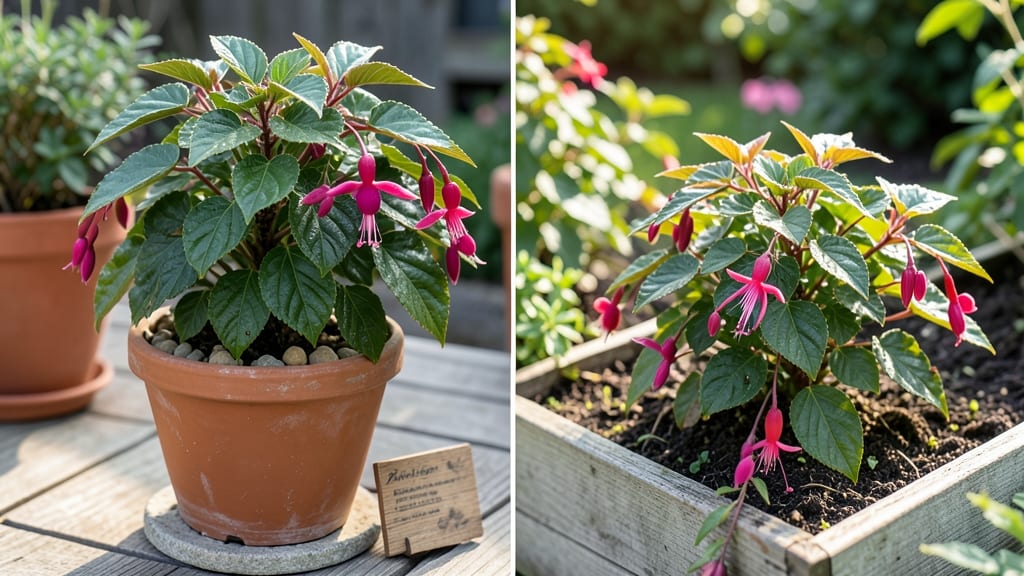
Fuchsias are perennial only in frost-free USDA zones 9-11, where they naturally regrow each year. In colder regions, they act as annuals or tender perennials that need overwintering indoors or replanting annually. Hardy varieties like Fuchsia magellanica tolerate light frost better than tropical species.
Whether fuchsias live multiple years depends entirely on your climate zone.
In warm regions like Southern California or Florida, these plants naturally survive winter and bloom again—true perennial behavior. 🌱 However, in colder zones (below 9), frost kills the above-ground growth, forcing gardeners to treat them as annuals or take special steps to protect them through winter.
The key difference lies in their roots: hardy types like Fuchsia magellanica can withstand brief chills, while tropical varieties need constant warmth to thrive.
This distinction explains why some gardeners swear by overwintering techniques like digging up tubers or moving plants indoors, while others in milder areas simply let them grow year-round. The plant's ability to bounce back hinges on whether its root system survives the cold—something only frost-free zones guarantee naturally.
💡 In This Article
- How Cold Hardiness Affects Fuchsia Lifespan
- Overwintering Fuchsias in Cold Climates: Step-by-Step Guide
How cold hardiness affects Fuchsia lifespan
Fuchsias' survival hinges on their cellular response to freezing temperatures. When exposed to 28°F (-2°C)—the threshold where most fuchsia varieties suffer damage—their cell membranes rupture due to ice crystal formation.
Hardy types like Fuchsia magellanica can tolerate brief dips to 20°F (-7°C) thanks to natural antifreeze proteins that lower their freezing point by 5-10°F. Tropical varieties like F. boliviana lack these adaptations and die when temperatures drop below 32°F (0°C). 🌡️
The USDA zone system directly correlates with this biology: zones 9-11 maintain winter temperatures above 20°F (-7°C), allowing fuchsias to enter natural dormancy rather than fatal freeze-thaw cycles.
In zone 8, where winters dip to 10-20°F (-12 to -7°C), plants may survive with protective mulch that insulates roots to 30°F (-1°C). The critical difference lies in root insulation—hardy varieties regrow from protected rhizomes, while tropical types require complete overwintering.
This cold tolerance explains why gardeners in zone 9 can plant fuchsias directly in garden beds year-round, while those in zone 6 must dig up tubers or use containers. The plant's ability to regenerate depends on whether its root system remains viable through winter.
For example, F. magellanica's roots can survive 2-3 weeks of 20°F (-7°C) exposure, while F. boliviana's roots die after just 48 hours below 30°F (-1°C). 🌱
Consider the visual differences: hardy fuchsias develop thicker, woody stems that store water and nutrients, while tropical varieties remain herbaceous and succumb to frost damage. This structural adaptation is nature's way of compensating for colder climates.
Gardeners in transitional zones (8-9) often use 3-4 inches of mulch to create a 5°F (3°C) temperature buffer around roots, mimicking the natural protection of frost-free regions.
What most gardeners overlook is how soil type affects cold tolerance. Sandy soils drain quickly, exposing roots to freezing air, while clay holds moisture and insulates better.
In zone 7, where winters average 15-20°F (-9 to -7°C), planting fuchsias in raised beds with compost-rich soil can extend their lifespan by 2-3 years compared to open ground. This soil modification creates a microclimate that delays frost penetration by 1-2 weeks. 💫
For those in zones 5-6, where winters drop below 0°F (-18°C), even hardy varieties require greenhouse storage or heated propagators to maintain root viability. The key metric here is root temperature: keeping it above 35°F (2°C) prevents irreversible damage.
This explains why many northern gardeners treat fuchsias as annuals—the energy required to protect them often outweighs their seasonal benefits.