
Flowers
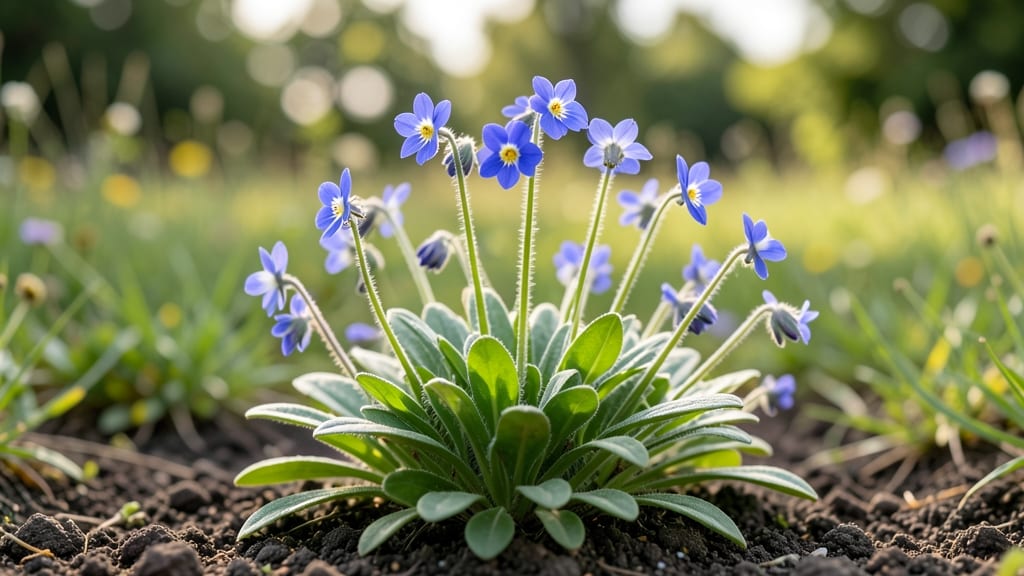
Forget-me-not flowers are perennials in USDA zones 3-7, where they naturally return each spring with proper care, but gardeners in warmer climates often grow them as annuals since they may not survive harsh winters. These delicate blooms thrive as self-seeders, creating new plants year after year in ideal conditions.
These charming blue flowers belong to the Myosotis genus, which includes both true perennials and biennials depending on the variety. 🌸 In colder regions, they develop deep root systems that allow them to regrow annually, while in warmer areas, their lifespan is often limited to one season unless they reseed naturally.
The key to encouraging perennial behavior lies in mimicking their native European woodland environments—rich, moist soil and partial shade help them establish strong roots for winter survival.
What sets forget-me-nots apart is their ability to self-seed prolifically. When left undisturbed, they'll scatter tiny seeds that sprout the following spring, creating naturalized patches that spread organically. This makes them perfect for cottage gardens or woodland edges where they can thrive with minimal intervention.
For gardeners in marginal zones, adding a thick layer of mulch in late fall can provide the extra insulation needed to protect their roots during cold snaps.
💡 In This Article
- Forget-Me-Not Flower Lifespan and Climate Adaptations
- Tips for Encouraging Forget-Me-Nots to Return Year After Year
Forget-me-not flower lifespan and climate adaptations
The forget-me-not's botanical classification as a perennial comes from its natural growth cycle in Myosotis species, which evolved in Europe's temperate climates. True perennials like Myosotis sylvatica (wood forget-me-not) develop fibrous root systems that store energy underground during winter dormancy, allowing them to regrow each spring.
These roots can extend 12-18 inches deep, accessing moisture and nutrients even when surface soil freezes. 🌱
In USDA zones 3-7, forget-me-nots naturally overwinter because their cold hardiness matches these regions' winter temperatures (-35°F to 0°F). The plant's cells produce protective proteins that prevent ice crystal formation in tissues, a process called cold acclimation.
However, in warmer zones (8+), where winters rarely drop below 20°F, the plant lacks sufficient dormancy cues to survive. Without proper chilling (4-8 weeks below 40°F), the roots fail to regenerate in spring.
Forget-me-nots' self-seeding habit explains why they often appear perennial even in marginal climates. Each tiny 0.1-inch seed contains enough stored energy to germinate within 10-14 days of landing in moist soil. This creates dense colonies that mask their true lifespan.
In ideal conditions (partial shade, consistent moisture), a single plant can produce 50,000+ seeds annually. The trade-off? These seedlings inherit their parents' delicate nature, making them equally vulnerable to summer drought or heat stress.
What most gardeners miss is how forget-me-nots adapt their growth patterns. In colder zones, they focus energy on root development early, while in warmer areas, they prioritize rapid flowering to complete their life cycle before summer heat arrives.
The Myosotis scorpioides variety, for example, thrives in wetter conditions and may behave as a short-lived perennial, while Myosotis discolor often acts as a biennial, flowering in its second year before dying.
Light exposure plays a surprising role in their perennial behavior. Forget-me-nots native to woodland edges prefer 30-50% shade, which reduces water loss and stress. In full sun, their leaves scorch at 85°F+, forcing the plant to expend energy on repair rather than root growth.
This explains why they often "disappear" in hot summers—they're not dead, just dormant until conditions improve. 🌿
For gardeners in zone 7 borders, the key difference between annual and perennial behavior comes down to winter soil temperatures. While air temps may drop to 20°F, soil often stays 5°F warmer—enough to protect roots if mulched properly.
The 3-inch layer of straw or leaves acts as insulation, maintaining soil temps above 25°F, the critical threshold for forget-me-not survival.