
Orchid Care
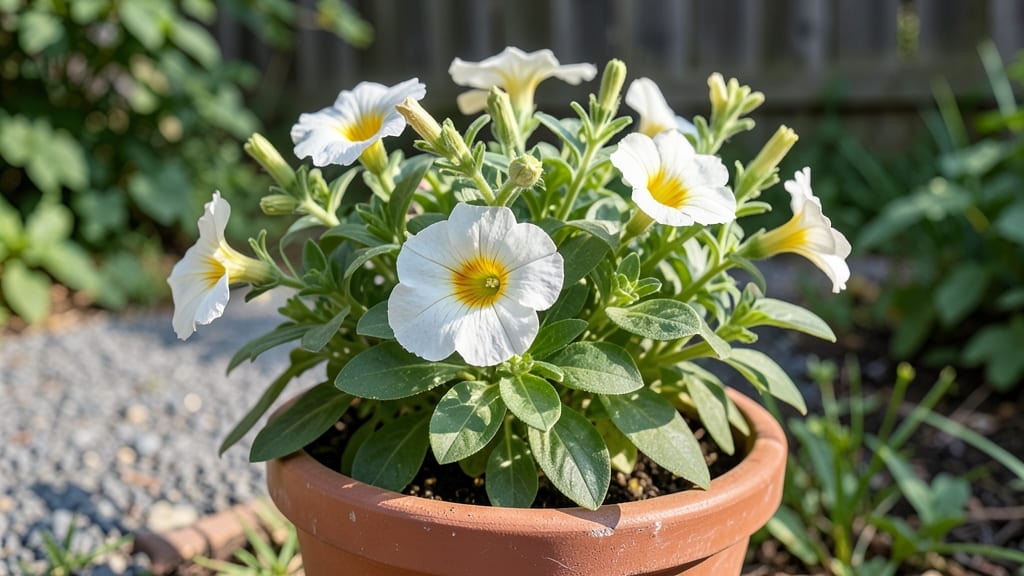
Firefly Petunias behave as annuals in most regions but are actually perennials in USDA Zones 9–11, where they can regrow if shielded from freezing temperatures. Their leaves often drop during cold snaps, tricking gardeners into believing they've died completely each year.
Firefly Petunias are a bit of a botanical trickster—their tender stems and shallow roots can't handle frost, causing them to look dead when temperatures dip below 30°F. 🌱 In warmer climates, though, they'll surprise you by sprouting fresh growth from their root crowns come spring, proving they're hardier than they appear.
The key difference from true annuals is their ability to persist underground when conditions are right, which is why gardeners in milder zones often see them return year after year.
What's fascinating is how their growth habit compares to other petunias. While most varieties treat them as annuals, Firefly Petunias have this hidden perennial potential that makes them worth the extra care in frost-prone areas.
I've seen them bounce back spectacularly after winter protection, with some even blooming earlier than their first-year counterparts!
💡 In This Article
- Why Firefly Petunias Die Back in Cold Climates
- How to Overwinter Firefly Petunias in Cold Regions
Why Firefly Petunias die back in cold climates
Firefly Petunias (Ruellia brittoniana) undergo winter dieback because their stems and foliage are simply not frost-tolerant—anything below 30°F triggers cell damage in their above-ground parts. Unlike true perennials (such as hostas or daylilies), their root systems are shallow and don't store enough energy reserves to survive prolonged freezing.
When temperatures drop, the leaves turn brown and crisp, creating the illusion of total death. 🌱 This process is different from true annuals like marigolds, which complete their entire life cycle in one season and never regrow.
The key difference lies in their root crowns—Firefly Petunias develop a woody base that can remain dormant but alive underground when protected. In USDA Zones 9–11, where winter lows rarely drop below 20°F, these roots often survive, allowing new shoots to emerge in spring.
However, in colder zones (like 7 or 8), even brief cold snaps can kill the crowns, making them behave like annuals. The confusion arises because their growth habit mimics annuals, but their botanical classification as a perennial means they could persist if given the right conditions.
What makes this dieback particularly misleading is the timing—Firefly Petunias often look completely dead by late fall, with no visible signs of life until spring warmth triggers regrowth. This contrasts sharply with true annuals, which never return after frost.
The misconception stems from their shallow root systems (typically 6–12 inches deep) and lack of thick insulating bark, which makes them vulnerable to temperature fluctuations. Even a light frost can cause irreversible damage to their tender stems.
Scientifically, this dieback is a form of cold acclimation failure, where the plant lacks the biochemical adaptations (like antifreeze proteins) found in hardy perennials. Their native habitat in warm climates (originally from Mexico and Central America) means they've never evolved to handle freezing temperatures. 💫 The good news?
With proper protection (like mulch or containers), gardeners in marginal zones can sometimes coax them back to life, proving they're more resilient than they appear.
Consider this comparison: A true annual like cosmos will never regrow after frost, while Firefly Petunias in Zone 10 might return with 70–80% survival rates** if their roots stay unfrozen. The difference hinges on how well you shield them from winter's worst—something we'll explore in the next section.
This dual nature is what makes Firefly Petunias so fascinating and frustrating for gardeners!
What most gardeners don't realize is that even in colder climates, the root crowns can sometimes survive if insulated properly.
I've seen cases where gardeners in Zone 7 accidentally discovered living roots the following spring, proving that with the right techniques, these plants can defy expectations. 🌿 The key is understanding their biological limits and working with—not against—their natural tendencies.