
Planting
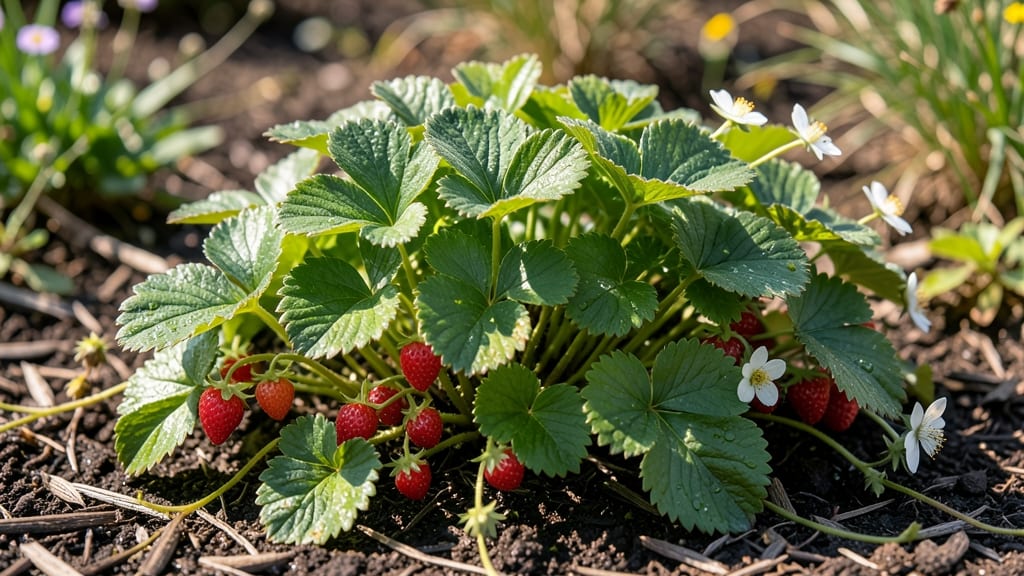
Everbearing strawberries are technically perennial plants, but their long-term survival depends heavily on climate. In colder regions (Zones 3-4), they often die back in winter, forcing gardeners to replant annually for continuous harvests. Only in Zones 5 and warmer can they reliably overwinter with proper protection.
Everbearing strawberries are perennial by nature, meaning their roots can live for years if given the right conditions. 🌱 However, their above-ground parts are more vulnerable to freezing temperatures, which is why many gardeners in colder climates treat them like annuals.
The key difference lies in the plant's crown—where the roots meet the stems—since this is the most sensitive part to winter dieback. In milder zones, these plants can produce fruit for multiple years with minimal care, while colder regions often see complete winterkill without protective measures.
What makes this especially tricky is that even "perennial" everbearing varieties can struggle in harsh winters. For example, a Zone 6 plant might survive winters without extra protection, while the same variety in Zone 4 would likely die back completely.
This is why gardeners in colder areas often plant new beds each spring—it's more reliable than trying to overwinter delicate varieties.
💡 In This Article
- How Cold Zones Affect Everbearing Strawberry Survival
- Year-Round Care to Extend Everbearing Strawberry Lifespan
How cold zones affect everbearing strawberry survival
Everbearing strawberries are perennial by nature, but their survival hinges on the delicate balance between root hardiness and crown tolerance to cold. The crown—the thickened stem base where roots and shoots meet—is the most vulnerable part, typically dying at temperatures below 10°F (-12°C).
While roots can survive colder temperatures (down to -5°F (-20°C) in some varieties), the crown's sensitivity determines whether the plant will regrow in spring.
The USDA hardiness zones provide a clear guideline: varieties like 'Albion' or 'Seascape' can overwinter in Zone 5 (-20°F/-29°C minimum) with proper protection, but in Zone 4 (-30°F/-34°C), even the hardiest everbearers often suffer complete dieback.
This is why gardeners in colder regions see their plants behave more like annuals—new crowns must regenerate each season from surviving roots or new plantings. 🌡️ The science lies in how cold stress triggers cellular damage through ice crystal formation in plant tissues, particularly in the crown's meristematic regions where growth originates.
What most gardeners don't realize is that everbearing strawberries enter a state of dormancy when temperatures drop below 40°F (4°C), but this protective mechanism only works if the cold is gradual.
Sudden freezes (below 20°F/-7°C) can cause irreversible damage to the crown's vascular system, cutting off nutrient flow even if roots remain alive.
This explains why Zone 5 plants might recover with mulch, while Zone 4 plants often need complete winter insulation like straw bales or row covers to prevent this vascular shutdown.
Consider this comparison: A well-protected 'Chandler' plant in Zone 5 might produce fruit for 3-5 years with minimal winter care, while an identical plant in Zone 4 would likely die back completely without 12+ inches of mulch or a cold frame.
The root system can persist for years underground, but without a viable crown to initiate spring growth, the plant essentially becomes a "zombie"—alive but unable to regenerate above ground. This is why many commercial growers in marginal zones treat everbearers as annuals despite their perennial classification.
Temperature thresholds also vary by variety. Some modern hybrids like 'Fort Laramie' can tolerate -25°F (-32°C) with protection, while older varieties might fail at -15°F (-26°C). This genetic variation explains why seed catalogs often specify zone ranges—what works in Portland (Zone 8) may fail completely in Minneapolis (Zone 4).
The key takeaway is that while everbearing strawberries are perennial in their genetic makeup, their practical lifespan as a productive garden plant is dictated by winter survival rates in your specific microclimate.
Here's what's actually happening at the cellular level: When temperatures drop below 28°F (-2°C), strawberry cells begin producing antifreeze proteins that prevent ice crystal formation. However, this protection only works down to about 20°F (-7°C).
Below that, ice crystals form in the crown's vascular bundles, disrupting water transport and causing irreversible damage. This is why even hardy varieties need protection—it's not just about surviving the cold, but preventing this cellular ice damage that triggers dieback. 🧊