
Plants
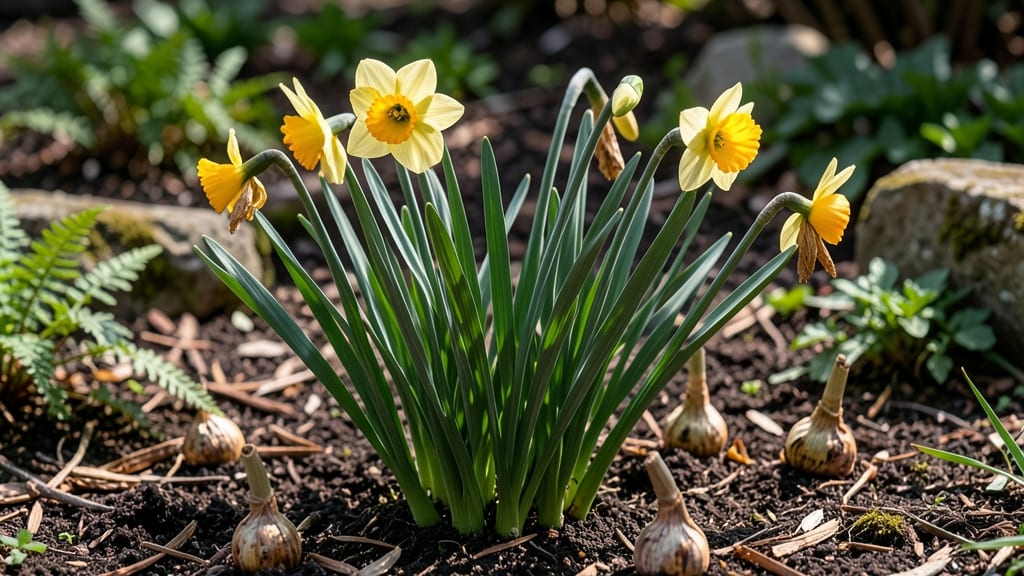
Daffodils are perennials that return every spring with minimal care, thanks to their underground bulbs storing nutrients through winter and reblooming reliably year after year.
These cheerful flowers earn their perennial status because their bulbs act like natural storage units. 🌱 During winter, daffodils enter dormancy, conserving energy underground until temperatures rise.
Unlike annuals that complete their life cycle in one season, daffodils' bulbs remain dormant but alive, ready to push through soil when conditions improve. The key to their longevity lies in this underground survival mechanism combined with their resilience against pests and diseases.
What makes daffodils particularly rewarding for gardeners is how little they demand to thrive. Most varieties handle partial shade and even survive light frosts, making them perfect for gardeners who want reliable color without constant attention.
Their ability to spread over time means you'll get more blooms each year with virtually no effort.
💡 In This Article
- How Daffodil Bulbs Survive Winter and Reemerge
- Essential Care Tips to Ensure Daffodils Return Annually
How daffodil bulbs survive winter and reemerge
Daffodil bulbs are nature's masterpiece of survival engineering. These underground structures store carbohydrates, proteins, and water like a high-efficiency battery, allowing them to endure months of freezing temperatures. During winter dormancy, the bulb's cells become dehydrated and enter a state of metabolic slowdown, reducing energy consumption to nearly zero.
This process is called endodormancy, where the plant's biological clock prevents growth even if conditions seem favorable.
The bulb's outer layers act as protective armor. A tough, papery skin called the tunic shields the inner layers from freezing and pests, while the bulb itself contains specialized cells that convert stored starches into sugars when temperatures rise.
What's fascinating is how daffodils can survive ground temperatures as low as 10°F (-12°C)—far colder than many other perennials. This hardiness comes from their ability to produce antifreeze proteins that prevent ice crystals from forming in their cells, similar to how some fish survive Arctic winters.
Unlike annuals that complete their entire life cycle in one season, daffodils' bulbs remain alive through winter, ready to resume growth when daytime temperatures consistently reach 50°F (10°C).
The first sign of life is often a small green shoot pushing through the soil, fueled by the energy stored during the previous growing season. This biological mechanism explains why daffodils often bloom earlier than other spring flowers—their bulbs have been preparing all winter to make an early appearance.
What sets daffodils apart from other perennials is their toxic defense system. The bulbs contain compounds like lycorine that deter animals and insects, making them less appealing as food sources. This natural protection means daffodils rarely suffer from the same pest pressures that affect other garden plants.
The combination of their underground storage system, cold resistance, and built-in pest deterrents creates a nearly foolproof survival strategy that's been perfected over millennia.
Consider this comparison: A single daffodil bulb can produce multiple flower stalks over its lifetime, while an annual plant would need to be replanted every year. The bulb's ability to regenerate from just a small piece—even a single scale—demonstrates its remarkable resilience.
This is why you'll often see daffodils spreading naturally in gardens, creating new shoots from offsets that form around the parent bulb each year.
One often overlooked fact is how daffodils' blooming cycle works. After flowering, the plant stores energy in the bulb through photosynthesis in the leaves, which continue growing even after the flowers fade.
These leaves are crucial—they're the plant's solar panels, converting sunlight into stored energy for next year's blooms. Removing leaves too soon can starve the bulb, reducing next year's flower production.