
Flowers
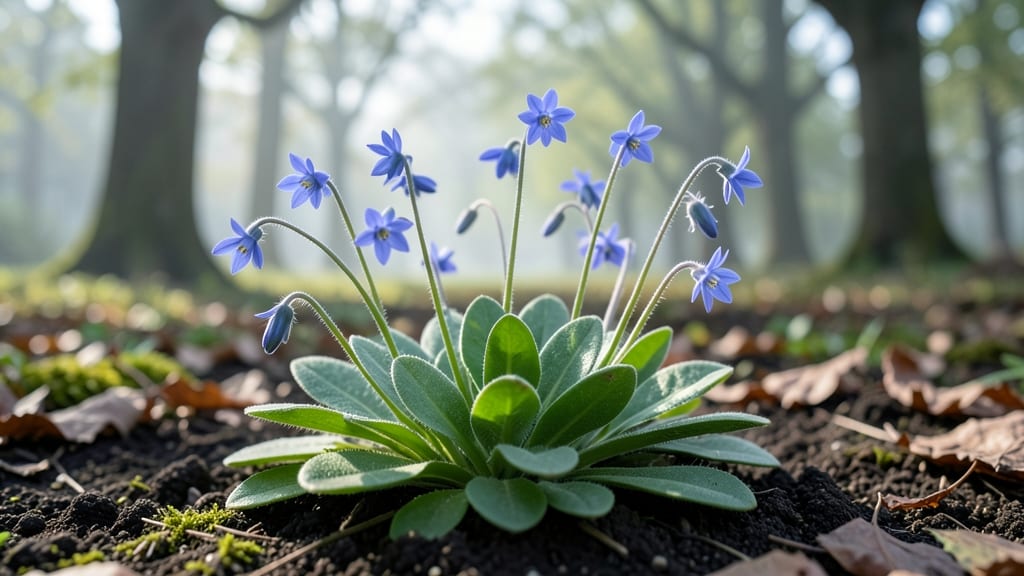
Chinese forget-me-nots are not true perennials—they’re tender annuals or short-lived perennials that die back in freezing temperatures. However, they self-seed prolifically, often returning yearly in mild climates like USDA Zones 7-10 with proper winter protection or mulching.
Chinese forget-me-nots (Myosotis spp.) are often mistaken for hardy perennials, but their delicate nature makes them more like annuals in colder regions. 🌱 The confusion stems from their ability to self-seed aggressively, creating the illusion of perennial behavior.
In reality, their roots and stems struggle below 20°F, causing irreversible damage. However, in warmer zones, they thrive as self-sustaining plants, often blooming year after year without intervention.
What sets them apart from native forget-me-nots is their frost sensitivity—their leaves and stems lack the protective adaptations of cold-hardy varieties. This means even a light freeze can kill the plant back to the ground, but the seeds often survive to sprout fresh growth in spring.
For gardeners in cooler climates, strategic mulching or container overwintering can help preserve their growth cycle.
💡 In This Article
- Why Chinese Forget-Me-Nots Die in Cold Climates
- How to Extend Chinese Forget-Me-Nots’ Lifespan in Cold Regions
Why Chinese forget-me-nots die in cold climates
Chinese forget-me-nots (Myosotis spp.) belong to a group of plants that lack the natural cold resistance found in true perennials. Their delicate stems and leaves contain high moisture levels—around 75-80% water content—which freezes and ruptures cell walls when temperatures drop below 20°F.
This is why even a light frost can cause irreversible damage, unlike hardy perennials like lavender or coneflowers, which can survive -10°F or lower.
The real vulnerability lies in their shallow root systems, typically only 6-12 inches deep, which can't access deeper soil warmth. Native forget-me-nots (Myosotis sylvatica) have evolved thicker stems and deeper roots, allowing them to endure colder winters.
Chinese varieties, however, prioritize rapid growth and abundant flowering over cold tolerance, making them more suited for USDA Zones 7-10 where winters rarely drop below freezing for extended periods.
What makes this even more confusing is their self-seeding behavior. When the plant dies back, it releases thousands of tiny seeds (0.02 inches in diameter) that germinate in spring, creating dense clusters of new growth.
This cycle tricks gardeners into thinking they're perennials, but the parent plant itself rarely survives intact through winter. The seeds' hardy outer coating (about 0.004 inches thick) protects them, while the plant's above-ground parts remain frost-sensitive.
Another key factor is their growth habit: Chinese forget-me-nots produce soft, hairy leaves that trap moisture, making them prone to frostbite. In contrast, cold-hardy plants like sedum develop waxy coatings or succulent tissues that resist freezing.
The combination of shallow roots, high moisture content, and delicate foliage creates a perfect storm of frost vulnerability for these plants.
Interestingly, their flowers themselves aren't the main issue—it's the stems and leaves that fail first. The blooms can sometimes survive light frosts (28-32°F) if they're fully open, but the supporting structures collapse when temperatures drop further.
This is why you might see dead stems with intact flowers in early spring—a classic sign of frost damage to the plant's vascular system.
For gardeners in marginal climates (like Zone 6), this means Chinese forget-me-nots will only persist if they can reseed successfully each year. Without this mechanism, they behave exactly like annuals, completing their entire life cycle in a single growing season before dying back completely.