
Vegetables
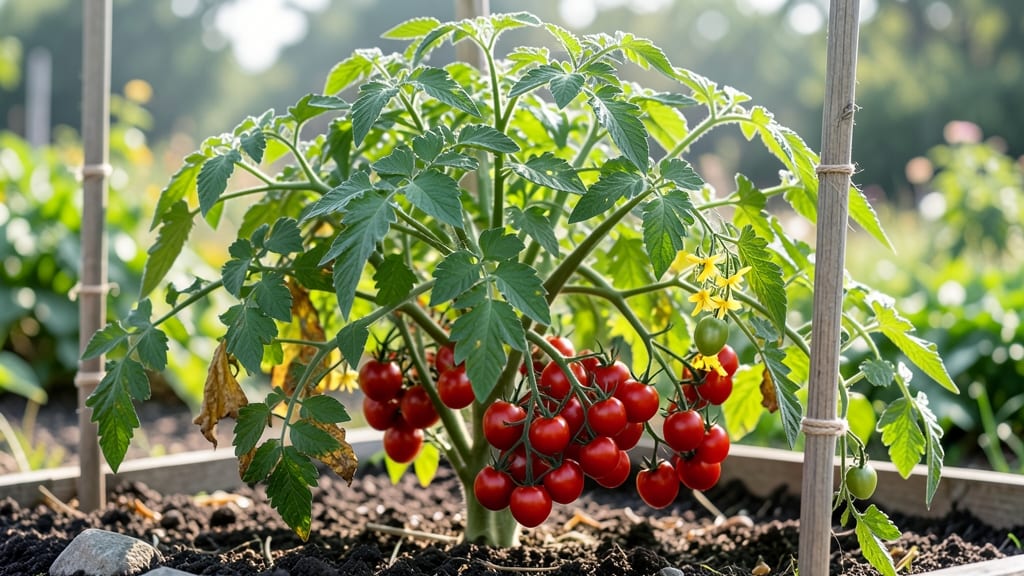
Cherry tomatoes aren't perennials in most climates because they can't survive freezing temperatures, but their roots can persist underground in warmer zones if properly protected and pruned.
Most gardeners treat cherry tomatoes as annuals because their above-ground growth dies back when temperatures drop below 32°F.
However, the plant's root system remains dormant in mild winters, ready to sprout again when spring arrives. 🌱 In USDA zones 9-11, where frost is rare, cherry tomatoes can actually regrow year after year from the same roots—this is why some gardeners call them "semi-perennials."
The key difference from true perennials like asparagus is that cherry tomatoes won't produce flowers or fruit during their dormant winter months, only regrowing foliage in spring.
This natural cycle explains why many gardeners in colder regions use protective measures like thick mulch or low tunnels to preserve those underground roots. With the right winter care, you can often get 3-5 years of production from a single planting, making them more cost-effective than true annuals.
💡 In This Article
- Why Cherry Tomatoes Die Back Annually in Most Gardens
- How to Extend Cherry Tomato Growth in Cold Climates
Why cherry tomatoes die back annually in most gardens
Cherry tomatoes behave like annuals in most gardens because their above-ground growth is extremely frost-sensitive. When temperatures drop below 32°F, the plant's cells rupture due to ice crystal formation in their vascular system, causing irreversible damage to stems and leaves.
This is different from true perennials like asparagus or rhubarb, which have specialized underground structures (rhizomes or crowns) designed to withstand -10°F to -20°F temperatures through winter.
The key difference lies in their root systems. While cherry tomato roots can survive in dormancy, they lack the protective adaptations of true perennials. Their fibrous root network extends only 12-18 inches deep, making them vulnerable to soil temperature fluctuations.
In contrast, asparagus roots grow 6-8 feet deep, accessing warmer soil layers. When spring arrives, cherry tomato roots must rapidly regenerate foliage from scratch, a process that takes 4-6 weeks compared to asparagus' 2-3 weeks for spear production.
What makes this interesting is how cherry tomatoes handle dormancy differently than true perennials. While asparagus stores energy in thick rhizomes, cherry tomato roots rely on stored carbohydrates in their crowns—similar to strawberries—which can sustain them through mild winters (40-50°F).
However, prolonged exposure to freezing temperatures (28°F or below) depletes these reserves faster than they can replenish, leading to plant death.
Another critical factor is their growth cycle timing. Cherry tomatoes complete their life cycle in 60-90 days from seed to fruit, while true perennials like rhubarb take 2-3 years to establish before producing edible parts.
This rapid growth means cherry tomatoes must focus their energy on fruit production rather than building winter-hardy structures, making them less resilient to cold stress.
For gardeners in colder climates, understanding this biological limitation explains why cherry tomatoes often need replanting each year. The plant's energy is prioritized toward fruit development rather than cold resistance, which is why they're classified as annuals in most gardening zones. 🌱
This frost sensitivity also affects their flavor profile. Plants grown in warmer climates develop sweeter, more concentrated flavors because they have more time to mature. In colder regions, the shortened growing season often results in slightly more acidic, less sweet tomatoes unless extended with protective measures.
The bottom line is that cherry tomatoes are biological annuals in most climates because their growth strategy prioritizes rapid fruit production over winter survival—a tradeoff that makes them delicious but less hardy than true perennials.