
Orchid Care
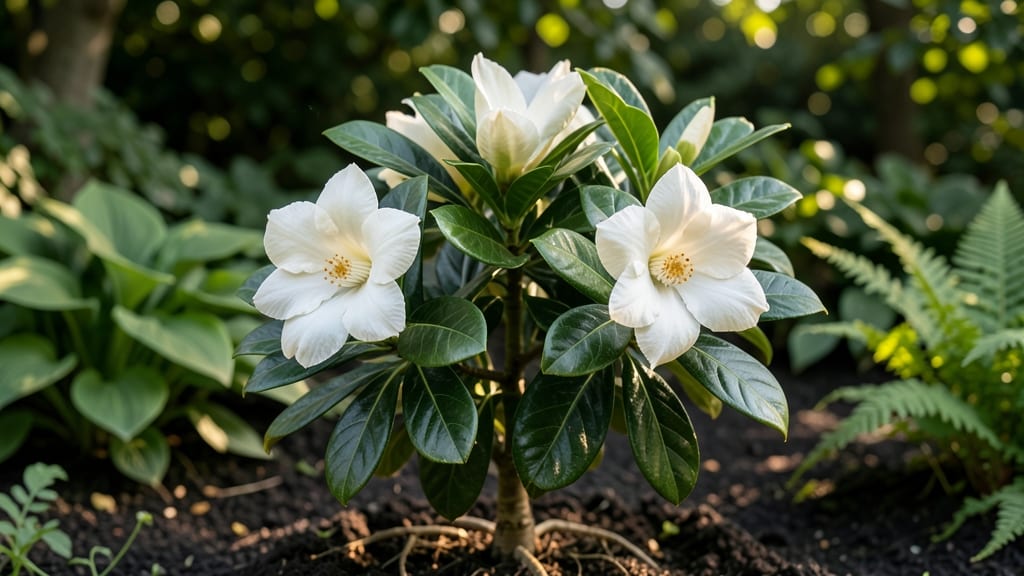
Are gardenias perennials or annuals? They are perennials in frost-free climates, where they thrive year-round, but they die back to the ground during cold winters and regrow from their hardy root systems each spring. Their ability to survive depends entirely on your local hardiness zone.
Gardenias act like perennials in warm climates because their extensive root systems store nutrients and energy underground, allowing them to push new growth when conditions improve. 🌱 In colder regions, though, these same roots become their lifeline—without protection, the above-ground plant may freeze back, but the roots often survive to regenerate.
This explains why gardenias sometimes appear to "die" in winter only to bounce back in spring, even if they don't bloom immediately.
What most gardeners don't realize is that the plant's dormancy isn't true death—it's a survival strategy. The root system, which can extend several feet deep, acts like a biological battery, storing carbohydrates that fuel regrowth.
This is why gardenias in zones 8-11 (like Florida or Southern California) stay evergreen year-round, while those in zones 7 or colder need winter protection like mulch or containers to mimic their natural frost-free conditions.
💡 In This Article
- How Gardenia Root Systems Influence Their Lifespan
- Climate-Specific Gardening Tips for Year-Round Gardenias
How gardenia root systems influence their lifespan
Gardenias rely on a specialized root system that acts like a biological storage unit. Their fibrous roots extend 12-18 inches deep, while their main taproot can reach up to 3 feet underground. This extensive network stores carbohydrates and nutrients during dormancy, allowing the plant to regenerate when conditions improve.
The root system's ability to survive cold snaps explains why gardenias often return each spring, even after freezing temperatures kill the above-ground foliage. 🌱
The key to understanding their perennial nature lies in their cold sensitivity. Gardenias are tropical/subtropical plants that evolved in regions with consistent warmth. When exposed to temperatures below 28°F, their cells begin to freeze, but their deep roots remain protected by the insulating soil.
This is why you'll often see gardenias in colder climates appear "dead" in winter—only to push new shoots from the roots once temperatures rise above 50°F in spring. The root system's hardiness is what truly defines whether a gardenia acts as a perennial or behaves like an annual.
What makes this even more fascinating is how the root system adapts to seasonal changes. During warm months, gardenias focus energy on flowering and foliage growth, while in cooler periods, they redirect resources underground.
This survival mechanism is similar to how peonies or daylilies operate in colder climates, but gardenias take it further with their deeper root penetration.
The deeper the roots, the better they can access moisture and nutrients year-round, which is why gardenias in ideal conditions (zones 8-11) can thrive continuously without dormancy.
However, there's a critical threshold where gardenias lose their perennial nature. In zones 6 and colder, where winter temperatures frequently drop below 15°F, even the roots struggle to survive.
This is why gardenias in these regions often need winter protection or must be grown as container plants that can be moved indoors.
The root system's ability to regenerate becomes compromised when exposed to prolonged freezing, turning what would normally be a perennial into a seasonal plant that behaves more like an annual.
Consider this real-world example: A gardenia planted in zone 9 (like Miami) will maintain its evergreen foliage year-round, while an identical plant in zone 7 (like Kansas City) will lose all leaves in winter but may still regrow from roots if properly mulched.
The difference isn't the plant itself, but how its root system interacts with the local climate. This is why gardeners in colder regions often refer to gardenias as "annuals"—they complete their life cycle each growing season rather than persisting continuously.
The root system's depth also plays a crucial role in water retention. Gardenias in arid climates develop even more extensive root networks to access groundwater, which helps them survive drought conditions.
This adaptation explains why gardenias can sometimes recover from neglect—those deep roots keep the plant alive even when the top growth appears stressed. Understanding this root behavior is key to determining whether your gardenia will act as a true perennial or require annual replanting.